
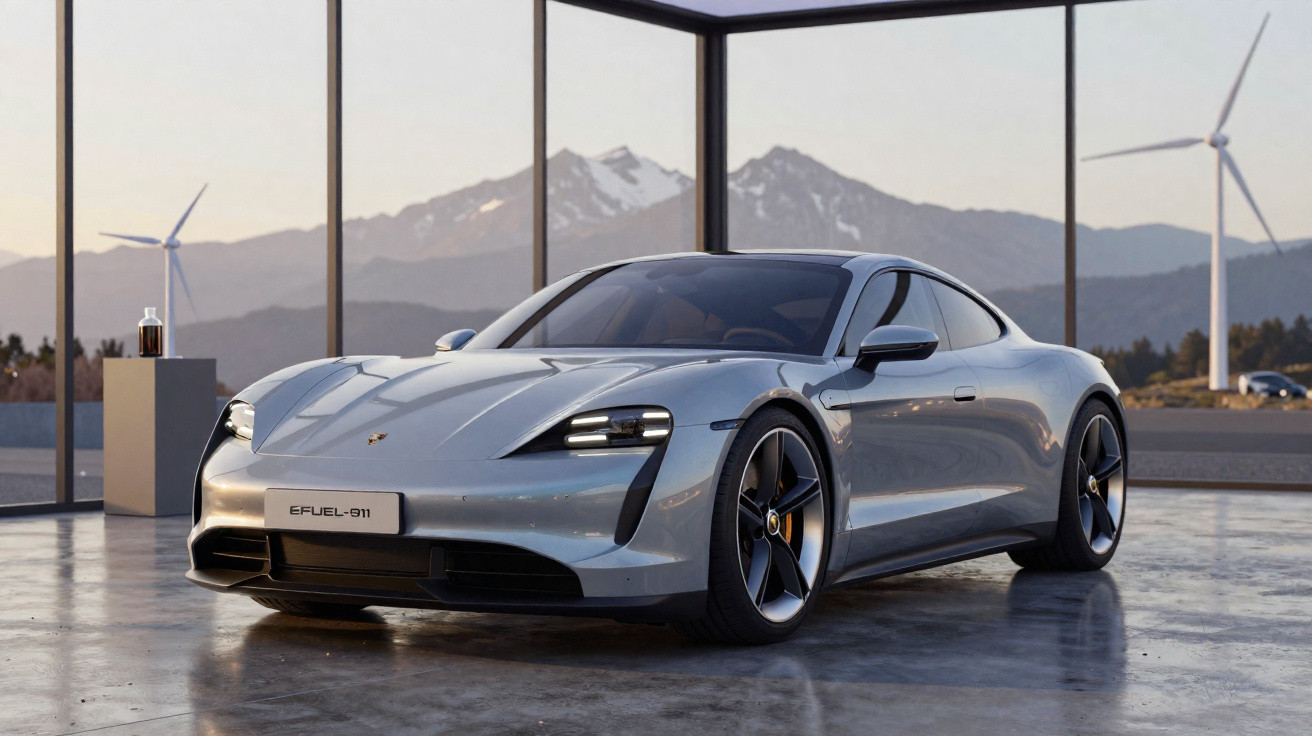
Although Porsche’s commitment to electric mobility is stronger than ever, the German brand announced last February that it is also involved in developing synthetic fuels, or e-fuels.
Why? As Michael Steiner, Porsche’s Director of Research and Development, put it, “with electricity alone, we cannot move forward quickly enough”, clearly referring to meeting carbon-neutrality targets.
These are not merely words: plans to build the first synthetic-fuel production plant are already under way. It will be located in Chile and could begin operating as early as 2022.
During the pilot stage, 130,000 litres of climate-neutral synthetic fuels will be produced, with output rising considerably in the two subsequent phases. Production capacity is set to reach 55 million litres of e-fuels in 2024 and will be ten times greater in 2026: 550 million litres.
Why Chile?
The plant’s construction and synthetic-fuel production stem from a partnership between Porsche and Siemens Energy, alongside other parties including energy company AME, Chilean oil company ENAP and Italian energy company Enel. The project also has backing from the German government through the Ministry for Economic Affairs and Energy, which contributed eight million euros.
Called “Haru Oni”, the pilot project incorporating this new factory will be established in Chile’s Magallanes province. Why was this South American country chosen, and this province in particular? Magallanes, in the far south of the country - closer to Antarctica in the south than to the Chilean capital, Santiago, in the north - has outstanding wind conditions. This makes it highly suitable for wind-power generation, and renewable energy is vital to ensuring that synthetic fuels are climate-neutral.
Green hydrogen for Porsche e-fuels
This is because e-fuels are made by combining two ingredients: carbon dioxide (CO₂) and hydrogen (H). The key issue still lies principally in hydrogen production. Currently, 90% of hydrogen is produced through steam reforming, a highly polluting process because it involves breaking down fossil fuels. For this reason, it is known as grey hydrogen.
Producing clean, non-polluting green hydrogen through water electrolysis - whereby water is split into its constituent molecules, oxygen (O) and hydrogen (H₂) - requires large amounts of electrical energy. That electricity must therefore come from renewable sources such as wind power, which was decisive in selecting Chile’s Magallanes province. It is also the most expensive type of hydrogen to produce, although costs are expected to fall as production volumes increase.
Siemens Energy will oversee systems integration across the entire value chain, from the Siemens Gamesa wind turbines to PEM (Proton Exchange Membrane) electrolysis, which is suited to the variable nature of wind energy.
Once water electrolysis has produced green hydrogen, it is then combined with CO₂ - which can also be obtained in several ways, including by capturing it from the atmosphere - to create synthetic, renewable methanol. This is subsequently converted into petrol using MTG (Methanol To Gasoline) technology, which will then be licensed and supported by ExxonMobil.
Porsche, the main customer
Given its role in the partnership, with Porsche initially expected to invest around 20 million euros, the company will also likely be the main customer receiving and using this e-fuel.
Porsche will initially use synthetic fuels in motorsport, where the German manufacturer has a substantial presence. They will also reach Porsche Experience Centres and its production vehicles.
In this way, all of its cars - whether powered solely by combustion engines, hybrid systems or electricity - will be able to help reduce emissions on the path towards carbon neutrality.

Comments
No comments yet. Be the first to comment!
Leave a Comment