
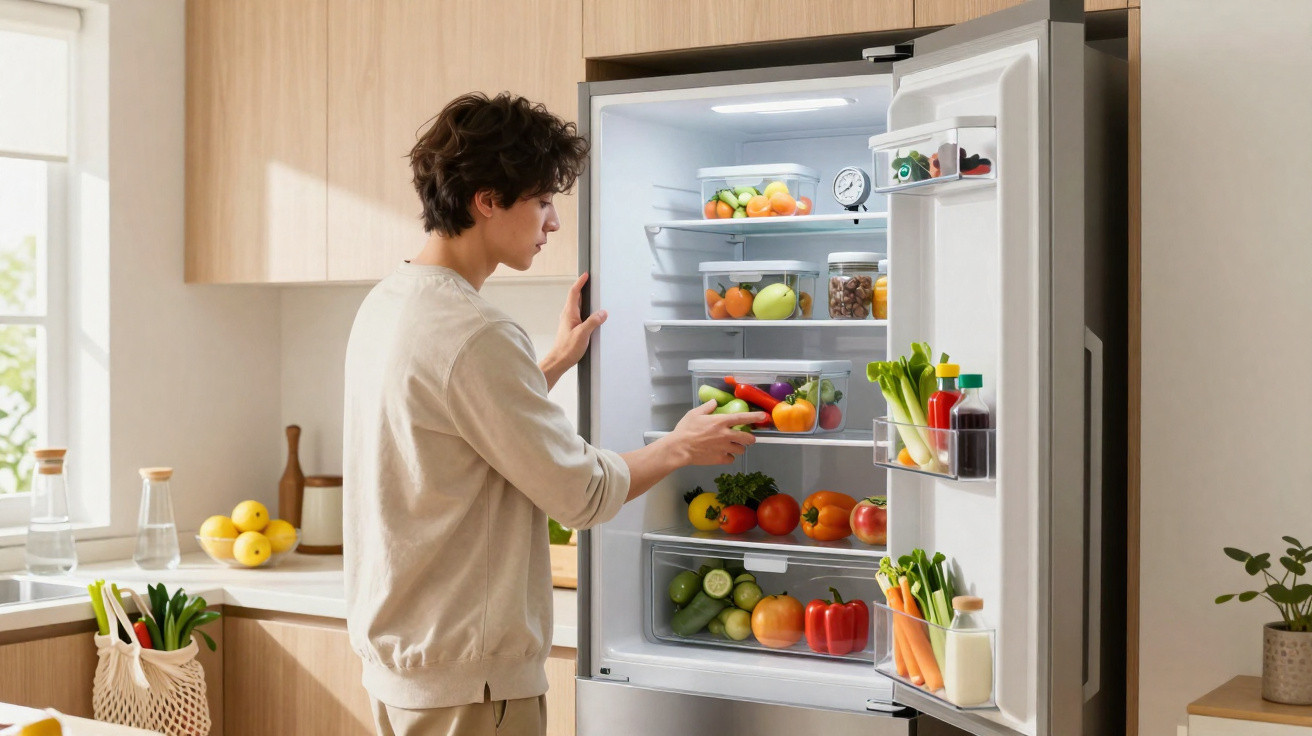
Organising a refrigerator can seem like little more than fitting in everything bought at the supermarket. However, food-storage specialists say that leaving some gaps can affect how efficiently the appliance operates, how long products last and even its energy use.
Why does refrigerator organisation have such a strong effect on food preservation?
Organising a refrigerator is about more than appearance: the way food is arranged directly influences cold-air circulation and the consistency of the internal temperature. Too many packages and stacked containers create warmer areas, causing delicate foods to spoil sooner.
In many households, the refrigerator is packed to capacity after a large monthly shop. This makes it harder to chill meat, dairy products and vegetables properly. As a result, more food is wasted, food safety is reduced, and the appliance has to work harder to offset temperature changes, increasing energy consumption.
How do empty spaces in the refrigerator support even cooling?
Leaving empty spaces in the refrigerator allows cold air to move between shelves and around food, creating genuine “air corridors”. If cartons, bottles or large containers obstruct the air vents, the flow is compromised and sections of a shelf can become warmer, even when the thermostat has been set correctly.
A few straightforward day-to-day organisation measures can help meat, cheese, cold cuts, leftover meals and vegetables keep for longer. The practical adjustments below improve air distribution and limit temperature fluctuations:
- Do not block cold-air vents with milk cartons, bottles or large containers.
- Leave a small gap between containers and packages instead of placing them tightly together.
- Avoid stacking too many containers on a single shelf, particularly the upper shelves.
- Spread items across more than one level rather than gathering everything in one area.
How can you organise a refrigerator into practical zones?
An effective way to use the interior of a refrigerator is to divide it into storage zones, giving priority to items that genuinely need chilling. Many packaged products only require refrigeration once opened, freeing shelf space for perishable food and preventing unnecessary overcrowding.
Grouping food by type and how often it is used also makes it easier to retain small gaps between shelves and drawers. This simple everyday layout can be followed:
- Top shelf: best for ready-to-eat food or properly stored leftovers, which need a more stable temperature.
- Middle shelves: suitable for dairy products, eggs in their original carton and everyday items.
- Bottom shelves: usually colder, making them appropriate for meat and products requiring greater refrigeration; always keep them in sealed containers.
- Drawers: intended for fruit and vegetables, while following the ventilation guidance provided by the manufacturer.
- Door: the area with the greatest temperature variation, for condiments, drinks and less sensitive products.
How does refrigerator organisation help save energy?
The link between empty spaces in the refrigerator and energy savings comes down to the compressor's effort to maintain the internal temperature. When air can circulate efficiently, the system reaches and maintains the desired cooling level with less work, which may be reflected in electricity bills over time.
Extra steps, such as checking the door seal, avoiding putting food away while it is still hot, adjusting the temperature for the season, and cleaning the inside and rear of the appliance, can enhance this effect. By planning shopping and storage in advance, the refrigerator becomes a more efficient part of the household routine, supporting food preservation, food safety and day-to-day organisation.





Comments
No comments yet. Be the first to comment!
Leave a Comment