
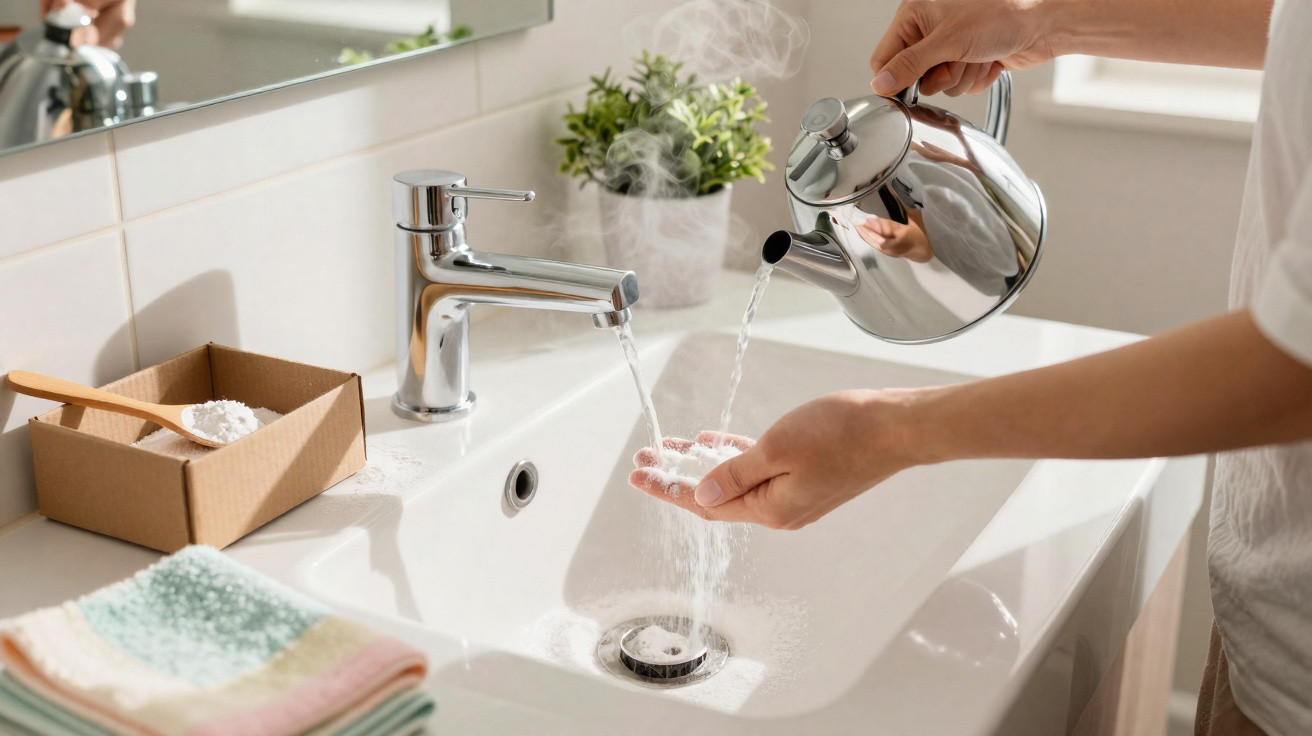
A bathroom drain can start giving off a sewage-like smell even when there is no fault in the drainage system. Hair, soap residue, skin oils and organic matter stick to the sides of the drain and trap, creating a film that holds dirt and encourages unpleasant odours. Bicarbonate of soda and hot water may help clean away this material, but one important point applies: boiling water should be avoided in PVC pipework.
Why does a bathroom drain start to smell?
While showering, hair strands, soap, skin cells and body oils flow away with the water. Some of this matter becomes caught in the grate, pipe bends and trap. Over time, the build-up creates a residue layer that may cause odours and slow down drainage.
Where the issue is caused by this surface dirt, cleaning the drain will usually reduce the smell considerably. However, if hair has built up, it is best removed by hand or with a suitable tool, as bicarbonate of soda will not dissolve large clumps of hair. Household mixtures can assist with minor blockages, but they are no substitute for physically removing a more substantial obstruction.
- Remove visible hair and debris from the grate;
- Clear any dirt within reach at the drain opening;
- Use bicarbonate of soda to help clean attached residue;
- Finish with hot, but not boiling, water if the pipework is PVC.
How to use bicarbonate of soda and hot water in a bathroom drain
Once the hair has been removed, add a small amount of bicarbonate of soda to the drain and allow it to act on the dirty area before rinsing with hot water. The purpose is to help loosen residue and flush dirt through the pipework, rather than attempting to dissolve a compact blockage on its own. Plumbing products also recommend bicarbonate of soda followed by hot water as a maintenance option for odours in certain drains.
Why is pouring boiling water not a good idea?
Temperature requires particular care with PVC installations. Drainage systems made from this material may have a maximum operating temperature of around 60 °C, depending on the pipe specification. Water straight from the boil is close to 100 °C and exceeds that limit.
For this reason, using hot water rather than boiling water is safer, especially if the age or type of pipework is unknown. Household cleaning should also remain straightforward, without combining different chemicals inside the pipes.
- Let boiled water cool slightly before use;
- Avoid repeatedly pouring water at approximately 100 °C into PVC;
- Do not combine chemical drain cleaners with other mixtures;
- If water is backing up, remove the hair blockage first.
Can caustic soda be used in pipework?
Caustic soda, or sodium hydroxide, calls for far greater caution. It can cause severe burns to the skin and eyes, and it releases significant heat when it comes into contact with water. Although PVC is chemically resistant to different concentrations of sodium hydroxide, improper household use of caustic drain cleaners introduces risks not present with simple mechanical cleaning.
- Never mix caustic soda with other cleaning products;
- Avoid allowing the substance to contact skin or eyes;
- Do not increase the amount in an attempt to speed up unblocking;
- Seek professional help if a blockage persists or water backs up.
What if the smell remains after cleaning?
Even a completely clean drain can smell of sewage if the trap has dried out. The water held in the bend of the trap acts as a physical barrier against gases from the drainage system. If a bathroom, cloakroom or floor drain is left unused for a long period, this water can evaporate and allow gases to return into the room.
In this situation, bicarbonate of soda is unnecessary: simply pour water into the drain to restore the water seal. If the smell returns quickly despite a full trap and clean drain, the cause may lie in sealing, ventilation or an issue with the sanitary installation. In that case, inspecting the pipework is more useful than continuing to pour products down the drain.





Comments
No comments yet. Be the first to comment!
Leave a Comment