
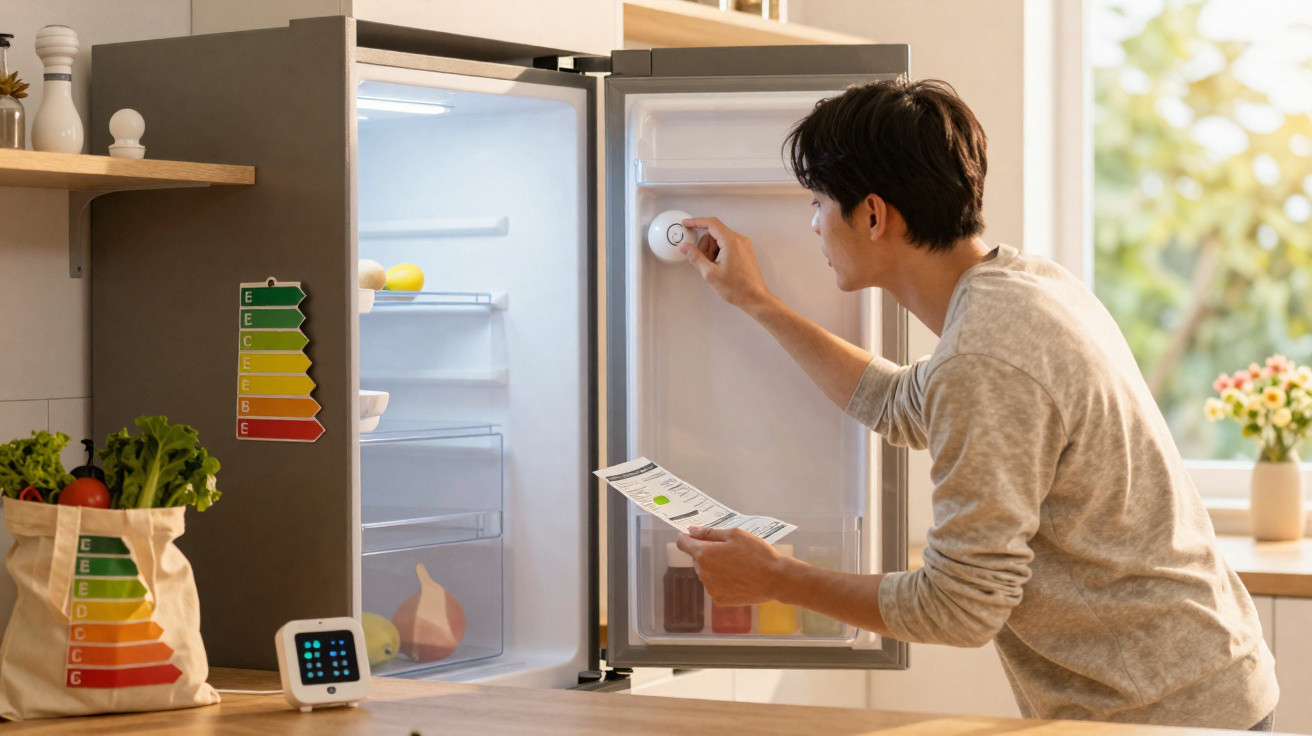
When electricity prices rise, most people immediately think about heating. Yet one quietly running appliance in the home secretly uses a considerable amount of energy – and in many households it stands right beside the coffee machine. Anyone who genuinely wants to control their costs should start by looking there.
Household electricity: a small share, a sizeable bill
In an average home, electricity accounts for only part of total energy use. Heating and hot water clearly dominate spending, but electricity still makes a notable contribution: around 17 per cent of all energy costs are attributable to electrical appliances – averaging well over a thousand euros each year.
This includes every everyday helper: lighting, kitchen appliances, the washing machine, entertainment electronics, computers, routers and chargers. Many operate unobtrusively in the background, while others are used only for a few hours at a time. One appliance, however, is virtually never given a break.
“The biggest electricity guzzler in the home is usually not the television – it is the appliance that is never switched off.”
Heating and hot water may remain the largest parts of a household’s energy costs. However, anyone aiming to reduce their outgoings in detail cannot ignore electrical appliances – particularly one in particular.
The real constant runner: fridge-freezer
It is present in most kitchens so routinely that hardly anyone considers its electricity bill: the fridge or fridge-freezer. Its continuous operation is precisely what makes it the leading contributor to annual electricity consumption.
While an oven or dishwasher is used only occasionally, a fridge works in cycles all day and all night. Added together, these many short cooling periods make a substantial difference – and appear directly on the bill.
“A typical fridge-freezer uses around 346 kWh per year – more than any other household appliance.”
That puts it clearly at the top of the ranking for major household electricity consumers. At 30 cents per kWh, this amounts to more than 100 euros annually for this appliance alone.
How the most important appliances compare for electricity use
Typical annual consumption figures reveal where electricity is really disappearing. The values below are averages and can vary depending on the model and how it is used, but they provide a clear indication:
- Fridge-freezer: approx. 346 kWh per year
- Tumble dryer: approx. 301 kWh per year
- Freezer (separate): approx. 288 kWh per year
- Television: approx. 187 kWh per year
- Fridge (without freezer compartment): approx. 166 kWh per year
- Dishwasher: approx. 162 kWh per year
- Electric oven: approx. 146 kWh per year
- Electric hob: approx. 131 kWh per year
- Desktop PC: approx. 123 kWh per year
- Games console: approx. 103 kWh per year
This order often surprises people. A gaming evening may feel energy-intensive, whereas most people pay far less attention to the hum of a tumble dryer or the discreet drone of a refrigeration unit.
That is exactly where the misconception lies: appliances that run intensely for a short period rarely catch up with a constant runner. A tumble dryer used several times a week or a console used at weekends consumes less overall than an appliance doing its job without interruption.
Why refrigeration becomes so expensive
From a cost perspective, refrigeration appliances come with several disadvantages:
- They operate every hour of the day, including when no one is at home.
- The difference in temperature between the interior and the kitchen has to be constantly balanced.
- Older models often work far less efficiently than modern appliances.
- An unsuitable location, such as directly beside the cooker, increases consumption even further.
In addition, many households own more than one refrigeration appliance – for example, an old second fridge in the cellar or an extra chest freezer. Every additional appliance running continuously adds to the annual bill.
Straightforward changes with a noticeable effect
Many households have already adopted initial energy-saving measures: LED bulbs instead of old incandescent lamps, shorter showers and a slightly lower heating temperature. Over the course of a year, these steps can certainly make a difference.
However, the potential savings from appliances often remains unused, even though the measures are relatively easy to put into practice. Alongside using the tumble dryer or oven more consciously, two factors matter most: the purchasing decision and everyday use.
“Anyone who considers energy efficiency when buying an appliance can cut its consumption by 20 to 50 per cent – and do so for many years.”
What to consider with a fridge
- Location: Do not place it directly next to a cooker, radiator or dishwasher. Every extra source of heat makes the appliance work harder.
- Distance from the wall: Leaving a few centimetres of space behind the appliance improves ventilation and reduces the load on the compressor.
- Set the right temperature: Around 7 degrees is generally sufficient for the fridge compartment, while the freezer should be about −18 degrees. Lower temperatures offer little benefit but use more electricity.
- Do not leave doors open: Whenever a door is left open for too long, warm air enters and must then be cooled down again.
- Defrost regularly: A thick layer of ice in the freezer compartment acts as insulation, meaning the compressor runs for longer to reach the target temperature.
- Check old appliances: A 15-year-old fridge can easily use twice as much electricity as a current, more efficient model.
When buying a replacement pays off
A new appliance costs money initially. With very old models, however, replacing it often pays for itself after only a few years. Switching from an energy-hungry old appliance to an efficient fridge-freezer can save several dozen euros each year.
For example, if an old fridge consumes 500 kWh annually and a new model uses only 250 kWh, costs fall by 75 euros per year at 30 cents per kWh. After a few years, the purchase has paid for itself even at a mid-range price.
Beyond the fridge: habits that reduce your electricity bill
Looking at the hidden constant runner is worthwhile, but an electricity bill is made up of many individual elements. Those who make changes in several areas at once will notice the effect sooner.
| Area | Typical measure | Possible effect |
|---|---|---|
| Lighting | Switch to LED | Significantly lower consumption with the same brightness |
| Bathroom | Shower rather than take a full bath | Less energy needed for hot water |
| Heating | Reduce the temperature by 1 degree | Noticeable cost reduction over the heating season |
| Washing | Use eco programmes | Longer running time, but often considerably less electricity |
| Standby | Switch appliances off completely | Prevents unnecessary continuous losses |
When buying appliances, many consumers still focus primarily on price, brand and features. Energy efficiency can easily be overlooked, even though it can amount to several hundred euros over an appliance’s lifetime.
Identifying electricity guzzlers: practical everyday tips
Anyone wanting to know precisely where their household energy is going can gain clarity with simple tools. A classic example is a plug-in energy monitor. It displays in real time how much electricity an appliance is currently drawing – including in standby mode.
A typical process could look like this:
- Monitor the fridge-freezer with an energy-monitoring plug for one week.
- Calculate the figures for a full year and compare them with the manufacturer’s specification sheet.
- Decide whether replacement or a better location would make sense.
- Gradually replace the most striking high-consumption items with more efficient solutions.
Energy supplier smartphone apps and smart meter displays can also help identify peaks in consumption – for instance, when several large appliances are running at the same time.
What many people underestimate: small effects, large total savings
No single action works like a miracle cure. Meaningful savings come from combining measures: slightly more efficient appliances, more conscious use, less standby consumption and attention to constant runners such as fridges and freezers.
Small changes add up particularly strongly with refrigeration appliances. A unit that is better positioned, regularly defrosted and sensibly set can save kWh year after year without making everyday life more complicated. Choosing a more economical model at the same time reduces electricity demand in the long term.
For many households, taking an honest look at the kitchen is more worthwhile than being frustrated with the games console or PC. The real energy guzzler is often standing right beside the sink – quietly humming away.






Comments
No comments yet. Be the first to comment!
Leave a Comment