
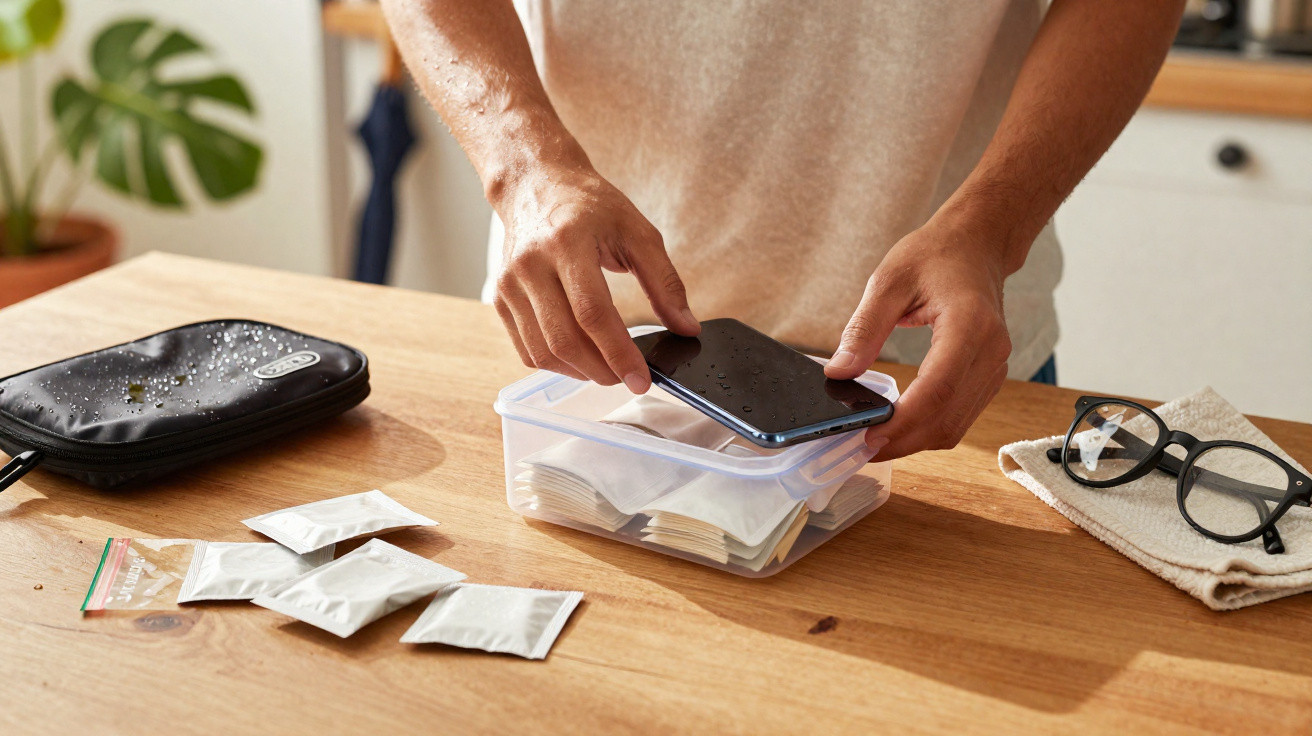
In almost every shoebox and many electronics packages, there are small white sachets usually marked “Do not eat”. Most people throw them away straight away. Yet they contain considerable potential: the silica gel inside is highly effective at removing moisture and can quietly solve several household problems, from misted-up car windows to a smartphone that appears to have drowned.
What is inside silica gel sachets, and why they work so well against moisture
The sachets contain tiny beads of silica gel, a material based on silicate. Each bead is filled with countless microscopic pores, which is where water particles attach themselves.
Silica gel does not soak up water like a sponge; it binds moisture to its surface – and does so very effectively.
The technical term for this is adsorption. As a result, the beads can retain up to around 40 per cent of their own weight in water without crumbling or leaking. This makes them ideal for protecting packaging containing:
- shoes and leather goods
- electronic devices such as cameras or headphones
- instruments, tools or delicate components
In everyday life, this potential is often wasted. Once an item has been unpacked, the sachets are usually binned in large numbers. Anyone who saves them can build a small anti-moisture army for the entire home.
A water-damaged smartphone: why silica gel is better than rice
It is a familiar scenario: your phone slips into the toilet, the kitchen sink or a puddle. The panic sets in, and many people still reach for a bowl of rice. It can work sometimes, but it is far less effective than silica gel.
What to do after water damage
The first few minutes matter most. This is the approach used by repair professionals:
- Switch the phone off immediately; do not turn it back on or charge it.
- Remove the case, memory card and SIM card.
- Carefully dry the outside of the device; do not use a hairdryer.
- Place the smartphone in an airtight box or freezer bag.
- Fill the container with as many silica gel sachets as possible.
- Leave it sealed for 48 to 72 hours.
During this time, the beads draw moisture out of crevices, speaker openings and the device’s interior. The same method can be used for headphones, a fitness tracker, a small camera or an e-reader that has been caught in the rain.
Rice does absorb water too, but it falls far short of silica gel’s performance and speed – particularly in the tight internal spaces of electronic devices.
Everyday ways to reuse silica gel sachets
Anyone who keeps these sachets can use them almost anywhere moisture is a nuisance or causes belongings to deteriorate.
Protecting paper, photographs and keepsakes
Old certificates, diaries and boxes of photographs can quickly suffer from damp in a cellar or loft. Paper buckles, photographs stick together, and that familiar “old book” smell develops.
Putting one or two sachets in:
- lever-arch files containing important documents
- shoeboxes full of photographs
- jewellery boxes holding treasured letters
reduces humidity in the immediate area. This noticeably slows down warping and mildew stains.
Keeping jewellery and silver shiny for longer
Metal is also sensitive to moisture. Silver cutlery tarnishes, while costume jewellery loses its shine. A single sachet in a cutlery drawer or jewellery box is often enough to slow oxidation. Polishing is needed less often, and necklaces or rings stay presentable for longer.
Tackling odours in trainers and gym bags
Active people will know the issue: shoes, shin pads and bags do not dry properly and soon develop a strong smell. Sweat is not the only cause; the persistently damp environment is also to blame.
Placing a sachet in each shoe after training, and adding one or two to the gym bag, removes the damp conditions that bacteria and fungi need. Odours develop much more slowly or disappear altogether.
Less rust in the bathroom and clearer car windows
Safety razors, nail scissors and tweezers often start to rust in a humid bathroom. A small sachet in their storage case reduces damp and extends the life of these tools.
In a car, two or three sachets on the dashboard or around the cockpit can help reduce the morning misting of the windows. They are no substitute for working ventilation, but can slightly lower moisture in the interior, especially when wet coats or umbrellas are being carried.
Refresh silica gel instead of throwing it away
These sachets are not single-use products. After spending a long time in a very damp environment, a sachet will eventually become saturated. It may then feel slightly damp or heavier.
A simple method restores its effectiveness:
- Set the oven to around 80 degrees.
- Put the sachets on a baking tray, not directly on the oven rack.
- Leave them to dry for around one hour.
- Allow the sachets to cool completely.
The heat drives the stored water from the pores. Afterwards, the sachets can be used again almost as if they were new. Storing them in a sealed jar from the outset means you will always have a small supply of regenerated moisture absorbers ready.
Safety: what households should bear in mind
Silica gel from these sachets is generally considered low-risk in normal household use. Even so, a few basic rules apply:
- Always keep sachets out of the reach of children and pets.
- Take the “Do not eat” warning seriously – the beads do not belong in anyone’s mouth.
- Do not cut open the sachets or scatter the beads.
- Do not use them instead of professional dehumidifiers in damp cellars or where mould is present.
Silica gel is suitable for small, enclosed spaces – not entire rooms with serious moisture problems.
If you have mould on walls or masonry that is constantly saturated, you need building repairs and perhaps professional help, not a handful of sachets in the corner.
When silica gel is especially useful – and when it is not
Silica gel is most effective wherever there is a small enclosed space: boxes, drawers, containers, bags or the glove compartment. On open shelving or spread around an entire living room, humidity disperses too widely for the effect to be noticeable.
Suitable places to use it include:
- boxes of photographs in the cellar or loft
- storage boxes for trading cards, comics or stamps
- guitar cases and covers for musical instruments
- toolboxes and cases for power drills
- shoe storage cupboards, especially those containing leather shoes
Collectors in particular can benefit greatly: less moisture means fewer rust marks, less buckling in paper and fewer yellowed surfaces. This helps collections retain their value more effectively.
Why it pays to take a closer look at these little sachets
Silica gel sachets are a typical example of an underestimated everyday resource. They cost manufacturers money to buy, yet consumers usually put them straight in the bin. Keeping and using them deliberately can save you from:
- buying new dehumidifying products
- the frustration of wet technology after an accident
- time spent constantly polishing jewellery or cutlery
- annoyance at buckled documents and smelly sports shoes
Silica gel does not replace good ventilation habits or a building dryer. However, in many small everyday situations, it is a quiet, unobtrusive helper – particularly when water suddenly becomes involved and a smartphone is at risk. Anyone who stops discarding these sachets without a thought may have a decisive advantage when the next accident happens.




Comments
No comments yet. Be the first to comment!
Leave a Comment