
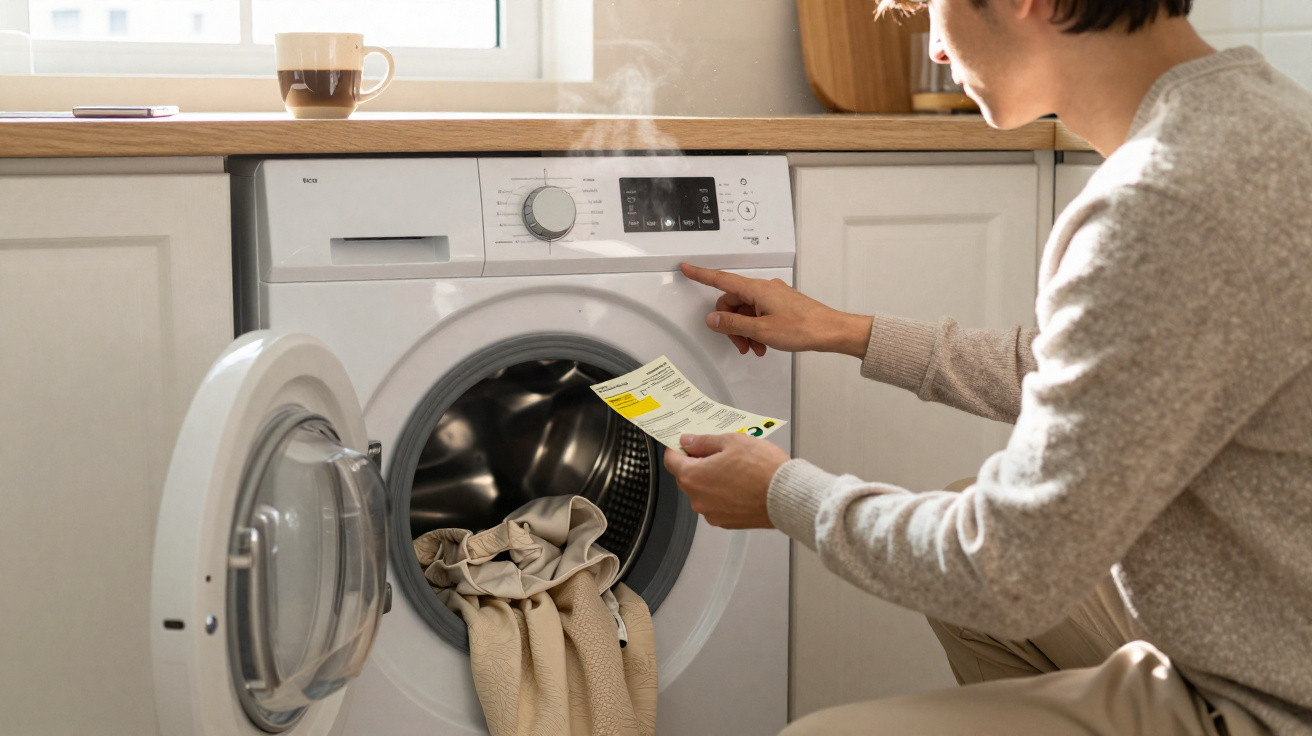
The first time my washing machine started beeping at 2am, I genuinely assumed something in the house was being attacked.
Its piercing electronic chirp cut through the silence, travelled beyond the shut bedroom door and hit my half-asleep mind. I had finally set the “eco” overnight programme, following the advice endlessly shared on social media: use appliances overnight, cut your costs, help the planet and sleep like a wonderfully energy-efficient angel. Rather than sleeping, I lay awake looking at the ceiling, trying to work out how an apparently sensible plan had gone so wrong.
The following morning, exhausted, I did what most of us do when reality fails to match the sales pitch: I looked at the bill. That was where things became interesting. On the night I believed I was spending less, I had actually paid more. The drum turning away in the dark was not the cheap deal I had pictured. For this particular laundry programme, washing at night could cost more than doing it in full daylight.
The persistent myth of the “cheap night wash”
Many of us hold on to a comforting assumption: electricity is cheaper at night. It is as though an unseen off-peak fairy arrives after dark, taps the washing-machine door and removes a few pence from every spin. Energy suppliers once promoted that message heavily, particularly alongside Economy 7 and Economy 10 tariffs, when night-time units really could be substantially cheaper. The routine has therefore survived, including among people who moved to entirely different tariffs years ago.
Look through any money-saving forum and the same tip appears repeatedly: “Just put the washing on at night, you’ll save a fortune.” But that is not automatically correct any longer. Most households now have single-rate tariffs, with electricity priced identically at 2pm and 2am. In that case, the loud “eco” wash running overnight is not only disturbing the baby and the neighbour’s dog; it may achieve nothing at all for your finances.
The frustrating part is the distance between what you expect and what happens. You assume you are Doing The Smart Thing and ought to receive a gold star. What you get instead is a larger bill and a load of damp laundry left untouched until the following lunchtime. Most of us have opened the machine to find clothes carrying the faint scent of an abandoned swimming-pool changing room.
Why an eco cycle is not always economical at night
Here is the catch: the programme that sounds least expensive - the so-called eco or cotton eco cycle - may become among the costliest options to use overnight. That is not because the programme itself is poor, but because real-world tariffs and timings matter. An eco programme generally runs for longer at a lower temperature, spreading the wash out to reduce total energy use.
In daytime, that slow and lengthy cycle often suits everyday life. You are there to hang the laundry as soon as it finishes, perhaps combine loads or schedule it while your solar panels are generating power, if you are fortunate enough to have them. At night, however, the same extended programme may begin just as your cheaper period finishes, or run on a flat rate that makes setting it in advance hardly worthwhile.
Time-of-use smart tariffs can complicate matters further. Some offer extremely low “flash” rates in the early hours before quietly increasing again shortly before sunrise. Your eco programme may therefore begin in the cheap period but end squarely in the costly one, using pricier electricity as you sleep, unaware that the supposed savings are disappearing with every rinse.
When a longer cycle costs more
There is also some straightforward arithmetic that no one wants to tackle after a tiring day. A three-hour eco cycle at 40°C may consume less electricity each minute, yet if it operates for twice as long as a 30°C mixed cycle, the difference quickly shrinks. Across a month of overnight loads, even a small extra cost per wash can become a noticeably larger figure on the bill.
There is a persistent, almost sentimental belief that “ eco equals always cheaper.” The reality is more complicated. At times, the best saving is a shorter daytime wash at a cooler temperature, followed by drying clothes properly rather than overworking the tumble dryer. A three-hour night wash that finishes at 4am and sits there stewing in the drum until 8am can quietly undo a lot of the micro-savings you hoped for.
Day versus night: what your tariff does not spell out
The unexciting but important factor behind all this is your actual tariff. Many UK households use a straightforward flat electricity rate without even noticing. The bill shows a unit price, perhaps a standing charge, and little else. There is no colour-coded breakdown of peak and off-peak times. Whether it is day, night, 3am or 3pm, the price remains exactly the same.
If that describes your tariff, programming an eco wash to start at 1am will not save one penny compared with putting on a quick wash after dinner. You are not reducing the cost; you are merely shifting it to a darker time of day. That could still work for your routine, of course, but it will not help your bank balance.
The idea that night-time is cheaper only genuinely applies to particular multi-rate or time-of-use tariffs, and the precise details still count. Economy 7 may offer low-priced electricity from, for example, midnight until 7am, but not every eco programme fits neatly within those hours. Some people routinely start the washing machine at 11pm and unknowingly pay peak rates for the first hour. Honestly, hardly anyone sits with a timer calculating the absolute cheapest moment to wash their socks.
The smart meter illusion
Then there is the glow of the smart meter. Moving things around and seeing the numbers fall a little can feel reassuringly productive. Smart meters are excellent for showing current consumption, yet having one does not automatically put you on a dynamic, time-based tariff. Plenty of households have smart meters while paying one unchanged rate throughout the day.
That is where confusion sets in. People see lower usage on their in-home display late at night, when everyone is asleep and the home is quiet, and mistake it for lower prices. Using less electricity does not necessarily mean paying a lower rate. Sometimes the only thing changing is the clock, not the cost.
The overlooked cost of damp laundry
Beyond the money, there is another expense rarely included on comparison charts: irritation. There is the drum knocking at 1am, the pump’s small whirr and the beep-beep-beep that seems audible from three rooms away when the wash ends too early. You wake, roll over and promise never to use delayed start again - then forget that promise by the next wash day.
There is also the unpleasant truth about neglected laundry. When an “eco” programme finishes at 3am, for instance, the door remains shut around a warm and damp little microclimate. Towels or school shirts sit there for hours, gradually cooling and developing that familiar wet-dog-meets-old-radiator smell. You then have to wash them again, doubling the water use and electricity consumption and removing any saving altogether.
Drying routines can quietly raise the bill as well. Laundry that finishes mid-morning on a weekday may be hung in a sunny corner of the living room or outside in a breezy garden. A load that ends at dawn while you are asleep is more likely to be thrown into the tumble dryer in a rush, because nothing is prepared, the school run is approaching and the weather app is showing rain clouds.
When night-time washing does work
None of this suggests that washing overnight is invariably a poor choice. For certain homes, it is genuinely invaluable. Night shifts, large families, thin walls and crying babies can make daytime chaotic enough already. Putting a load on before bed and waking to clean clothes ready for hanging can feel like a small miracle amid domestic disorder.
If you have a genuine off-peak tariff, overnight laundry can certainly be worthwhile. The crucial point is understanding your exact lower-price hours, confirming that the eco programme fits entirely inside them, and checking whether a slightly shorter cycle might use less energy overall. Sometimes the win is as simple as switching from a three-hour eco night cycle to a 30° mixed wash that you run just after the cheap-rate kicks in.
There is an emotional consideration too. Some people truly sleep more easily knowing the machine is quietly dealing with a task they will not need to face in the morning. The gentle swish from the kitchen can make it seem as if the home is helping you out. Just ensure that reassuring feeling is not attached to a bill you would rather avoid opening.
A small habit that can alter the bill
One modest adjustment can often matter more than expected: select the programme according to the time, rather than simply its label. During the day, that might mean a cooler, shorter cycle that can be hung up immediately. At night, when the hours really are cheaper, it may mean a longer eco programme that remains within the low-rate window and does not leave clothes stewing in the drum until lunchtime.
It may sound almost absurdly obvious, but this is where many of us go wrong. The washing machine turns into background sound, part of a home’s rhythm, so we choose the same programme instinctively at the same time on every occasion. Pausing briefly to ask, “What does my tariff actually do, and when?” may be more valuable than any elaborate “eco” button.
The point at which you check the bill
There is a quietly powerful step that very few people take: picking up an old bill and properly reading it. Do not merely scan for the total or complain about the standing charge; inspect the details. Is there a single unit rate or two? Does it mention off-peak hours? Does the supplier state exactly when those hours begin and end, or conceal the information behind jargon?
This is often when the assumptions collapse. People find they have not had a cheaper overnight rate for years because they changed supplier three flats ago and never paid attention to the terms. Or they discover that their low-rate period is 1am to 6am, while they have been scheduling the machine for 11:30pm out of habit and using the final stretch of peak-rate electricity before the bargain starts.
After learning the truth, it is impossible to forget it. The 2am eco programme becomes a deliberate decision rather than a vague expectation. You stop relying on half-remembered tips from that one friend who insists they’re saving a fortune because they “just run everything at night.” There is something surprisingly liberating about that.
So, when should you press start?
If there is one plain, unglamorous lesson here, it is this: choose your laundry programme around your tariff and your actual routine, rather than a generic “eco” claim. With a flat-rate deal, washing after dark brings no magical reduction. You may be better served by a shorter, cooler daytime wash, hanging it up promptly and avoiding the dreaded repeat wash for a “forgotten damp load”.
If you do have off-peak hours, use them with purpose. Identify a programme that will finish fully inside the cheaper period, then use the delay timer so it ends close to the time you wake. That prevents clothes being trapped in warm steam for hours, quietly developing the odd sour smell that sends you back to square one.
Ultimately, this is less about getting everything perfect than leaving autopilot behind. The machine humming in the corner has become part of modern life’s soundtrack, much like the kettle or phone charger. Once you understand that the “eco night cycle” may be taking you for a spin, you hear it differently. The next time it beeps in the middle of the night, you will know exactly whether it was worth it.






Comments
No comments yet. Be the first to comment!
Leave a Comment