
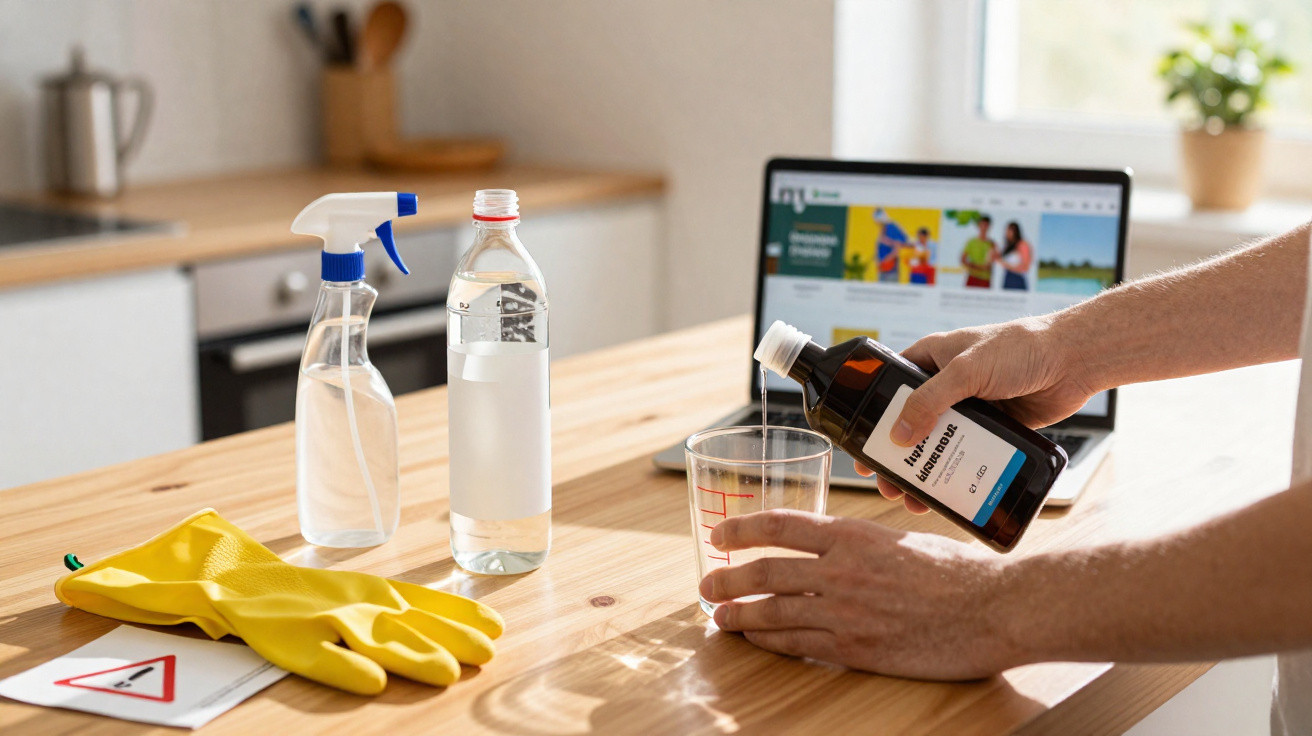
The smell is the first thing you notice: sharp, sour and clinically clean all at once. In a cramped, tiled bathroom, an exhausted parent crouches over blackened grout, gripping a bottle of vinegar in one hand and a hydrogen peroxide spray in the other. A TikTok clip had billed it as “the ultimate DIY disinfectant.” In the comments, people called it a miracle combo.
What they leave out is the point at which your eyes begin to burn.
Elsewhere online, a chemist explains how quickly things can go wrong when acids and peroxides are combined. The ingredients are identical, but the message could not be more different.
The reality lies somewhere between those two versions.
Why everyone is suddenly obsessed with this “magic” mix
Browse social-media cleaning hacks and the same two products appear repeatedly: white vinegar and hydrogen peroxide. They are inexpensive, familiar bottles found beneath countless kitchen sinks, and both are marketed as mild household essentials.
Placed next to each other, they seem almost completely harmless, rather like the ingredients for a simple school science experiment. What is less obvious is that combining them can take you over a boundary most people cannot detect by sight or smell before it is too late.
Consider Emma, a 32-year-old teacher who decided to “deep-clean” her kitchen after a winter filled with colds. A blog had told her that peroxide kills germs while vinegar removes mineral deposits, so mixing them would make a turbocharged disinfectant. She tipped both into one spray bottle, shook it and enthusiastically sprayed her worktops.
Minutes later, her throat felt sore and raw. Odd cloudy marks appeared on the stainless steel around the sink. The room smelled neither of vinegar nor bleach, but of something more aggressive. She opened the window, spent an hour coughing, and later learnt that she had not made a super-cleaner at all.
Instead, Emma had produced peracetic acid: a far stronger, highly reactive disinfectant used in hospitals and food-processing plants under tightly controlled procedures. When vinegar, or acetic acid, and hydrogen peroxide are mixed, they do not simply remain together without consequence. They react. The reaction may give off irritating vapours and form a liquid more corrosive to skin, lungs and household surfaces than either product is by itself.
That is the point at which the DIY narrative becomes misleading. The chemistry that makes this combination effective in professional settings is precisely what makes it hazardous in a home with children, pets and no protective equipment.
How to use vinegar and hydrogen peroxide safely without playing chemist
The unexpected advice from experts is not to throw either product away. It is to use them sensibly. Rather than mixing vinegar and hydrogen peroxide in one bottle, the safest way to use both is to apply them separately, one after the other, to the same surface.
For instance, when sanitising a chopping board, spray it with hydrogen peroxide (3%) first, leave it for a few minutes and wipe it clean before using vinegar. You can also do this in the opposite order. What matters is that each product contacts the surface, rather than the other product inside a sealed container.
This gives you a one-two approach to bacteria without turning the space beneath your sink into a miniature chemical plant.
Problems arise when people try to turn that sequence into one all-purpose magic spray. They are busy, want fewer bottles and hope for quick results, so they combine both liquids in a single container believing it is a clever, efficient shortcut. We have all had that moment when an easy fix seems more sensible than reading the dull instructions on the label.
However, those labels carry warnings for good reason. Hydrogen peroxide decomposes and releases oxygen, and adding an acid such as vinegar accelerates this process in ways that cannot be fully predicted. There may be no dramatic smoke or fizzing. Instead, it can quietly corrode grout and metal fittings, while repeatedly irritating your lungs over time.
“From a chemistry standpoint, vinegar and hydrogen peroxide are both useful, low‑toxicity tools,” explains Dr. Laura Campos, an environmental health researcher. “But once you deliberately combine them, you’re no longer cleaning. You’re doing chemistry you can’t easily control, and that’s where domestic accidents begin.”
- Never mix them in the same bottle – Keep separate sprays and use one after the other.
- Ventilate the room – Open a window or switch on an extractor fan whenever you use strong cleaning products.
- Test a concealed area – Do this on grout, metal or stone before using either product routinely.
- Use basic protection – Wear gloves and, if you are sensitive, a simple mask.
- Label everything – Do not leave unidentified bottles “for later”; that is where mistakes begin.
The quiet line between smart DIY and risky home chemistry
The bigger issue beneath this “dangerous hack or powerful solution” argument is trust. Many people are disappointed by harsh shop-bought cleaners whose ingredient lists seem longer than a receipt. Vinegar and hydrogen peroxide appeal because they appear straightforward, “natural” and manageable. Then the algorithm encourages the next step: combine them, strengthen them, hack them.
There is also reassurance in taking action. When flu season arrives or a virus dominates the news, spraying a homemade disinfectant can feel like regaining control. Honestly, hardly anyone does this every day. More often, it happens in worried bursts: after a scare, when a child becomes ill or following a news notification.
So what should you do when you are in the kitchen, holding two bottles and facing a stream of conflicting advice? The most sensible route may be the least exciting one. Use hydrogen peroxide on its own to disinfect chopping boards, fridge handles and bathroom surfaces touched frequently by hands. Use vinegar by itself for limescale, soap scum and cloudy glass. If you use them in layers, leave a pause, wipe the surface and take a breath.
That small interval is where the risk reduces dramatically. There is no mysterious bubbling mixture or invisible acidic mist, only two modest household products carrying out separate tasks.
Some professionals do use peracetic acid, which results from the same vinegar-and-peroxide reaction. It is used to sanitise medical instruments and food equipment because it destroys a broad range of microbes, including some that resist milder cleaners. The difference is, they’re trained, protected, and measuring concentrations with care.
At home, the genuinely effective approach may be less about creating a secret formula and more about returning to simple, repeatable habits. Air the bathroom. Clean frequently touched areas each day. Wash your hands. Use the products you have, while respecting what you cannot see or smell. A random spray bottle containing that mixture will not magically make your home an operating theatre. It may simply turn an ordinary chore into an avoidable health hazard.
| Key point | Detail | Value for the reader |
|---|---|---|
| Don’t mix in the same container | Mixing vinegar + hydrogen peroxide produces peracetic acid and irritating vapours | Helps protect lungs, skin and surfaces from hidden harm |
| Use sequentially, not simultaneously | Apply one product, allow it to work, wipe it away, then apply the other | Provides stronger hygiene benefits without hazardous reactions |
| Choose the right job for each | Peroxide is for disinfecting; vinegar is for descaling and shine | Keeps cleaning more effective, affordable and safe |
FAQ:
- Can I ever safely mix vinegar and hydrogen peroxide? You may use them on one surface in sequence, but never together in the same bottle or container. Combining them in an enclosed space encourages the formation of peracetic acid, which is much too harsh for everyday household use.
- Is breathing the fumes from my “mixed” spray really dangerous? A short, occasional exposure may cause only irritation, but repeated use in rooms with poor ventilation can irritate the eyes, throat and lungs, particularly if you have asthma or allergies. If you have already mixed them, dispose of the bottle and ventilate the room.
- Does the combo actually disinfect better than peroxide alone? Under industrial conditions, peracetic acid is an exceptionally powerful disinfectant. At home, uncontrolled mixtures are unpredictable, whereas ordinary 3% hydrogen peroxide already provides reliable disinfection on clean, pre-washed surfaces.
- Can I use the mix on grout, tiles, or stainless steel? The reaction may etch some metals, harm sealants and gradually discolour grout. Use the products separately: vinegar for soap scum or limescale, and peroxide for mould marks and disinfection, after testing a small hidden patch first.
- What should I do if I already used a mixed bottle for months? Stop using it, empty it into the drain with plenty of water and rinse the container. If you have had coughing, stinging eyes or skin irritation, speak to a healthcare professional and tell them you were using mixed vinegar and peroxide.






Comments
No comments yet. Be the first to comment!
Leave a Comment