
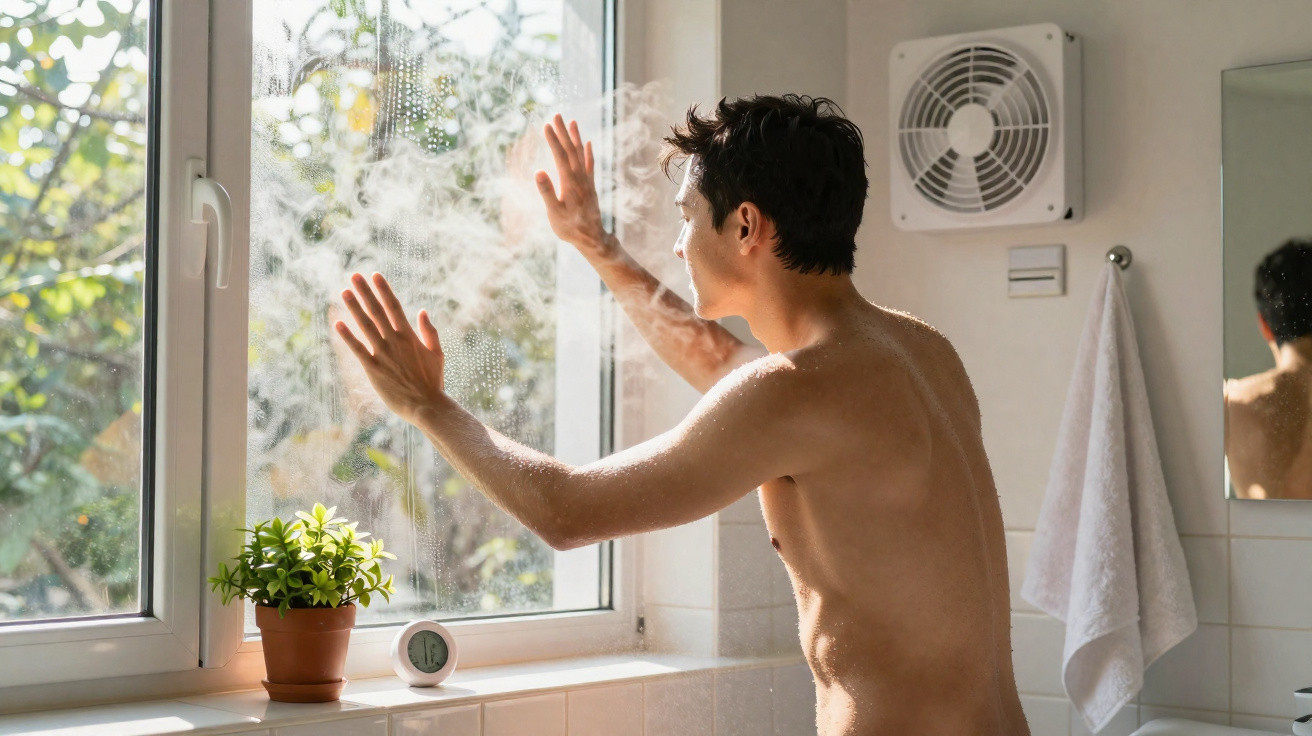
The mirror is clouded over, the tiles are slick, and the air seems heavier than the hot water that filled the room with steam.
You take your towel, climb out of the shower and, for a moment, simply stand there in the warmth. Then comes that small household decision: switch on the extractor fan and leave, or open the window and invite the cold air inside?
Most people press the plastic fan switch, assume it will handle the problem and forget about it. It drones away as they get dressed, make coffee or read the news.
But the real issue is not the steam you can see. It is the moisture settling unseen in walls, ceilings and window frames. That is where problems begin.
Why bathroom windows can outperform extractor fans after a shower
Opening a bathroom window after a hot shower gives you an immediate shock: cold air against damp skin. You shiver, your body objects, and your mind tells you to shut it quickly. So, instead, you open it by the smallest amount, assuming it will make little difference.
Yet, within a few minutes, something changes. The mirror clears more quickly than usual, the thick humid air starts to disappear, and the room smells genuinely fresher rather than merely masked by a spray from the shelf. It is not imagined; it is simply physics at work.
Extractor fans operate within limits. They remove moisture only at a certain rate, and only when they are clean, sufficiently powerful and left running for long enough. Even a half-open window, however, makes the bathroom part of an airflow route. Damp air goes out, drier air comes in, and the exchange speeds up. Air moving both in and out is more effective than one fan extracting in a single direction.
In one UK survey of rental homes, nearly 30% of tenants reported ongoing mould in bathrooms, even where extractor fans were installed. Many of the fans technically “worked” when tested. They simply did not shift enough air in everyday conditions. Greasy dust on blades, undersized motors and vents partly clogged with years of fluff all reduce their effectiveness.
After the same shower, opening a window produces a visible difference. You can see the condensation recede on the mirror and watch droplets on the tiles stop joining into small streams. In some older properties, landlords have quietly advised tenants: “Use the window first, the fan is just for show.” It may sound humorous, but it is not far from reality.
There is a human element too. A fan forgotten at the switch is no better than no fan at all. Opening a window can become as automatic as hanging up a towel. On a misty winter morning, that brief rush of fresh air against your face makes the routine feel tangible, rather than like another task involving a wall switch.
Behind the fogged mirror and damp ceiling is a straightforward explanation of how moisture works. Warm shower air can hold far more water than colder outdoor air. Once that warm, wet air reaches a cold surface, the water leaves it and becomes droplets. That is the condensation you notice, as well as the damp you cannot see.
An extractor fan attempts to draw some of this moist air away. That works in principle. In reality, bathroom doors are often partly shut, the gap beneath them is narrow, and make-up bags or laundry baskets obstruct minor airflow routes. The fan may keep whirring while repeatedly working on the same stale pocket of air, without properly clearing the entire room.
By opening a window, you create a route driven by pressure. Moist air takes the easiest way out, while outdoor air enters to replace it. The difference between indoor and outdoor temperatures does much of the work. As cold air holds less moisture, even a brief exchange can reduce humidity faster than an extra ten minutes from a weak fan. It’s a bit like opening the door of a packed, stuffy train carriage and suddenly being able to breathe again.
How to use bathroom windows effectively after showering
The straightforward approach is to open the window fully for a short, sharp period as soon as you turn off the water. Do not leave a hesitant two-centimetre gap; open it properly. Think in terms of changing the air, rather than making a polite gesture. In a small bathroom, ten to fifteen minutes is often sufficient, particularly if you leave the door slightly ajar to encourage airflow.
If you cannot stand the cold, wrap yourself in your towel, open the window and leave the bathroom. Let the room air out while you get dressed elsewhere. The aim is not to remain in a draught, but to give moisture a quick escape while it is still airborne, before it settles across every surface.
During winter, it is tempting to keep everything shut to “save heat”. The less obvious reality is that brief, intensive ventilation wastes less energy than allowing slow, persistent humidity to cling to the walls for hours. Damp walls take more time to dry and to warm again. A quick burst of cold air is preferable to the continual low-level chill caused by hidden moisture.
On a grey Tuesday morning when you are already running late, this may sound theoretical. In practical terms, make one rule: every shower means an open window. No exceptions. It is one habit rather than a long chore list. Get out, reach for the handle, open it, then leave.
The usual mistakes are very understandable. Shutting the window as soon as the mirror begins to clear. Leaving wet towels in a heap in the corner “for later”. Overlooking the dark flecks beginning along the grout behind shampoo bottles because you are busy and, frankly, worn out by the day. In a difficult week, that small mould patch can feel like one issue too many.
More practically, do not allow the fan to become an excuse. Use both where possible: window first, fan as support. If you live with others, discuss the habit openly. It may feel silly, but saying “I’m opening the window for ten minutes after showers” makes it easier for everyone to follow the routine rather than quietly closing it after you.
“I used to clean black mould off the bathroom ceiling every three months,” says Laura, a 32-year-old living in a damp Victorian terrace. “The thing that finally fixed it wasn’t some fancy spray. It was leaving the window open for 20 minutes every single shower. Not glamorous, just boringly effective.”
Small, regular actions beat major efforts done only occasionally. Let us be honest: nobody truly does that every day if it means fetching a step-ladder, spray, sponge and three microfibre cloths. The daily routine that lasts is the one requiring three seconds and no extra determination when you are tired.
- Open the window fully immediately after showering for 10–20 minutes.
- Keep the bathroom door slightly open to allow cross-ventilation.
- Hang towels spread out and high up, rather than leaving them in damp piles on the floor.
- Treat the extractor fan as a supporting measure, not your sole defence.
- On very cold days, wipe visible condensation from window sills and frames.
Less steam, less mould and fewer hidden costs at home
There is real reassurance in knowing that a small routine can alter how a home ages. Opening a window hundreds of times over a year can mean fewer black marks in corners, less peeling paint above the shower and fewer frustrated messages to a landlord about “that smell” which never entirely disappears.
It also gives you a little more control. Rather than depending solely on equipment selected and fitted by someone else years earlier, you are using the ventilation tool available almost everywhere: outdoor air. Whether you live high up in a city, in a small village bungalow or in a student flat with ageing fittings that hum more effectively than they work, the action is identical: handle, push, fresh air in, moist air out.
For people with asthma, allergies or simply a sensitive sense of smell, the benefit is not merely cosmetic. Stagnant, moist air contains spores, dust and lingering cleaning fumes. A bathroom that clears properly after each shower feels noticeably different. You sense it when entering at night: the air is lighter rather than swamp-like. Your lungs can tell before your eyes do.
There is a financial aspect as well, even if it is not something people enjoy discussing. Ongoing damp penetrates plaster, expands wood and corrodes window fittings. Eventually, that leads to repairs, whether you are the owner paying for them or the tenant disputing a deposit. Opening the window now costs less than repainting a blistered ceiling two winters from now.
Most of us have entered another person’s bathroom and immediately recognised the story of the previous ten years through its smell: layers of steam, air freshener and quiet neglect. Opening your own window after showering is a modest act of consideration for your future self, and for future guests who will enter and breathe in that history.
Tomorrow morning, when the mirror fogs and the room feels closed in, try this: do not reach for the fan first. Go to the window. Let a strip of cold air slice through the steam. Walk away and allow it a few minutes. After a week, notice how often the mirror clears sooner, how rarely the walls feel sticky and how the room smells less like “after shower” and more like nothing at all.
Some routines feel like burdens. Over time, this one can feel more like light: the sort that enters through an open gap, bringing dry air and a small, unseen promise that your home will remain a little healthier for a little longer.
| Key point | Details | Why it matters to readers |
|---|---|---|
| Short, wide airing beats long, weak fan use | Opening a bathroom window fully for 10–15 minutes after a shower often lowers humidity more quickly than running a small extractor fan for 30 minutes, particularly in older or underpowered systems. | It helps prevent fogged mirrors, peeling paint and concealed damp through a routine that suits a busy morning, rather than creating another time-consuming job. |
| Cross-ventilation is the real game changer | Leaving the bathroom door slightly open while the window is open creates an airflow route: moist air exits outdoors while drier air enters from the rest of the home, speeding the drying of tiles, grout and ceilings. | This lowers the chance of mould developing in corners and silicone joints, meaning less scrubbing, fewer harsh chemicals and a bathroom that remains fresher for years rather than merely weeks. |
| Windows cut long-term repair and health costs | Persistent humidity caused by relying only on fans can distort wood, damage plaster and encourage mould spores, which are linked with respiratory irritation and worsening asthma symptoms. | It safeguards your deposit or renovation budget while making everyday life more comfortable for people with allergies, young children or older relatives sensitive to musty, damp air. |
FAQ
Is it still worth opening the window if I already have a powerful extractor fan? Yes. A good fan plus an open window is the best combo: the fan helps pull moist air out, while the window lets fresh air replace it quickly. On cold days, you can open the window for a shorter time but still get a stronger air change than the fan alone.
What if it’s very cold or raining outside? You can still open the window, just not for as long. A 5–10 minute wide opening usually beats a tiny crack for half an hour. Even on rainy days, the outside air is often less humid than your post-shower bathroom and will help pull moisture out.
How long should I leave the window open after a shower? For a small, typical bathroom, 10–20 minutes is a good rule of thumb. If there are two or three showers back-to-back, aim for the longer end. You can close it as soon as the mirror stays clear and the surfaces no longer feel tacky.
My bathroom has no window at all. What can I do? In that case, the extractor fan does the heavy lifting. Let it run at least 20–30 minutes after showers, keep the door slightly open to let dry air in from the hallway, and hang towels in a room that has a window so they don’t add extra moisture to the bathroom.
Will opening the window after showering waste lots of heating? A short, intense airing loses surprisingly little heat compared with letting damp soak into walls and ceilings. Dry surfaces warm up faster than wet ones, so your heating doesn’t have to fight against trapped moisture over the rest of the day.




Comments
No comments yet. Be the first to comment!
Leave a Comment