
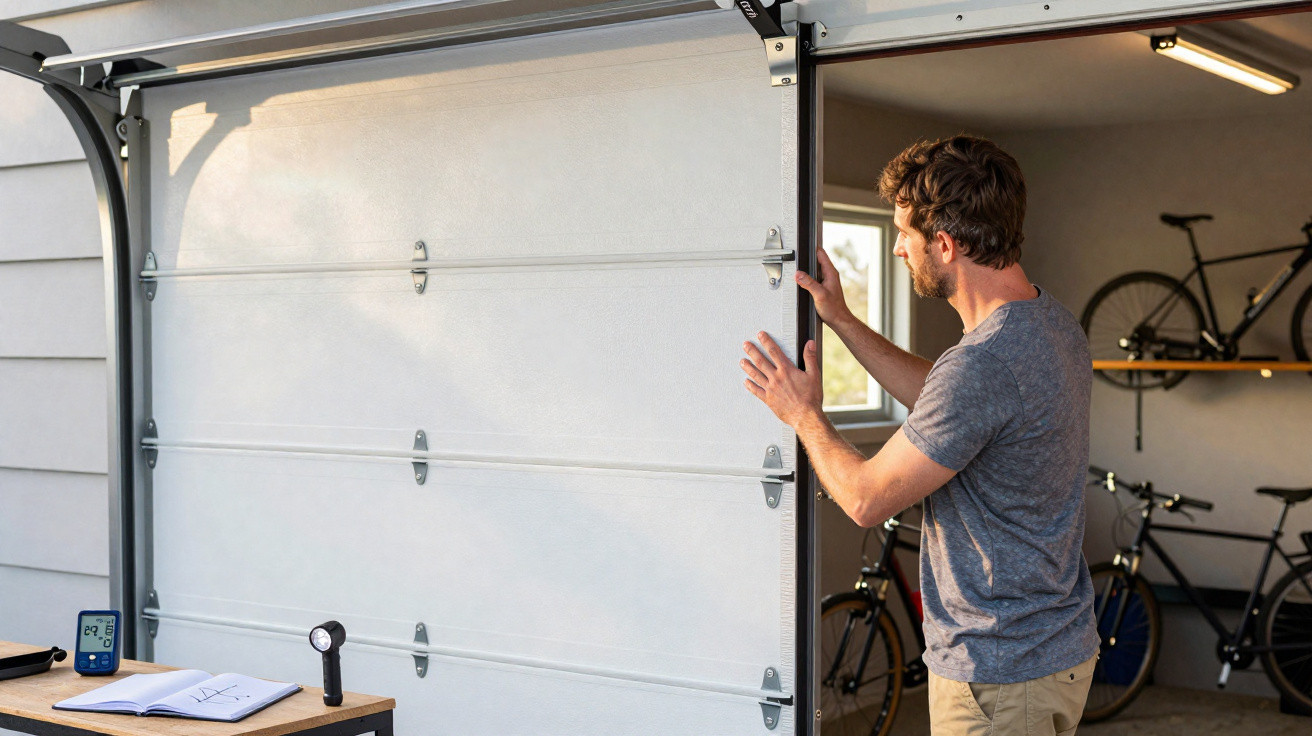
The first warning is not always a puddle or a strong smell. It may be a box of decorations going soft in a corner, mist that lingers on the car window, or the heavy feeling in the air when you open the garage in the morning. After replacing an old up-and-over door with a new, well-insulated and tightly sealed model, some homeowners encounter a puzzling paradox: their garage, once cold but dry, becomes damp. It is natural to wonder what has gone wrong. The door is new, the installation looks neat, yet the walls appear to be sweating. The change is often invisible, but it affects something very real: air is no longer moving as it did before. And moisture needs only a small opportunity to take hold.
A new garage door can remove ventilation no one had really noticed
We all know the feeling of improving a room to make it more comfortable, only for an unexpected detail to spoil the result. In many older garages, the old door allowed a constant trickle of air through worn seals, beneath the threshold or between its panels. It was neither attractive nor particularly efficient, but that leakage provided a form of natural air renewal. A modern insulated door seals far more effectively, sometimes almost too effectively for a space with no proper ventilation.
For Marc, who lives near Lille, replacing a warped wooden door stopped the draughts and reduced road noise. Three weeks later, he found droplets on the inside of his sectional garage door and greyish marks behind a metal cabinet. His garage housed a car that came in wet every evening, some logs and a tumble dryer used from time to time. Before the work, cold air entered everywhere; afterwards, moisture was trapped inside. The garage had not produced water: it had lost its escape route.
The process is straightforward, even if it seems surprising. Warm air can hold more water vapour than cold air; when it meets a cooler surface, that vapour turns into condensation. An insulated door limits heat loss, but it does not remove the water brought in by a wet car, damp flooring, clothes or gardening. Insulation is not ventilation. When air inlets and outlets have been reduced without an alternative solution, moisture eventually settles on the coldest areas: walls, ceilings, glazing, tools and cardboard boxes.
Check what is actually bringing moisture into the garage
The first useful step is simply to watch the space for a few days, without turning it into a laboratory investigation. A small hygrometer placed on a shelf is inexpensive and can reveal persistently high humidity; above 65 to 70% relative humidity, mould and condensation have favourable conditions. Also note when the air feels heavy: after parking the car, doing laundry, a spell of rain or storing freshly cut wood. This timeline often tells the story more clearly than a general impression.
It is also worth checking what may have been blocked during the installation. A low-level grille covered by a skirting board, an old ventilation gap concealed by insulation, or an external vent sealed to keep insects out: these small choices can seem harmless at the time. Yet they alter how the whole space breathes. Let us be honest: nobody checks ventilation grilles every day. Even so, a closed garage containing a wet car can release several litres of water, in the form of snow, rain or condensation, over the course of a week.
Effective ventilation does not need to be dramatic: it must allow air to enter and moisture-laden air to leave, ideally through two sides or at different heights. A ventilation specialist or a surveyor can quickly identify a lack of airflow, particularly when the garage is connected to the house.
“A high-performing door improves the building envelope; it never replaces air renewal suited to the room’s actual use.”
- Check existing grilles, both inside and on the outside wall.
- Measure humidity over several days, rather than only after a downpour.
- Keep cardboard boxes and furniture a few centimetres away from cold walls.
- Dry the car as much as possible before leaving it parked for a long period.
The right balance is not about reopening every gap
It can be tempting to leave the new door slightly open or remove a seal to restore the airflow of the past. That would be a shame: an insulated door can reduce the feeling of cold, protect stored belongings and improve the comfort of an adjoining room. The aim is not to reproduce the shortcomings of the old garage, but to introduce controlled ventilation. A correctly sized permanent grille, two opposing vents or occasional mechanical extraction may be enough, depending on the garage’s size and how it is used.
When the garage is heated, converted into a workshop, connected to the house or used as a utility room, the issue becomes even more significant. There are then more sources of moisture, and indoor air may travel towards cold walls. A dehumidifier can be helpful during a damp spell, especially after water damage or a particularly wet winter, but it does not solve the cause when air is not renewed. It is a little like mopping up without turning off the tap: useful for a while, frustrating in the long run.
This story about a garage door is a reminder of a simple reality: every piece of work changes a balance, even in a space we barely notice. Wanting less cold, dust and noise is entirely reasonable. But a garage lives with cars coming and going, the seasons, walls exposed to the outdoors and the items left inside it. Watching for signs of condensation, listening to the installer’s advice and asking where air should circulate can prevent many unpleasant surprises. True performance is not a hermetically sealed space: it is one that stays dry, healthy and usable all year round.
| Key point | Detail | Added value for the reader |
|---|---|---|
| A sealed door changes airflow | Leaks around the old door may have provided unintentional ventilation. | Understand why damp appears immediately after the work. |
| Moisture often comes from how the garage is used | A wet car, laundry, wood, damp floors and stored items add water vapour to the air. | Identify the source before buying an unnecessary solution. |
| The answer is suitable ventilation | Clear grilles, airflow and extraction where needed limit condensation. | Keep the benefits of insulation without allowing mould to take hold. |






Comments
No comments yet. Be the first to comment!
Leave a Comment