
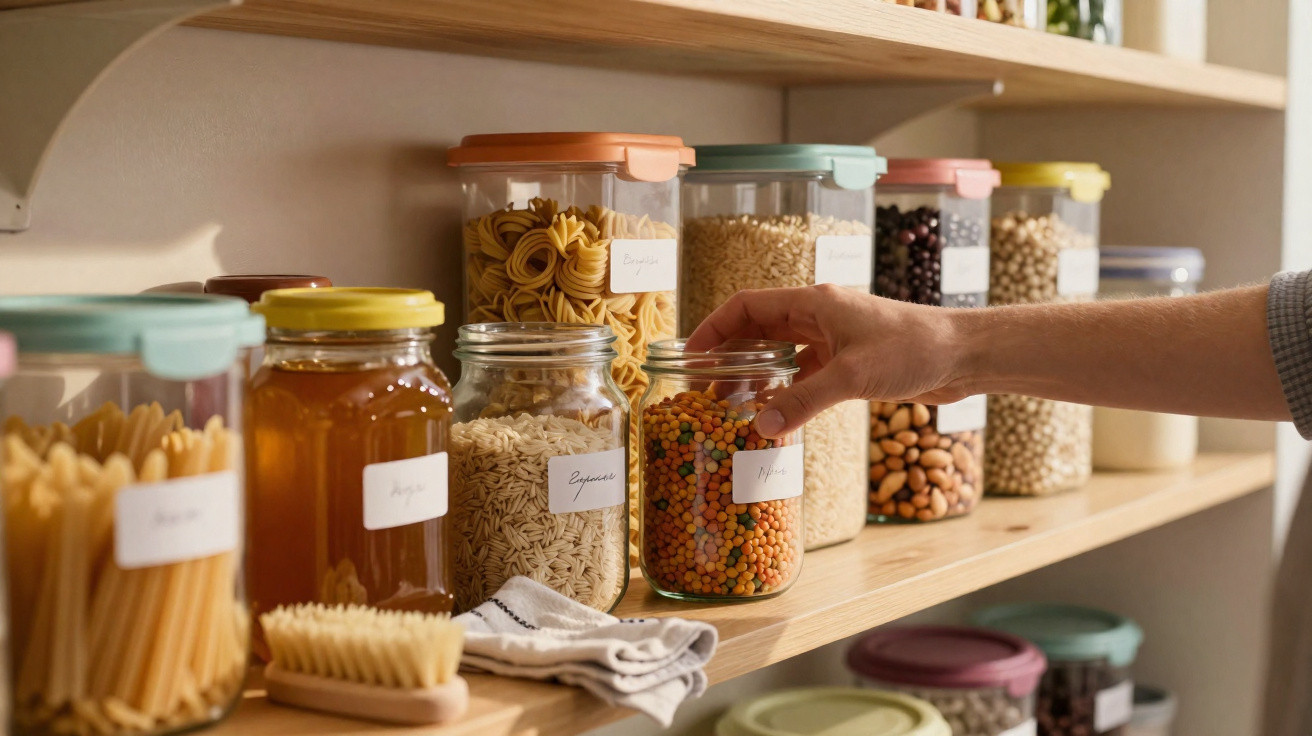
Keeping glass and plastic containers at home is often regarded simply as a build-up of empty packaging. Yet this habit can become a practical way to organise the pantry without extra expense, keeping grains, pasta, spices, seeds and biscuits better protected, visible and easy to reach every day.
How do you start organising the pantry with reused containers?
For reuse to work well, begin by sorting containers according to their material and condition. Glass jars with lids in good condition are suitable for grains, seeds and dried spices, as they seal more effectively and do not retain smells. Good-quality rigid plastic containers, meanwhile, are useful for pasta and biscuits.
It is also worth considering the shape of each container: stackable options take up less room and make it easier to organise shelves vertically. Whenever possible, choose transparent containers, as these let you see what is inside without removing the lid and make it less likely that food will be forgotten at the back of the cupboard.
How should you choose sizes and positions for more practical use?
An easy way to make everyday use simpler is to consider how often each food is used. Frequently used staples, such as rice, beans, coffee and sugar, can be kept in larger containers at the front of the shelves. Less commonly used items can go into smaller containers, placed towards the back or on higher shelves.
Choosing two or three main container sizes can also help create a degree of visual consistency. This makes shelf layouts more even, leaves less wasted space and makes it easier to group similar containers together, such as glass in one area and plastic in another, creating “sections” within the cupboard.
How can you label, clean and monitor food expiry dates?
Clear labelling prevents confusion between flours, different types of sugar or similar-looking grains. Before putting food away, it is useful to establish a small routine: label it, date it and check its expiry date, keeping the essential details clearly visible on the front of the container to make kitchen tasks quicker.
You can use a straightforward system to standardise this process:
- Food name: write it clearly in a place that is easy to see.
- Date decanted: note when the food was transferred into the container.
- Expiry date: cut it from the original label and stick it onto the new container.
When cleaning, glass containers can be washed with hot water and mild washing-up liquid, then left to dry thoroughly in the air. Plastic containers require particular attention around lids and edges, with all moisture removed before they are filled with dry foods. This helps reduce the risk of mould and changes in texture.
Which containers should be avoided when organising the pantry?
Some containers should not be returned to the pantry, even after washing, including those previously used for cleaning products, cosmetics or chemical substances. Very flexible, cracked, scratched or cloudy plastics can also affect food safety and preservation, as can warped or rusty lids.
By choosing only intact containers, standardising sizes, labelling every item and keeping them properly clean, saving packaging becomes more than simple accumulation and turns into an intelligent organising method. Food is easier to find, available space is used more effectively, and the kitchen routine becomes quicker, more functional and even more economical, with less waste.




Comments
No comments yet. Be the first to comment!
Leave a Comment