

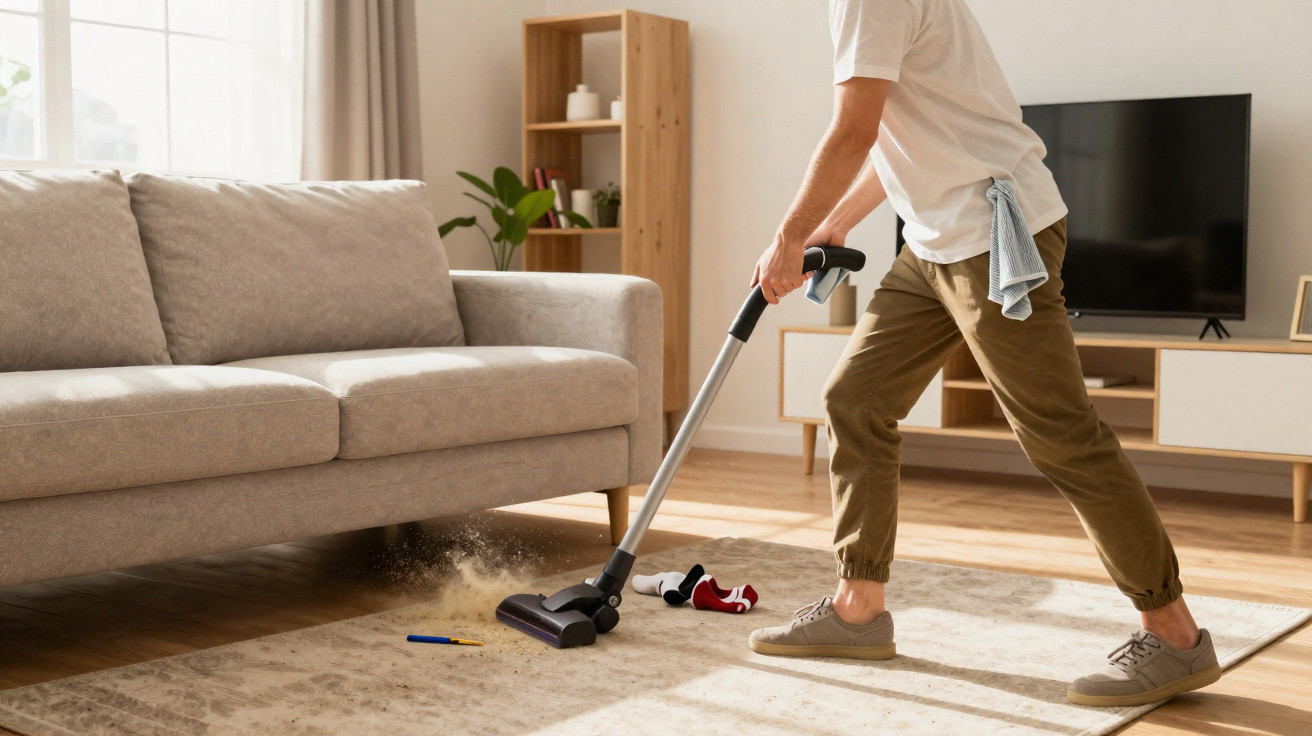
It is 8.12 am. Your coffee is cooling on the worktop, a sock is lying by the sofa, and the keys have vanished again. We all know that point when we spend three minutes looking for one thing, then another, then the motivation to properly begin the day. Clutter does not always look like a room turned upside down: it creeps into those repeated little decisions that quietly eat away at your time. The most effective hack requires neither immaculate labels nor catalogue-worthy cupboards. It comes down to one almost ordinary action. Yet it changes the feel of a home.
The real time thief is not clutter, but scattered belongings
The hack is straightforward: set up a single drop zone in every living area - a basket, tray or open box where passing items can naturally land. Post, earphones, chargers, glasses, forgotten toys and hair ties: anything that would normally end up on a table has a temporary home. The aim is not to put everything away immediately, as that approach often falls apart by Tuesday evening. It is to stop small items spreading across five different rooms. One destination is better than a good intention.
For 38-year-old Lucie, the shift began with a large woven basket at the foot of the stairs. Previously, discarded clothes, books to take upstairs “later” and things to return to someone created little piles all over the lounge. Several times a day, she would spend around ten minutes making needless trips back and forth. Now, everything goes in the same place. She empties it when she goes upstairs to bed - or she does not. After two weeks, she reckons she has reclaimed between 45 minutes and an hour on her busiest days.
The benefit comes from a very practical mechanism: every item left without a destination creates a decision for later. Where is it? Who does it belong to? Should it be moved now? These tiny questions are more tiring than they seem, particularly after a packed day. A drop zone cuts down the number of choices and shortens searches. This is not a perfect tidying method; it is a domestic survival method. Let us be honest: nobody really manages a thorough, methodical tidy every single day. Putting something into an open basket, however, takes barely a second.
The transit basket: a method that works even on low-energy days
Start by noticing where mess builds up fastest: the hallway, kitchen table, sofa or bottom of the stairs. Put a container there that is big enough to be useful, but not so stylish that you hesitate to use it. A fabric tub, wooden crate, extra-large catch-all tray or shopping basket will do the job perfectly. The rule is clear: anything that does not need dealing with straight away goes to this drop zone. No complicated sorting. No categories at the outset.
A common mistake is buying ten matching boxes and trying to reorganise the entire house in one Sunday. We know the pattern: an inspiring video, two hours of motivation, then a stack of clothes in the middle of the hallway and complete exhaustion. Keep the system deliberately modest. One basket can already take in a surprising amount of visual clutter. If it overflows, it is not a failure; it is useful information. Its position may be right while its size is not. Or perhaps an item keeps returning and finally needs a proper home.
The key is choosing a natural moment to empty the basket: before going upstairs, while starting dinner, or as the coffee brews in the morning. This habit should not become a military-style chore.
“Good organisation does not require you to be motivated: it stops you needing to be,” says home organiser Maud Ravel.
- Put the basket where items already gather.
- Keep it open and easy to reach, with no lid and no mental barrier.
- Empty it at a transition point, rather than at a fixed time.
- Accept that it may occasionally stay full for two days.
An hour saved is not a magic promise: it is time reclaimed
Saying that a basket saves an hour may sound overstated. Yet that hour does not appear in one piece, like a gift falling from the sky. It is rebuilt from key searches, trips up and down the stairs, five minutes spent moving a pile before cooking, or a quarter of an hour of improvised tidying before a guest arrives. This hack mainly tackles fragmented time - the kind we never measure. By the end of the day, it leaves more room to breathe, read, call someone or simply do nothing.
Perhaps the most interesting part is how this system changes the way you see your home. A space does not need to be flawless to feel calming. Above all, it needs to stop demanding decisions from you every 30 seconds. The transit basket allows for a kind of managed mess, without guilt or a false ideal. When children put down their things, post arrives, or you get home too late, the house absorbs the movement instead of passing it back to you. It is a small amount of breathing room, and it matters a great deal on overfilled days.
The idea can also be adapted for every household: a tray for morning essentials in the hallway, an “upstairs” box by the steps, a family tub in the lounge, or a clean-laundry basket that can wait to be folded without shame. The right system is the one you use without thinking. There is no prize for the most photogenic method. Try one drop zone for a week, see what ends up in it, then adjust. You may discover that the issue was not a lack of discipline, but the lack of somewhere to put real life.
| Key point | Detail | Added value for the reader |
|---|---|---|
| A drop zone | An open basket or tub in the most cluttered area | Fewer scattered items and less time wasted searching |
| A flexible rule | Put things down first, then sort them later at a natural moment | Realistic organisation, even on busy days |
| A useful observation | What is in the basket reveals items with no real home | Practical adjustments without reorganising the whole house |
Comments
No comments yet. Be the first to comment!
Leave a Comment