
A new study suggests that metal mining’s carbon footprint could be over ten times higher than existing estimates indicate.
The additional carbon dioxide is generated by acidic water flowing from mine sites long after extraction has ended.
Constructing wind turbines, batteries and more robust electricity grids will demand much greater quantities of copper and zinc. Yet plans to decarbonise this supply chain rely on emissions estimates that entirely omit this source.
How acid mine drainage develops
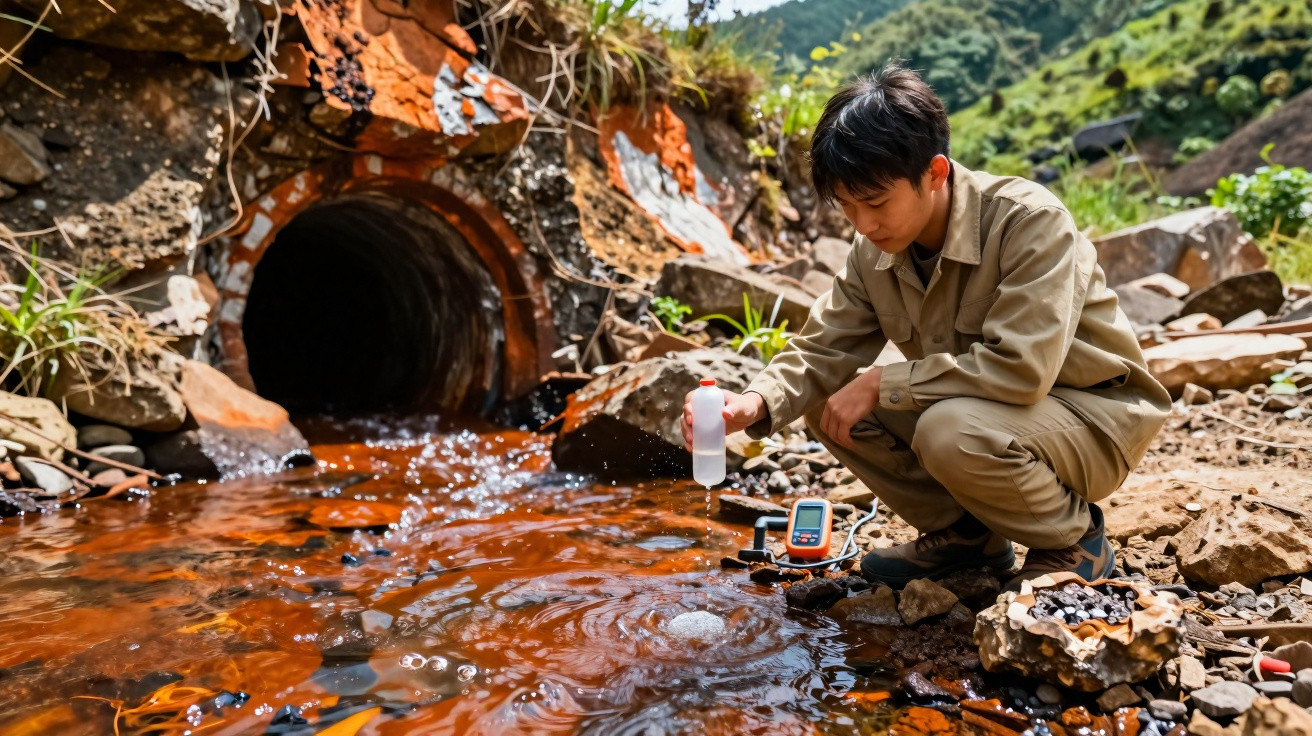
Metal ores are frequently associated with sulphide minerals. Pyrite is the most widespread rock type that links metal with sulphur. Mining brings these minerals into contact with oxygen and rain for the first time in millions of years.
As the minerals react, the drainage becomes weak sulphuric acid, carrying dissolved iron and aluminium with it. Its harmful effects on rivers are well established, but its carbon impact is not.
This acid must ultimately be neutralised. When mine drainage encounters limestone, the resulting reaction emits carbon dioxide into the atmosphere. The same process occurs in the sea, where seawater neutralises the acid and releases carbon dioxide in exchange.
One paper estimates that mining and metal production produce around one-tenth of global energy-related greenhouse gas emissions. Those calculations include diesel use, electricity and ore processing, but exclude carbon dioxide produced by acidic mine drainage.
Two of Earth’s most acidic rivers
A group led by Dr Luke Bridgestock, a geochemist at the University of St Andrews, set out to quantify this missing source. The researchers travelled to the Iberian Pyrite Belt in south-west Spain.
Nowhere else on Earth contains sulphide ore at such high density. The area contains more than 1.6 billion tonnes of ore and 82 active and abandoned mines.
Ore has been extracted there since antiquity, although the majority has been mined since 1875. Between 1873 and 2001, miners removed approximately 245 million tonnes.
The Tinto and Odiel rivers drain the region. After centuries of runoff, they rank among the world’s most acidic rivers. The Tinto is rust-red, with a pH of between 2 and 4.
The researchers sampled both rivers twice during 2024, initially in April when water levels were high. By June, the Tinto had fallen to almost no flow, with the gauge recording barely any movement.
They tested acidity and dissolved metals on site. Samples of iron were delivered to the University of Huelva within a day, before the metal could alter its form.
Where carbon dioxide is produced
About half of the acid does not make it to the sea. The rock that the water travels through first neutralises it, and this process does not release carbon dioxide.
The dissolved calcium carried by the rivers suggested that limestone might be responsible. However, magnesium concentrations ruled this out. Instead, the chemistry appears more consistent with the volcanic rock containing the ore.
The remaining half is neutralised where the rivers enter the sea, within the Ria de Huelva estuary. Throughout this mixing zone, seawater gradually loses its capacity to absorb acid.
Iron and aluminium are removed from the water as solid particles, while pH rises rapidly once the acid has finally been used up.
Laboratory tests confirm the chemistry
To verify their field measurements, the researchers combined river water and seawater in laboratory experiments. They measured the quantity of seawater required to return each sample to neutral conditions. The results matched, with field and laboratory figures agreeing to within around a tenth.
The chemical balance is not entirely exact. Seawater absorbs marginally less acid than dissolved-metal concentrations imply it should. The team believes that some sulphur becomes trapped by settling metals in minerals that only break down later.
Nobody had directly observed the gas leaving the water. The researchers instead calculated the amount produced, noting that these waters remain exposed to air for years.
Over a full year, acid drainage from mining in these two rivers emits about 32,000 tonnes of carbon dioxide.
Carbon emissions persist beyond mining
Relative to the region’s copper mining production, this equates to 0.3 to 4.2 tonnes of carbon dioxide for every tonne of metal. Standard carbon footprints for copper production range from 1 to 9 tonnes.
This overlooked source already falls within the same range as all the emissions the industry currently includes. The greater total, however, comes from processes still to occur. Waste sulphide rock continues oxidising at the surface for centuries or millennia, producing a little more acid and carbon dioxide each year.
The rock will continue reacting until it is exhausted. Once that happens, the cumulative total will be between 7 and 165 tonnes of carbon dioxide per tonne of copper extracted. That exceeds the conventional estimate by more than ten times.
“This is a shocking result,” said Bridgestock, the study’s senior author.
The ore already extracted represents a combined budget of about 80 to 155 million tonnes of carbon dioxide. At the estuary’s current release rate, it would take 2,000 to 7,000 years to work through that budget.
Mining leaves a long-term carbon legacy
The findings come as the sector’s emissions accounting continues to expand. Last year, one analysis examined forests removed for mines supplying metals used in clean energy. On average, that forest loss increased extraction’s carbon cost by 63 percent.
Decisions about remediation also matter. Treatment facilities commonly neutralise acidic mine water using crushed limestone, a process designed to release carbon dioxide.
Keeping waste sulphide in conditions where it oxidises more slowly would only spread the same emissions across a longer timeframe.
“We need to decarbonize the mining industry,” said Bridgestock.
Mining’s carbon footprint increases
Mining’s role in net-zero plans depends on accurately establishing these totals. A recent study concluded that fully electrifying mining could reduce copper’s footprint by more than tenfold.
Emissions from acid drainage would remain unaffected by that transition. As a result, they would account for most of what remains of copper’s footprint.
Before this research, the reaction was understood as chemistry without a number assigned to it. It now has a quantified value.
In a location so rich in sulphide rock, that value is substantial enough to exceed every other recorded source. Companies and regulators can now begin accounting for emissions that continue accumulating long after a mine closes.
The team’s approach can readily be applied elsewhere. Any mining area drained by a river can be assessed in the same manner.



Comments
No comments yet. Be the first to comment!
Leave a Comment