
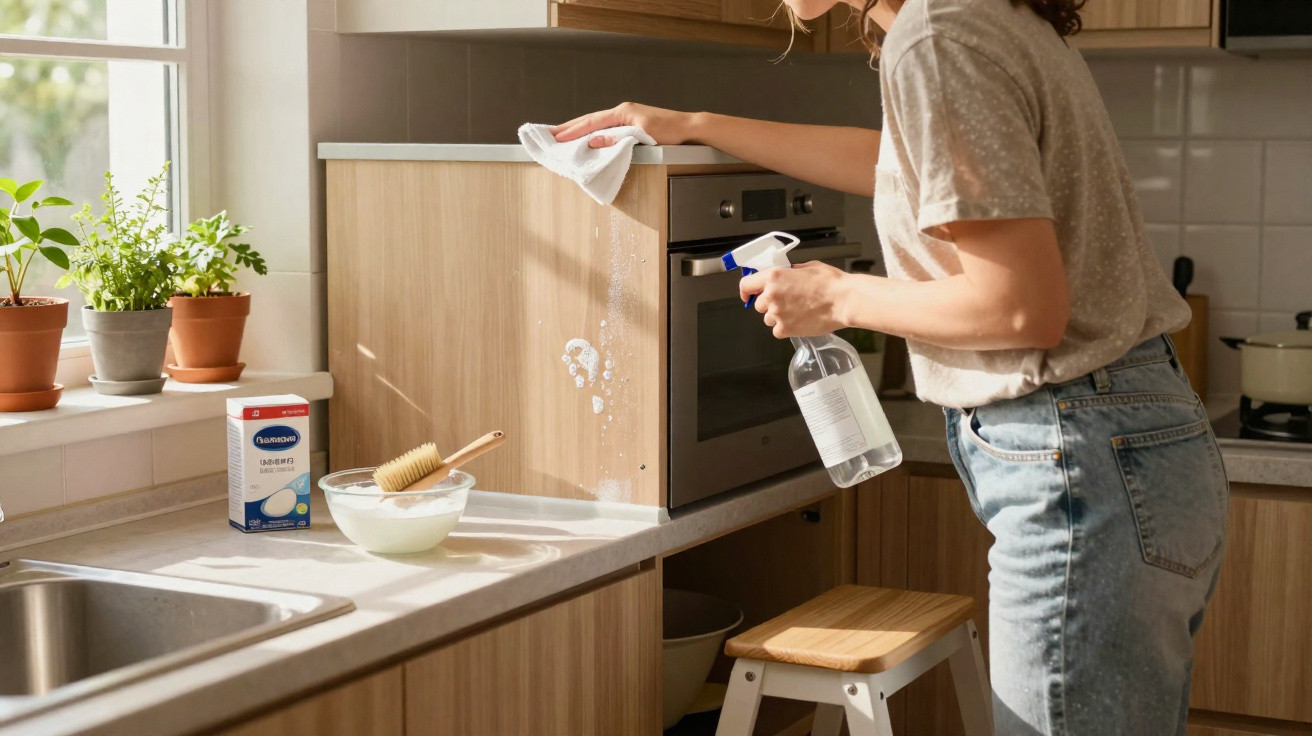
The tops of kitchen cabinets are often missed during routine cleaning, yet they can collect grease particles, dust and airborne residue released while food is being prepared. Over time, this mixture may create a sticky layer that attracts and holds even more dirt.
Why do the tops of kitchen cabinets become greasy?
When food is cooked, particularly when frying, heat can release tiny grease particles and aerosols into the room. These can settle on nearby surfaces as well as in higher areas.
Because the top of a cabinet is not usually touched or cleaned regularly, the residue remains there for longer. Dust settling on this layer can make the surface even harder to clean.
Why is the dirt so sticky?
Grease can leave a film across the surface. When dust and other particles come into contact with it, they stick to the material.
If this layer is left for months, fresh particles can build up over the older ones. The result is a type of crust that takes more effort to remove than recent dirt.
How can you clean kitchen cabinets without damaging them?
Before using any product, check the material and finish of the cabinet. Wood, coated MDF, laminates and painted surfaces may each have different cleaning recommendations.
For light dirt, start by removing dust with a dry or slightly damp cloth. Where grease is present, use a cloth with a degreasing solution that is suitable for the finish, without soaking the surface.
How often should this area be cleaned?
There is no single recommended frequency, as the amount of grease produced depends on the kitchen routine, ventilation and how close the cabinets are to the cooker. Homes where frying is frequent may need to give this area more attention.
A sensible approach is to include the tops of cabinets in regular cleaning, before the grease becomes a thick layer. Checking this area during a more thorough clean can prevent a far bigger job later on.
What helps prevent build-up?
Keeping the cooker hood or extractor fan in good working order can help reduce the amount of particles suspended in the air while meals are prepared. Ventilating the room properly also helps improve air circulation.
Another simple step is not to wait until the dirt is obvious from a distance. Running a finger or cloth over a small section of the cabinet top from time to time can reveal whether a grease film has already formed.
In this way, cleaning the tops of kitchen cabinets is not simply an aesthetic matter. Carrying out this maintenance regularly helps stop grease and dust from remaining built up for long periods and forming a layer that is much more difficult to remove.



Comments
No comments yet. Be the first to comment!
Leave a Comment