
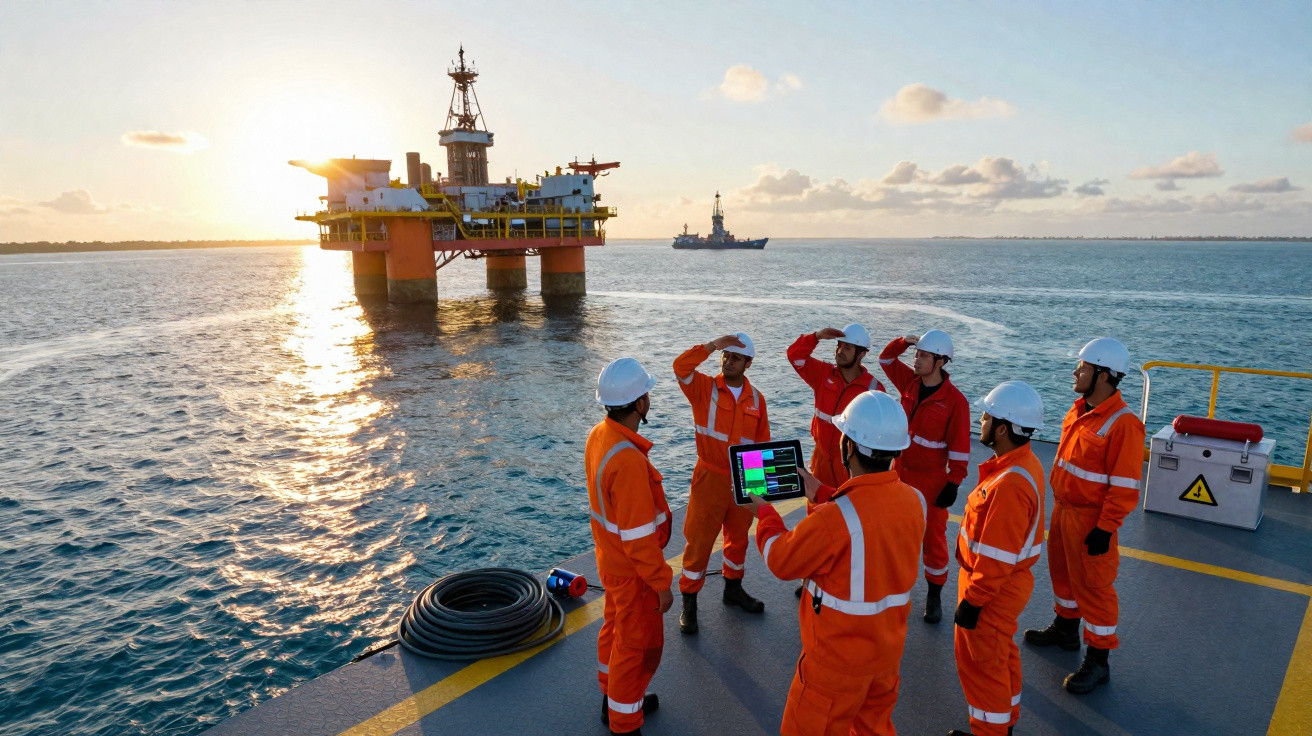
Fresh reports of a new deep-sea oil discovery are attracting attention from both the general public and experienced energy-industry professionals.
Many are asking whether the well could alter the balance of the global market, particularly while concerns about energy supplies remain in the background.
Deep-sea oil rumour confirmed
Talos Energy, a US-based company pursuing the Gulf of Mexico’s untapped potential, quietly disclosed the major deep-sea oil discovery in early September, amid the intensity of the US election season.
Known as EW 953, the well reaches roughly 5,800 metres (19,000 feet) beneath the surface and may produce between 8,000 and 10,000 barrels a day.
The proposal is to connect it to the South Timbalier 311 Megalodon platform, a host facility in which Talos has a partial interest. Walter Oil & Gas owns about 56.7%, while Talos holds about 33.3% and Gordy Oil Company has 10%.
At such an exceptional depth, the well poses a demanding engineering task, involving substantial costs and unquantifiable risks throughout the process.
Murphy Oil Corporation’s Sebastian prospect, another planned regional well expected to produce 6,000–10,000 barrels per day, is progressing on a similar schedule and will be drilled to around 3,660 metres (12,000 feet). Together, these efforts arguably form one of the Gulf of Mexico’s largest projects.
Early estimates suggest a potential combined recovery of about 15 to 25 million barrels of oil equivalent, worth around $1.89 billion.
Market ripples and economic stakes
“We are excited about the results of the Ewing Bank 953 well. The well logged better than expected rock properties, which we believe should lead to a robust initial flow rate,” enthused Joe Mills, the Interim President and Chief Executive Officer at Talos Energy.
Given those figures, energy observers are preparing for possible market changes. Fresh supply sources of this kind can alter the way oil moves around the world.
Prices may not change immediately, but traders and analysts closely monitor every new piece of information. Some may view the development as a way of reducing import pressures.
Others may regard it as an opportunity to strengthen their competitive position in international markets.
A highly productive well in a strategically important location can shift the debate over who will wield influence in future energy negotiations.
Risks of deep-sea oil drilling
The Gulf of Mexico has hosted deep-sea oil exploration for decades, and its history has not always been positive. The 2010 Deepwater Horizon disaster severely damaged public confidence in offshore drilling.
Millions of barrels of crude oil were released, inflicting serious environmental damage and provoking outrage around the world. The event remains firmly in people’s minds.
Although technology and safety procedures have advanced since that time, every new undertaking in these waters revives concerns about the possible hazards.
Preventing spills, maintaining emergency-response plans and enforcing strict safety standards are still vital. This new discovery will also be judged against the lessons of the past.
Why does any of this matter?
For investors, new wells can represent potential routes to financial growth. Local economies may hope for new jobs and increased revenues. Behind the scenes, however, caution remains paramount.
Deep-sea oil drilling invariably involves engineering difficulties, environmental dangers and regulatory scrutiny. Equipment requires frequent monitoring, while unexpected geological conditions can increase costs.
Companies have to balance these factors, and their choices are not made in isolation. Consumers, campaigners and politicians are watching closely and will help shape the next steps.
Production could begin within a few years, though that schedule may still change. Delays to equipment, political negotiations or unforeseen technical problems could alter the outcome.
The energy sector rarely follows a straightforward path. Instead, it moves through unexpected developments that leave everyone uncertain about what comes next.
Will this new well merely become part of the global supply mix, or could it ultimately change who holds power in the industry?
What happens next?
At present, the available details only reveal part of the picture. The development raises major questions about safety, finance and responsibility, and interested observers are awaiting further updates.
The energy industry is driven by surprises. Should this well meet its targets, there will likely be more discussion of its wider implications.
For now, there are only the figures, the hopes and the reminder that much remains to be watched far beneath the waves.
Read more details about this oil discovery here…






Comments
No comments yet. Be the first to comment!
Leave a Comment