
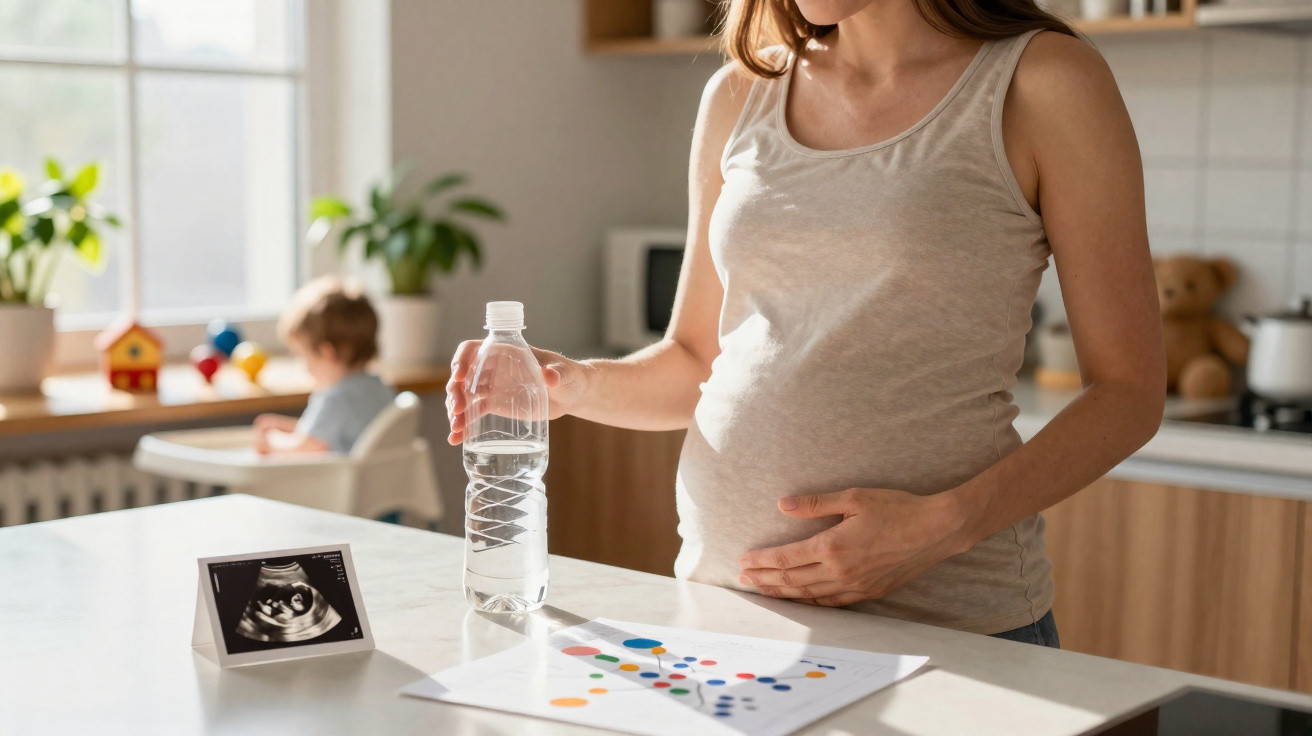
A recently published study has attracted considerable media coverage over whether plastics could have a role in the development of autism.
More specifically, the research examined exposure in the womb to bisphenol A (BPA), a chemical used in hard plastics, and the likelihood that boys may develop this neurodevelopmental disorder.
Crucially, the study does not demonstrate that plastics containing BPA cause autism.
It does, however, indicate that BPA could influence oestrogen levels in baby and school-age boys, potentially affecting their likelihood of receiving an autism diagnosis.
Here is a closer look at the findings.
What is BPA?
BPA is a chemical component of hard plastics that has been in use for several decades. As it occurs in plastics used for some food and drink containers, many people encounter small amounts of BPA every day.
Concerns about BPA's effects on health have existed for some time, because it can weakly imitate the action of the hormone oestrogen in the body.
Although this effect is limited, exposure to low concentrations throughout life has raised health concerns. As a precaution, certain countries have prohibited BPA in baby bottles, while Australia is voluntarily removing it from baby bottles.
What is autism, and what causes it?
Autism is a neurodevelopmental disorder identified through differences in social communication and repetitive and/or restrictive behaviours.
Autistic people can also experience other difficulties, including seizures, altered motor function - such as problems with fine motor coordination, including gripping a pencil or turning a key in a door - anxiety, sensory differences, sleep problems and gastrointestinal upset.
The severity of these features varies widely, meaning autistic people can have profoundly different experiences of everyday life.
To date, most research has described autistic people who can participate very effectively in their communities and may show exceptional abilities in particular fields. However, substantial gaps remain in what we know about the many profoundly autistic people who need round-the-clock care.
Genetics has a major influence on autism, with more than 1,000 genes linked to it. Yet the cause of autism remains unknown in most instances, for several reasons.
Detailed gene sequencing is not routinely carried out for autistic children. While some individual genes are clearly responsible for certain forms of autism, it is more common for autism to arise from a complex interplay among numerous genes. This is extremely difficult to identify, even through large-scale research.
Environmental influences may also play a part in autism development. For instance, some antiseizure medicines are no longer prescribed to pregnant women because their children face a higher risk of neurodevelopmental disorders, including autism.
The new research considered another potential environmental influence: exposure to BPA before birth. It comprised several elements, including research involving both people and mice.
What did the human research show?
The researchers examined a cohort of 1,074 Australian children, approximately half of whom were boys. By the age of seven to 11, 43 children - 29 boys and 14 girls - had received an autism diagnosis; their average age was nine.
Urine samples were taken from 847 mothers late in pregnancy, and the researchers measured their BPA concentrations. Their analysis then concentrated on the samples containing the highest BPA levels.
They also assessed genetic changes using blood taken from the umbilical cord at birth. This was intended to examine activity of the aromatase enzyme, which is linked to oestrogen levels. Children whose genetic changes suggested lower oestrogen levels were categorised as having "low aromatase activity".
The researchers identified an association between high BPA concentrations in mothers and an increased autism risk in boys with low aromatase activity.
For the final analysis, the team reported that there were too few girls with both an autism diagnosis and low aromatase levels for analysis. Their findings were therefore confined to boys.
What did the mouse research show?
The researchers also investigated the effects of exposure to BPA in the womb in mice.
Mice exposed to BPA in this manner showed more grooming, described as an indicator of repetitive behaviour, and less social approach behaviour, described as an indicator of reduced social interaction.
Following BPA treatment, the team also found changes in the amygdala, a brain region that plays an important role in processing social interactions.
The researchers concluded that high BPA concentrations may suppress the aromatase enzyme, changing oestrogen production and altering the growth of neurons in mouse brains.
However, there are several reasons to treat the mouse findings cautiously:
- mouse behaviour cannot be assumed to correspond directly with human behaviour
- BPA was not administered to all mice in the same way: some received injections beneath the skin, while others consumed BPA in a sugary jelly. This could affect the amount of BPA the mice actually received or the way it was metabolised
- the daily dose used - 50 micrograms per kilogram - exceeded the levels to which people in Australia would be exposed and was far above the concentrations detected in the mothers' urine during the study.
What is the key message?
An association between two factors - here, BPA exposure before birth and autism - does not establish that one causes the other.
Nevertheless, drawing on the mouse study, the researchers suggest a possible mechanism. They propose that high BPA levels could suppress the aromatase enzyme, thereby changing oestrogen production and modifying how neurons develop in mouse brains.
Has this research identified the cause of autism? On the basis of this study alone, no. Not every baby born to a woman with BPA in her urine had autism, so exposure to these plastics by itself is not enough to cause autism. A range of factors, including genetics, is likely to be involved.
The study does suggest that a gene-environment interaction may be possible: babies with particular genetic variations could be more vulnerable to BPA's effects and face a higher risk of autism. Further research would be needed to establish this.
It is important to recognise that many other potential contributors to autism have comparable levels of supporting evidence. Ultimately, the causes of autism for most people are still not known with certainty.
Elisa Hill-Yardin, Professor and Head, Gut-Brain Axis Laboratory, RMIT University
This article is republished from The Conversation under a Creative Commons licence. Read the original article.




Comments
No comments yet. Be the first to comment!
Leave a Comment