
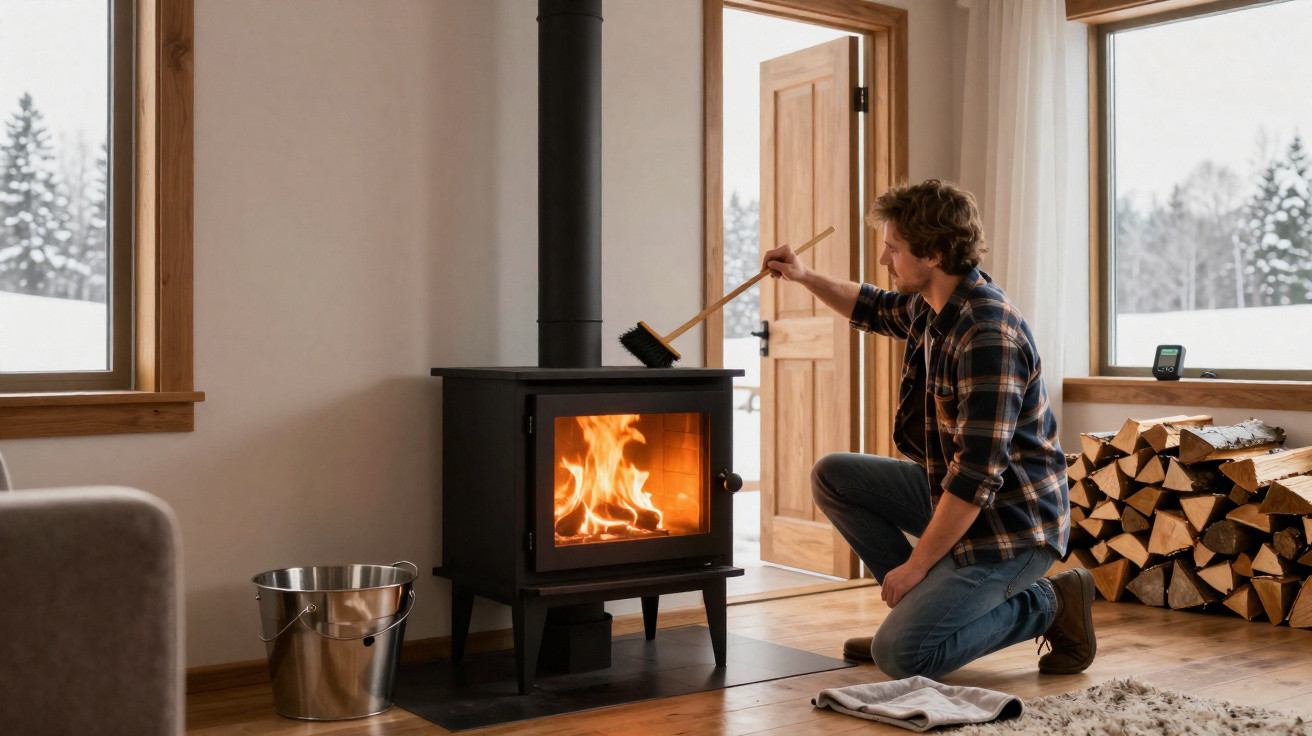
For anyone heating with a fireplace or wood-burning stove, the first thoughts usually turn to quality firewood or the best way to light it. Yet the real difference-maker is often elsewhere: in the unassuming flue above the fire. One small routine, carried out regularly, can noticeably improve heat output, reduce wood use and increase safety at the same time.
Why your wood-burning stove may be delivering less than it can
Many fireplace and stove owners notice the same issue: the appliance appears to be working as usual, yet it consumes more wood while producing less warmth than expected. In many cases, this is not a fault with the stove but a common maintenance mistake - the chimney is cleaned too infrequently or not thoroughly enough.
"A clean chimney can noticeably increase the usable heat - in some households, almost doubling it."
Over the heating season, soot, ash and tar residues build up on the chimney’s inner walls. These deposits narrow the flue, weaken the draught and interfere with the removal of combustion gases. With less oxygen available, the fire burns less effectively and converts less wood into useful heat. Energy is, quite literally, lost up the chimney before it has properly warmed the living room.
A clean chimney means more heat: the scale of the difference
When the flue is clear, the stove can operate within its optimum range: flames burn more steadily, logs burn through more evenly and the draught is balanced. As a result, more heating energy remains in the room, while less escapes as hot combustion gas.
The day-to-day effects are easy to notice:
- The room reaches a comfortable temperature more quickly.
- Less wood is needed to achieve the same temperature.
- The stove-door glass takes longer to become sooty.
- The stove responds more effectively to air and heat controls.
It also reduces the risk of chimney fires and toxic combustion gases. The same deposits that restrict the draught can, in extreme cases, ignite or obstruct exhaust gases to the point that carbon monoxide enters the room.
How to maintain your chimney correctly
In Germany, combustion regulations require regular inspections and sweeping by a chimney sweep, with requirements varying by state. These appointments do not replace basic upkeep; instead, they form its compulsory foundation. Between visits, there are several things you can do yourself to help maintain performance.
Support chimney cleaning regularly
- Sweep mechanically with a brush attachment: A chimney brush can be pulled through the flue from above or below. For experienced DIY users, doing this as an additional measure once or twice during the heating season is sufficient - around every three months if the stove is used frequently.
- Use cleaning logs: Special chimney-cleaning logs are placed on the fire in the same way as ordinary firewood. Their released substances loosen some of the deposits. They are not a replacement for professional cleaning, but they can help keep the residue soft and thin.
- Clean the stove pipe as well: With exposed stove pipes, it is worth checking the connections. If a section can be removed easily, it can also be cleaned with a brush.
"The cleaner the route taken by the combustion gases, the more easily the stove draws and the more efficiently it converts wood into heat."
Quality firewood is half the maintenance work
The fuel you choose also determines how quickly deposits accumulate in the chimney. Damp wood creates large amounts of smoke and condensation, which in turn produce sticky residues.
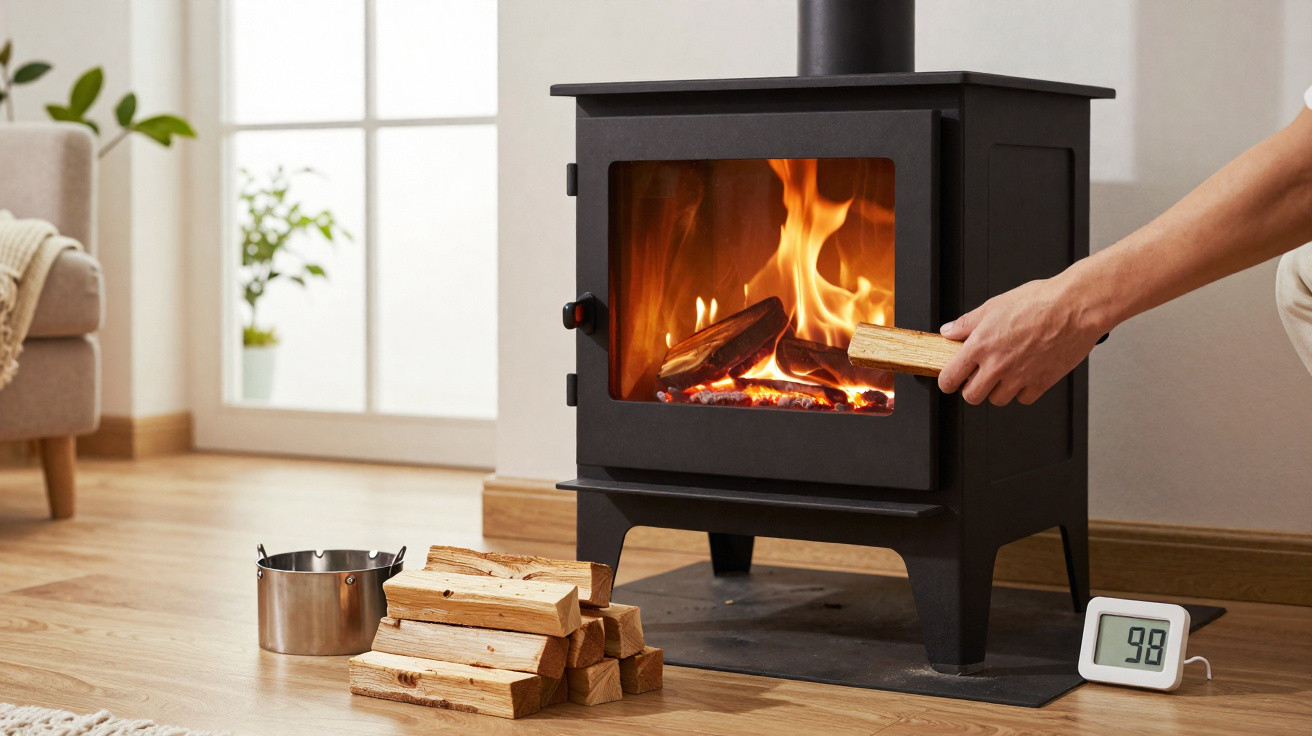
- Aim for a wood moisture level below 20 per cent, using a moisture meter.
- Use wood that has been air-dried for at least two years.
- Choose proven hardwoods such as beech or oak where possible.
- Store it in a well-ventilated, covered place and never directly on the ground.
Using dry, high-quality wood consistently automatically means less soot in the flue - and, in the long run, better performance.
Warning signs that your chimney needs urgent attention
Your chimney will effectively "tell" you when something is wrong. Several signs should be taken seriously:
- A strong, acrid smell of soot in or near the stove.
- Smoke flows back into the room even though the dampers are correctly positioned.
- The stove takes significantly longer to give off noticeable heat.
- Wood consumption rises without the living space becoming genuinely warmer.
- Crackling or popping sounds come from the chimney despite only embers remaining in the stove.
If any of these signs occur, do not wait several weeks; arrange for a chimney sweep to attend promptly. They can clean the chimney and assess whether there is a safety risk.
Controlling combustion properly to gain the final percentage points
A clean chimney is the foundation, but the way you operate the stove also affects its efficiency.
The best start to an evening of heating
- Build up the temperature gradually: Do not begin with an excessively full, intensely hot fire. Start with only a few thinner logs, then add more step by step. This protects the chimney and provides steadier warmth.
- Avoid damp wood completely: Dripping logs or musty wood produce very little useful heat but a great deal of smoke.
- Do not overfill the stove: Loading too much wood at once starves the fire of air, causing the flames to become dull and reducing efficiency.
Use the air supply intelligently
The stove’s air controls are not decorative; they are your most important tool for balancing efficiency and comfort.
- Give the fire more air at the start so that it establishes itself cleanly.
- Once strong flames are burning, reduce the air gradually until a calm, bright fire remains.
- Dark, sluggish flames or heavy smoke indicate that there is too little air.
"A well-adjusted air supply saves wood, keeps the glass cleaner for longer and reduces soot formation in the chimney."
Noticeable savings: how maintenance benefits your budget
Those who sweep regularly, burn dry wood and set the air supply correctly often need to refuel the stove far less often. Over long winters, the benefits add up:
- fewer wood deliveries per season
- lower fine-particle pollution around the home
- less cleaning caused by blackened glass and large piles of ash
- less risk of costly chimney damage
In many homes, these measures can reduce wood consumption by a worthwhile amount without sacrificing a warm living space. With energy prices rising, this is a lever that should not be underestimated.
Understanding soot, glazed soot and carbon monoxide
Anyone heating with wood soon comes across specialist terms. Some deserve closer attention because they relate directly to both performance and safety.
- Soot: A black, dry deposit made up of incompletely burnt particles. It forms when there is insufficient air or the wood is damp.
- Glazed soot: A hard, shiny layer that is highly combustible. It points to consistently poor combustion and is considered a principal trigger for chimney fires.
- Carbon monoxide: An odourless, poisonous gas created during incomplete combustion. A blocked chimney can force it into living spaces. A carbon monoxide alarm near the stove provides additional protection.
Practical example: how a chimney "spring clean" can transform winter
Many stove owners report that, after a thorough sweep, they suddenly feel as though they have a new appliance: the flames burn far more steadily, the room warms sooner, and the amount of wood required for refuelling is an amount that would previously have barely registered.
Anyone wanting to test this in their own home should ideally carry out a small reference evening before cleaning: use the same outdoor temperature, the same type of wood and a similar heating duration. Repeat the test after the cleaning, paying attention to the time needed to reach a comfortable temperature, the quantity of wood used and the behaviour of the flames. The difference surprises many people - and encourages them to continue the new routine.
Ultimately, it is this combination of small steps carried out consistently: a clean chimney, dry firewood and conscious control of combustion. Following these principles turns a fireplace or wood-burning stove from a cosy open fire into a serious heat source that combines living comfort with sensible savings.
Comments
No comments yet. Be the first to comment!
Leave a Comment