
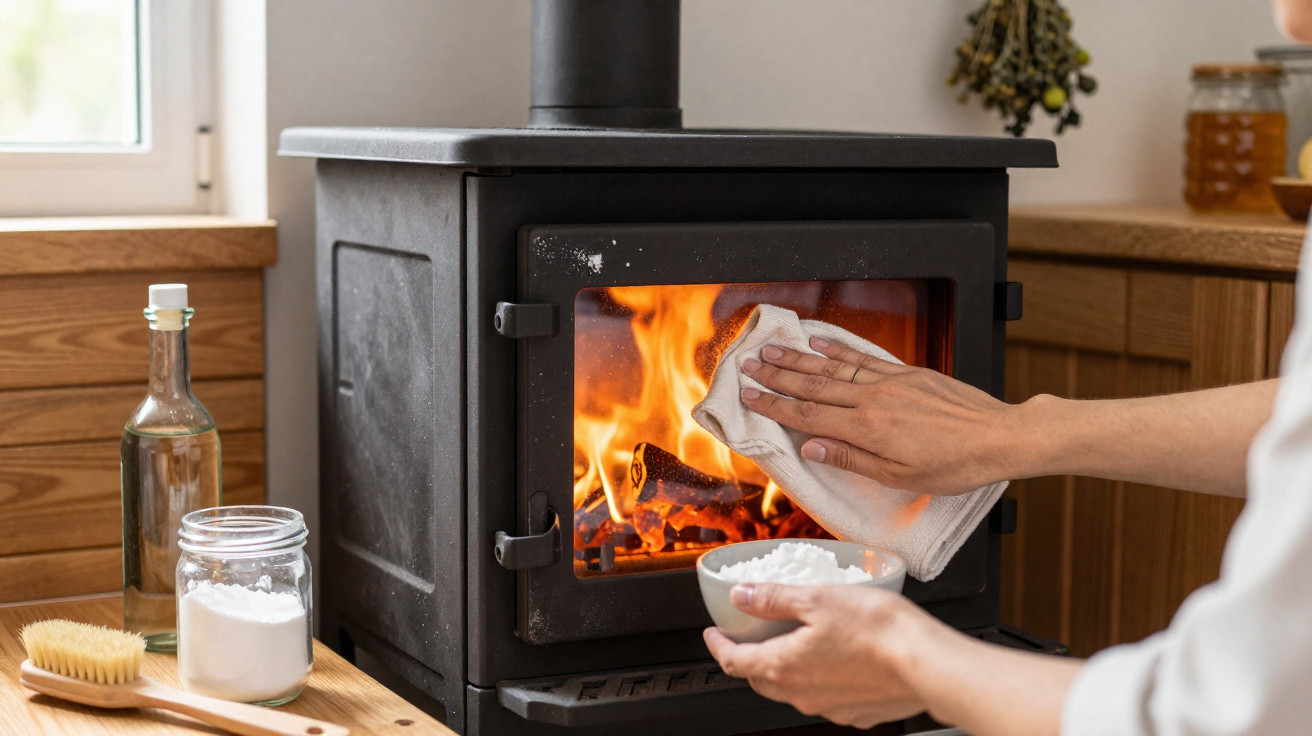
With a simple household remedy trick, it can be made crystal clear again in moments.
Many stove owners instinctively use ash to clean the glass. It works to a degree, but it is messy and soon becomes tiresome. What is less widely known is that soot can also be removed with a different, far more pleasant mixture – without specialist cleaner and without a chemical smell in the home.
Why the glass on a wood-burning stove turns black so quickly
Before reaching for the cleaning bucket, it is worth considering the cause. Once you know the weak points, you will need to scrub the glass far less often.
- Poor-quality or damp wood
Firewood with a high moisture content produces more smoke. That smoke contains more particles, which settle on the glass. Well-seasoned wood with less than 20 per cent residual moisture is ideal. - Incomplete combustion
When a fire merely smoulders, it creates more soot and tar deposits. This is often caused by insufficient airflow or combustion temperatures that are too low. - Incorrectly adjusted air controls
If the primary air supply is restricted too much, there is not enough oxygen. The wood then tends to smoulder rather than burn cleanly – leaving a dark layer on the glass. - Continuous operation in economy mode
Many people turn their stove down too far to save fuel. While this may save money in the short term, it eventually spoils the view of the flames and encourages deposits in the flue pipe.
“Anyone who ensures adequate airflow and uses dry wood will need to clean their stove glass much less often.”
The straightforward alternative to ash: vinegar and bicarbonate of soda
Rather than dealing with grey ash sludge, there is a much more pleasant option: ordinary clear household vinegar, with an acidity of around 5–10%, and bicarbonate of soda. Both products are already found in many kitchen cupboards.
Why this combination works so well
- Vinegar loosens greasy films and soot
The acid in vinegar attacks organic residue and softens the blackened layers. - Bicarbonate of soda acts like a gentle scouring powder
Its fine crystals help lift the coating mechanically without scratching the glass surface – provided you use a soft cloth. - The reaction enhances the cleaning effect
When the two substances meet, they create gentle fizzing. This movement helps to lift stubborn particles away from the glass.
“Vinegar plus bicarbonate of soda replaces expensive specialist cleaner – and leaves no concerning residue in the firebox.”
Step by step: how to make wood-burning stove glass clear again
Step 1: Mix the cleaner
A small bowl or an old jam jar is all you need for the cleaning mixture.
- Pour in 2 parts clear household vinegar
- Add 1 part bicarbonate of soda
- Wait briefly until the initial foaming subsides
There is no need to measure the ingredients with precision. As long as vinegar is the dominant ingredient, the mixture will remain easy to spread.
Step 2: Prepare the stove
- Let the stove cool completely – the glass must be cold.
- Remove any large ash remnants from the firebox with a shovel or brush.
- Place an old towel underneath to prevent drips reaching parquet flooring or carpet.
Step 3: Apply the cleaner
- Dip a soft sponge or microfibre cloth into the mixture.
- Work it over the sooty areas in circular motions.
- Allow 1–2 minutes for heavier deposits to loosen.
Depending on the level of dirt, one application may be enough. For very thick layers, repeat the process.
Step 4: Wipe and dry
- Use a clean, lightly damp cloth to remove the remaining solution.
- Buff with a dry cloth or kitchen paper until no streaks remain visible.
“With a little routine, the entire cleaning job takes only a few minutes – much less time than many people fear.”
Other natural methods for quick cleaning
If you have no bicarbonate of soda or vinegar at home, other everyday products can also be used.
- Black soap
Add a squirt to warm water, apply it with a sponge, then wipe over with clean water. It gently removes grease and soot residue. - Methylated spirits or household alcohol
Put some on a cloth and rub it over the glass. This works particularly well on greasy deposits. Ensure good ventilation and never use it near naked flames. - Hot water and newspaper
A traditional method: crumple the paper, dampen it, dip it into a little fine ash and rub it over the glass. It is more suitable for lighter soiling.
How to keep stove glass clean for longer
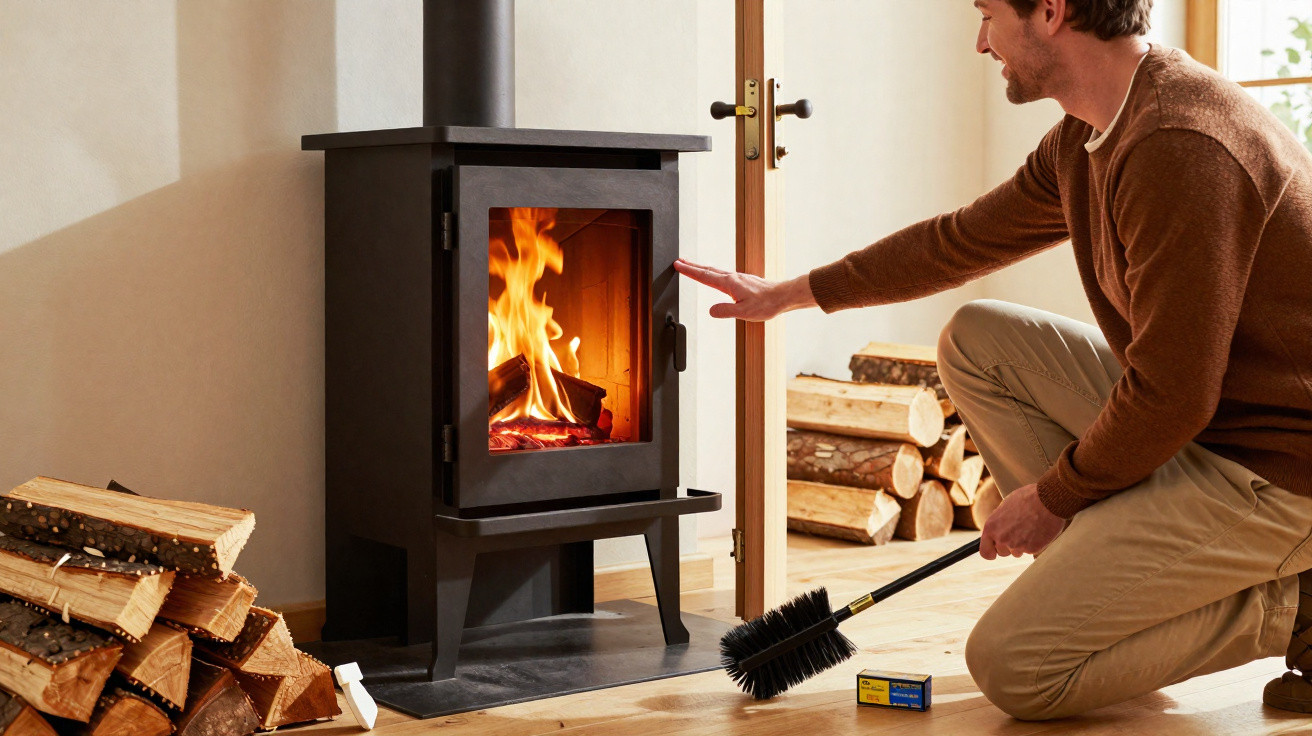
Running your stove sensibly saves a great deal of cleaning effort. A few habits make all the difference.
- Use dry firewood only
Store wood for at least two years, ideally somewhere well ventilated and protected from rain. Use resin-rich softwoods only for lighting the fire. - Do not suffocate the fire
During the lighting phase, let it burn strongly rather than reducing the air supply too soon. The stove will heat up faster, and soot will burn off more effectively. - Check the air controls regularly
Follow the manufacturer’s instructions and do not keep the stove on its lowest setting continuously. If you are unsure, a chimney sweep can show you the basic setting. - Clean lightly on a regular basis
It is better to give the glass a quick wipe once a week than tackle a centimetre-thick layer every few months.
Household remedies instead of harsh chemicals: why switching makes sense
Shops offer a range of glass cleaners specifically for wood-burning stoves. Many contain strongly alkaline or aggressive substances. These can put strain on the seals around the glass and often irritate the skin and respiratory system during use.
“Vinegar and bicarbonate of soda cost only a few pence per use, need no warning symbols and can be used in many ways around the home.”
This approach can also feel more relaxed for households with children or pets. Any residue in the firebox is of little consequence the next time the stove is lit and breaks down into harmless components. Anyone who values the healthiest possible indoor air benefits twice over.
When professionals are needed – and what you can do yourself
If the glass becomes heavily sooted again extremely quickly despite cleaning, the issue may be more than simply “poor-quality wood”. Possible causes include:
- Draught problems in the chimney
- A stove that is incorrectly sized for the room
- Faulty or jammed air dampers
In these cases, it is worth speaking to a chimney sweep or stove installer. At the same time, check whether you are splitting the wood into pieces that are too large, stacking it too tightly or overfilling the firebox. Small, well-arranged loads of wood burn far more cleanly than an overstuffed firebox.
Practical tips from everyday stove ownership
Over time, many users develop their own routines. Here are three examples that have proved useful in daily life:
- Link cleaning day to a planned break from using the stove, such as your weekend cleaning routine.
- Keep a small kit containing vinegar, bicarbonate of soda, a sponge and a cloth near the stove – this makes it easier to give it a quick wipe.
- Light a strong fire straight after cleaning. This dries the glass and burns off any final residue on the surface.
Anyone who adopts these simple strategies will enjoy an uninterrupted view of the flames for the long term and get considerably more comfort from their wood-burning stove – without expensive specialist cleaners or hours of scrubbing.





Comments
No comments yet. Be the first to comment!
Leave a Comment