
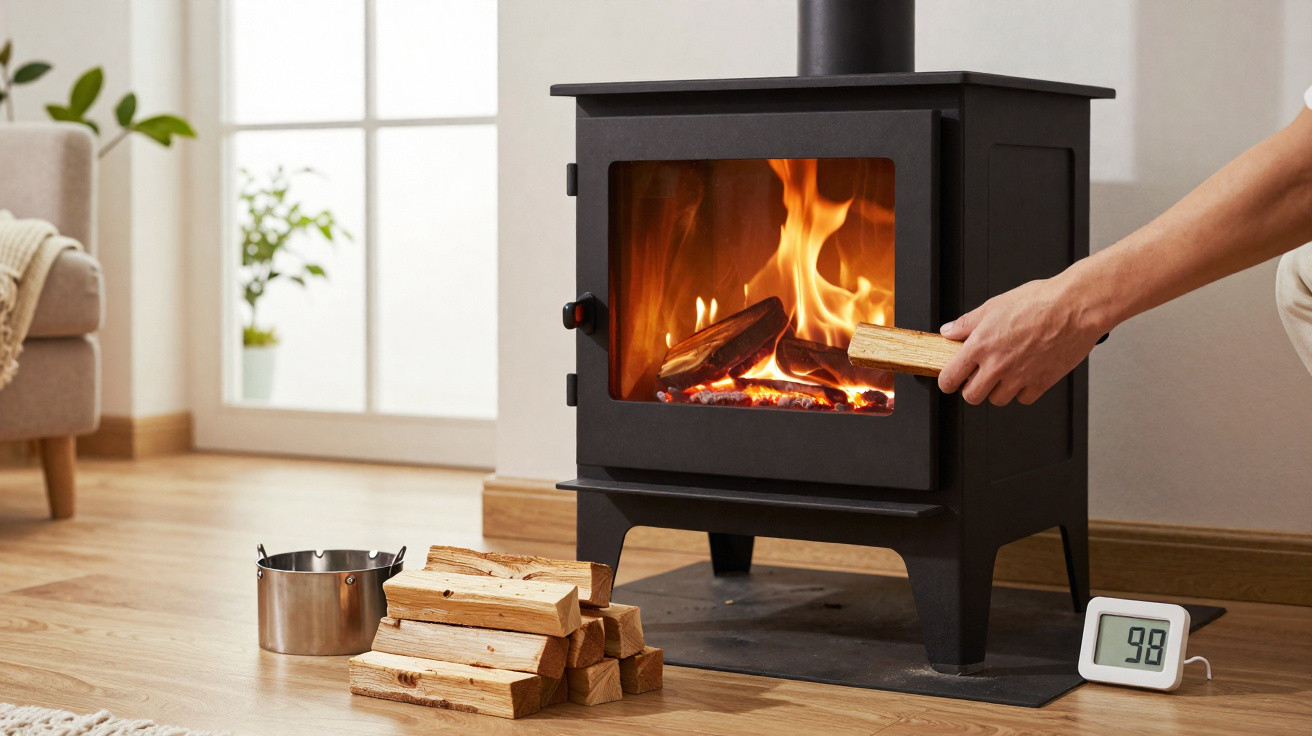
More and more households are questioning their reliance on traditional firewood and choosing a product that was long dismissed: highly compressed wood briquettes. These compact fuel blocks promise considerably more heat from less material, while also saving storage space and being kinder to the chimney.
What modern wood briquettes are really made from
These “new” logs are essentially a familiar concept refined through technology: wood briquettes made from compressed residual materials. Rather than splitting whole logs, manufacturers use sawdust, wood shavings and other timber offcuts from sawmills and joinery workshops.
The remnants are pressed together under immense pressure, with no resin, glue or other chemical additives. Lignin, which occurs naturally in the wood fibres, acts as a binding agent and holds the material together. This produces highly dense, uniform briquettes, either cylindrical or in a “beech-log format”.
The high compression and low moisture content mean that one briquette can provide as much heat as three to four ordinary logs.
Anyone who has stored a stack of freshly delivered wood in the garden will know that much of it is simply water. Briquettes reverse that balance in favour of heating performance.
Why the heating performance is so much greater
Low moisture, high energy
The key difference compared with conventional stove wood is its moisture content. In reality, air-dried firewood contains 20 to 25 per cent residual moisture, while poorly stored wood can contain substantially more. Modern compressed briquettes are often below ten per cent.
- less water vapour in the flue gases
- more usable heat in the room
- cleaner combustion with less soot
Rather than first having to “evaporate” water, a greater share of the energy locked into the wood is immediately available as heat. This becomes apparent when refuelling: the stove heats up more quickly and maintains its temperature for longer.
High density, longer-lasting embers
Because they are so heavily compressed, one cubic metre of briquettes contains considerably more wood mass than one cubic metre of ready-to-burn logs. Practical experience and manufacturers’ data indicate similar figures:
| Fuel | Volume | Roughly equivalent to |
|---|---|---|
| Wood briquettes | 1 m³ | approx. 4 m³ of split firewood |
| Firewood (air-dried) | 1 m³ | Reference value |
This high density produces two noticeable effects: the flame lasts longer, while the stove burns more steadily without major temperature swings. This can feel particularly more comfortable in well-insulated homes than a constant cycle of rising and falling heat.
Cleaner, more convenient and less work
Less mess in the living room
People using briquettes instead of conventional logs soon notice an everyday benefit: considerably less debris around the fireplace. There is barely any loose bark or wood splinters, and the volume of ash is also lower.
Many users only need to empty the ash pan every few days – rather than every day.
As briquettes burn almost completely, little unburned material remains. This also benefits the chimney, as less soot and tar deposits build up, which can reduce the risk of a chimney-flue fire.
Easier to store and carry
Storage requirements are a strong selling point for city residents or anyone with a small garage. Instead of stacking several metres of wood, a much smaller corner is enough for a few bags of briquettes. The fuel is packaged dry and ready for immediate use, removing the need for lengthy drying times.
In addition, many briquettes can be stored conveniently in cardboard boxes or plastic-wrapped packs in a cellar or dry shed. There is no hassle with wood stacks on property boundaries, no pest infestation, and fewer spiders, beetles and fungi in the storage area.
How to use compressed briquettes correctly
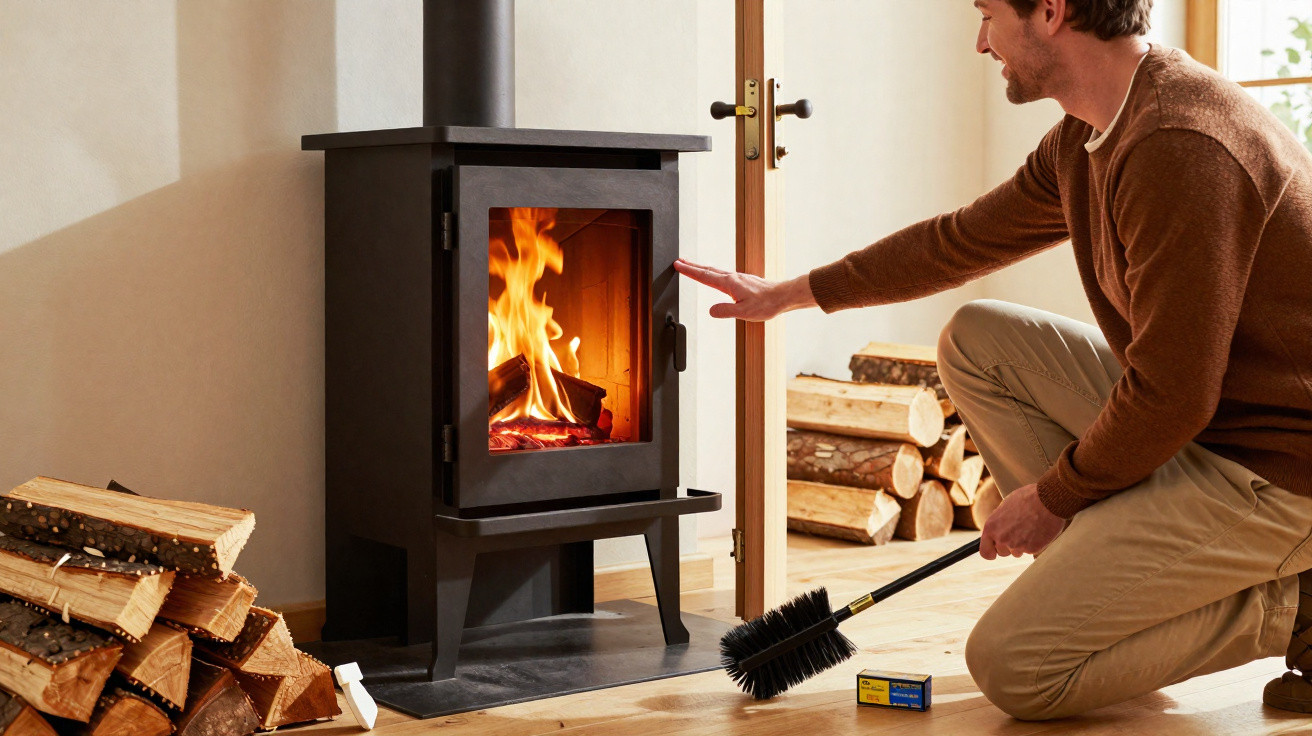
Starting the stove properly
Most briquettes do not ignite as readily as thin kindling, but they burn more consistently once alight. The following method has proved effective for a clean start:
- place 2–3 eco firelighters in the stove
- layer thin kindling or a smaller briquette piece on top
- light the firelighters and initially open the air supply wide
- only add one or two large briquettes once a stable flame has formed
Loading large quantities into the stove too early wastes energy and can overload the firebox. It is sensible to follow the manufacturer’s guidance on the maximum fuel weight for each load.
Caution: temperatures can become very high
As briquettes deliver so much energy in such a small volume, stove temperatures can rise rapidly. For older models without a temperature display, a simple stove thermometer on the door or flue pipe is worthwhile. If the temperature remains in the red zone, material damage may result.
It is also important to check the operating manual: not every wood-burning stove or fireplace cassette is designed for continuously high output. Some manufacturers provide specific instructions on suitable fuels, loading quantities and airflow management.
Comparing briquettes with traditional firewood
Heat output and everyday convenience
Per kilogram, briquettes provide roughly the same calorific value as very well-dried hardwood. The difference in convenience lies in handling: less refuelling, fewer fluctuations and more predictable heat output. Anyone who does not want to go to the stove every 30 minutes after work will benefit.
The “fire experience” is different, however: many people enjoy the crackling, imperfect play of flames created by real logs. Briquettes burn more calmly, often with a more even flame. Combining both fuels can be a good compromise.
Sustainability and air quality
There are several environmental arguments in favour of compressed fuel blocks: they are made from materials that would otherwise arise anyway. Sawdust is turned into a useful energy source rather than being disposed of or used in lower-value applications. This helps protect forests because less whole timber is burned directly in stoves.
Lower moisture levels and more complete combustion reduce particulate pollution compared with damp or poor-quality firewood.
This is especially relevant in densely populated areas with many individual stoves. It means less smoke, less odour nuisance for neighbours and fewer deposits in chimneys.
Who benefits most from switching to wood briquettes
Typical practical uses
Many users now deploy briquettes for specific purposes, for example:
- as an evening base load to keep the home warm for several hours
- in weekend homes where people want to move quickly from “cold” to “comfortable”
- in small city flats, where every square metre of storage space matters
- for people who no longer want to carry heavy firewood
Anyone operating a water-heating fireplace or a very high-output stove should take particular care when measuring fuel quantities. The high energy density can place considerable demands on the heating system. In such cases, consulting a heating engineer or chimney sweep is advisable.
What to look for when buying wood briquettes
The market is growing rapidly and quality varies greatly. Several factors can help with selection:
- manufacturer information on moisture content, ideally below 10 per cent
- origin of the raw material, using certified timber sources and preferably no tropical hardwood
- dimensional stability: briquettes should not crumble when handled
- clear labelling confirming that no chemical additives are used
When trying new varieties, it is best to buy small quantities first and assess their behaviour in your own stove: How quickly do they ignite? How long do the embers last? How much ash remains? This makes it easier to identify the variety most suited to individual needs.
How daily heating changes with briquettes
Compressed briquettes make heating more predictable: it is possible to estimate fairly precisely how long a particular quantity will heat a room of a given size. This helps with calculating costs and managing fuel stocks.
At the same time, one important principle remains: anyone heating with wood, in any form, carries responsibility. A suitable stove, correct operation and regular inspections by a chimney sweep ensure that this heating method delivers powerful warmth while remaining safe and as clean as possible.
Comments
No comments yet. Be the first to comment!
Leave a Comment