
Ursula von der Leyen, President of the European Commission (EC), today set out three strategic pillars at the European Parliament to bring down living costs and strengthen industry across Europe: a commitment to nuclear power, the Small Affordable Cars Initiative for affordable small electric cars, and European battery production.
Nuclear power and Europe’s energy independence
In her State of the European Union address, von der Leyen identified nuclear power as a central component of the continent’s energy independence. “We have to produce more home-grown renewables - with nuclear as a baseload energy source,” she said.
According to the Commission President, this is the only way to secure affordable energy for households and businesses while keeping Europe competitive worldwide. It marks a complete reversal in European energy policy after years of measures that led to the closure of several nuclear power stations, particularly in Germany.
The plan also seeks to stabilise energy prices and lessen reliance on Russian fossil fuels. To achieve this, the EC announced a package to strengthen energy grids, alongside a new Energy Highways Initiative. It is intended to remove the eight bottlenecks identified in European infrastructure, from the Öresund Strait, which connects Denmark and Sweden, to the Strait of Sicily. Further details of the scheme are expected in the coming days.
The return of the people’s car
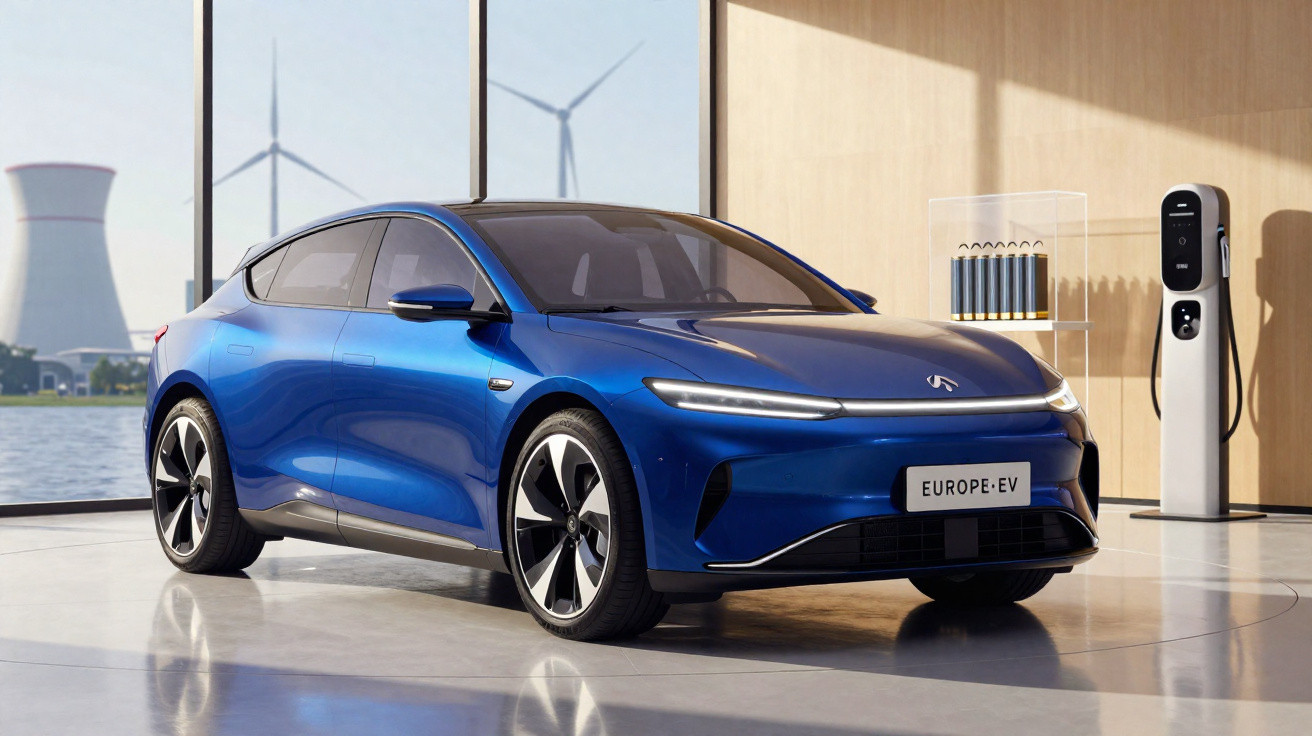
While energy is one pillar, the motor industry is another. Against this backdrop, von der Leyen unveiled the Small Affordable Cars Initiative, a programme designed to revive the manufacture of affordable small electric cars built in Europe with local supply chains. The first details can be found in this article:
The Commission President said these cars must be “(e)cological, (e)conomical and (e)uropean”: “(E)-cars”. The programme complements the easing of 2025 CO₂ (carbon dioxide) targets and the review scheduled for 2035, while also responding to China’s push into the low-cost electric vehicle market.
“Millions of Europeans want to buy affordable European cars. So we also have to invest in small, affordable vehicles.”
Ursula von der Leyen, President of the European Commission
The figures underline the urgency. In 2019, more than one million cars costing less than €15,000 were sold in the European Union; today, annual sales do not even reach 100,000. Renault and Stellantis had already called for an “M0 class”, a kind of European kei car. Brussels now appears to be moving in the same direction.
“Whatever it takes, the future is electric. Europe will be part of that future. The cars of the future - and the future of cars - must be made in Europe,” she added.
Batteries made in Europe
Von der Leyen’s address also reiterated the need for an Industrial Accelerator for strategic sectors, including batteries, clean technologies and digitalisation, as well as a “Made in Europe” criterion for public procurement contracts.
Until recently, this strategy was based largely on a commitment to Northvolt, but the results have been catastrophic.
The EC will introduce the “Battery Booster Package”, providing €1.8 billion in equity capital to strengthen production in Europe. “Batteries are a key enabler for other clean technologies - especially electric vehicles. This is why they are at the heart of our independence,” the President said.
For the Commission, the objective is to create a new cycle in Europe - or at least reverse the present one: supply and demand would reinforce one another, production would increase, and prices would fall. Through these measures, the European Commission aims to make the future of the economy progressively less dependent on imports.
“We have to make sure our industry has the raw materials it needs here in Europe. And for that, the only answer is to create a truly circular economy,” she concluded.



Comments
No comments yet. Be the first to comment!
Leave a Comment