
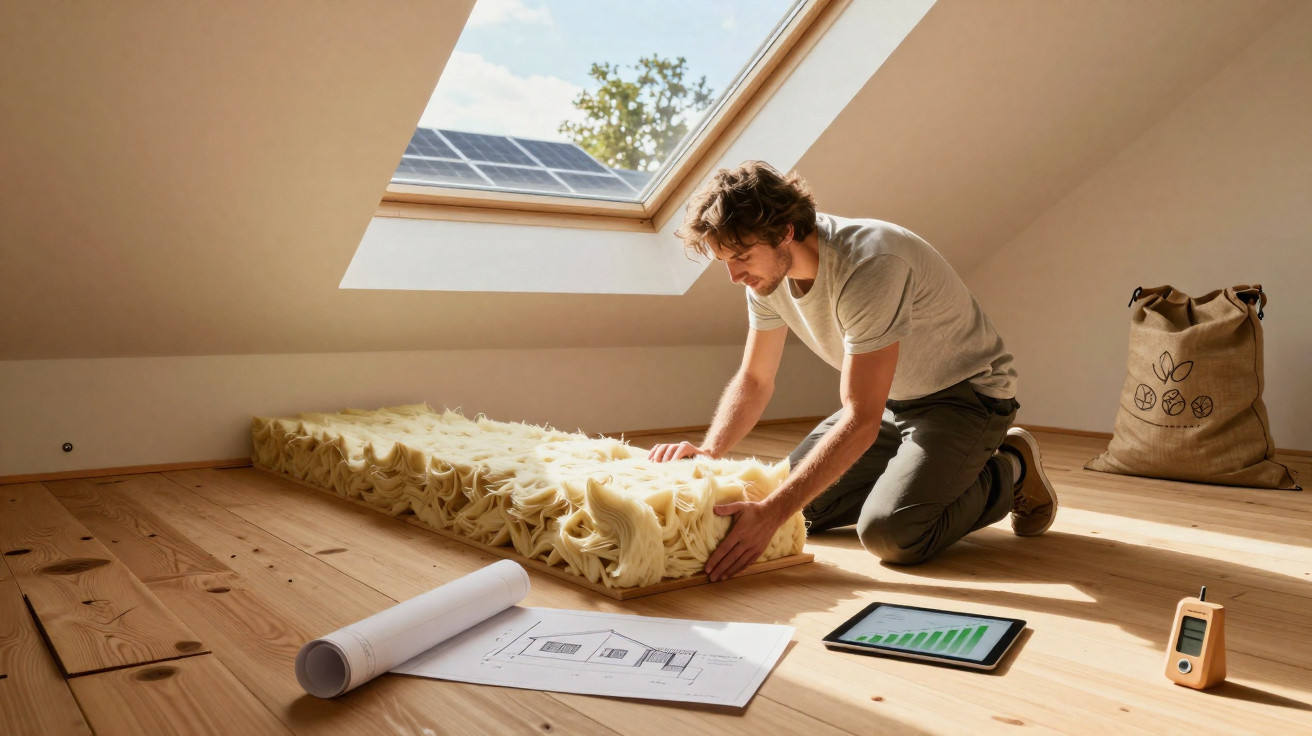
Poor insulation wastes money in many homes – but a natural material is now aiming to improve energy consumption, living comfort and property value at the same time.
As conventional insulation materials come under pressure over climate impact and recycling concerns, an established raw material is taking on a new purpose: flax. Fibre from this modest plant is emerging as a leading material for modern ecological construction projects – and could become a genuine value driver for residential property in the United Kingdom and across Europe over the coming years.
Why effective insulation is worth real money today
Insulation no longer simply determines whether a home feels warm underfoot in winter. It affects energy use, household bills and CO₂ emissions – and therefore has a direct bearing on a property's market value.
- Lower heating costs in winter
- Reduced reliance on air conditioning in summer
- Improved acoustic protection from road and neighbouring noise
- Fewer CO₂ emissions and a better energy performance profile
Energy losses can be substantial, particularly in older properties: heat escapes through the roof, façade, window reveals and basement ceilings. Traditional materials such as mineral wool and polystyrene can improve matters, but they also create new concerns, from energy-intensive production to difficult disposal.
Anyone renovating today looks beyond insulation thickness alone, considering the material's origin, health impact and recyclability.
Flax insulation: an old crop with a new purpose
Flax has been cultivated in Europe for centuries, principally to make linen. The construction sector is now rediscovering its fibres as insulation with a notable set of qualities.
Renewable, local and resource-efficient
Flax is mainly grown in temperate regions, including northern France, Belgium and the Netherlands, and increasingly in Germany and Austria. Cultivation is considered relatively undemanding:
- low water requirements
- little to no need for additional pesticides
- short transport routes when produced in Europe
The fibres can be made into insulation batts, boards or loose-fill material. Manufacturing requires considerably less energy than producing many synthetic insulation products. This reduces a building's so-called embodied energy – a factor receiving growing weight in new energy and building standards.
Technical performance that makes a difference every day
Flax insulation offers more than just strong environmental credentials; it also performs well in practical use. Its thermal conductivity is in a range that compares favourably with established insulation materials. Its interaction with temperature, moisture and sound is especially noteworthy.
Flax insulates against heat, absorbs noise and can buffer moisture without losing its structure.
During winter, the insulation keeps warmth inside the property; in summer, it slows the entry of heat. This offers noticeable benefits particularly in roof spaces, as flax's mass delays temperature peaks. Rooms warm up more gradually and remain comfortable for longer into the evening.
It also provides acoustic benefits: its fibrous composition absorbs sound far more effectively than many rigid board materials. People living on busy roads or in densely built-up residential areas are likely to notice the difference quickly.
Healthier homes without a chemical cocktail
Indoor air quality is another issue of interest to many self-builders and renovators. Conventional insulation can release fibres during installation or emit gases from added substances. Flax is among the comparatively gentler alternatives.
- no irritating glass or stone fibres
- no emissions of typical volatile organic compounds (VOCs)
- more comfortable handling for tradespeople and DIY users
When combined with clay plaster, timber structures or vapour-open external walls, flax can form a wall build-up that regulates moisture. This lowers the risk of mould and helps maintain a more stable indoor climate – particularly relevant for allergy sufferers and families with young children.
Where flax insulation can be used
Flax is surprisingly versatile and works with many common construction systems.
Renovation and new builds
The fibre is available as:
- insulation batts for timber-frame walls, infill sections and pitched roofs
- boards for internal and external walls, and service voids
- loose-fill material for cavities, intermediate floors and difficult-to-reach areas
Typical applications include:
- Roof: between rafters or across the upper floor ceiling
- Façade: in ventilated façade systems or timber-frame walls
- Internal walls: to improve sound insulation between living spaces
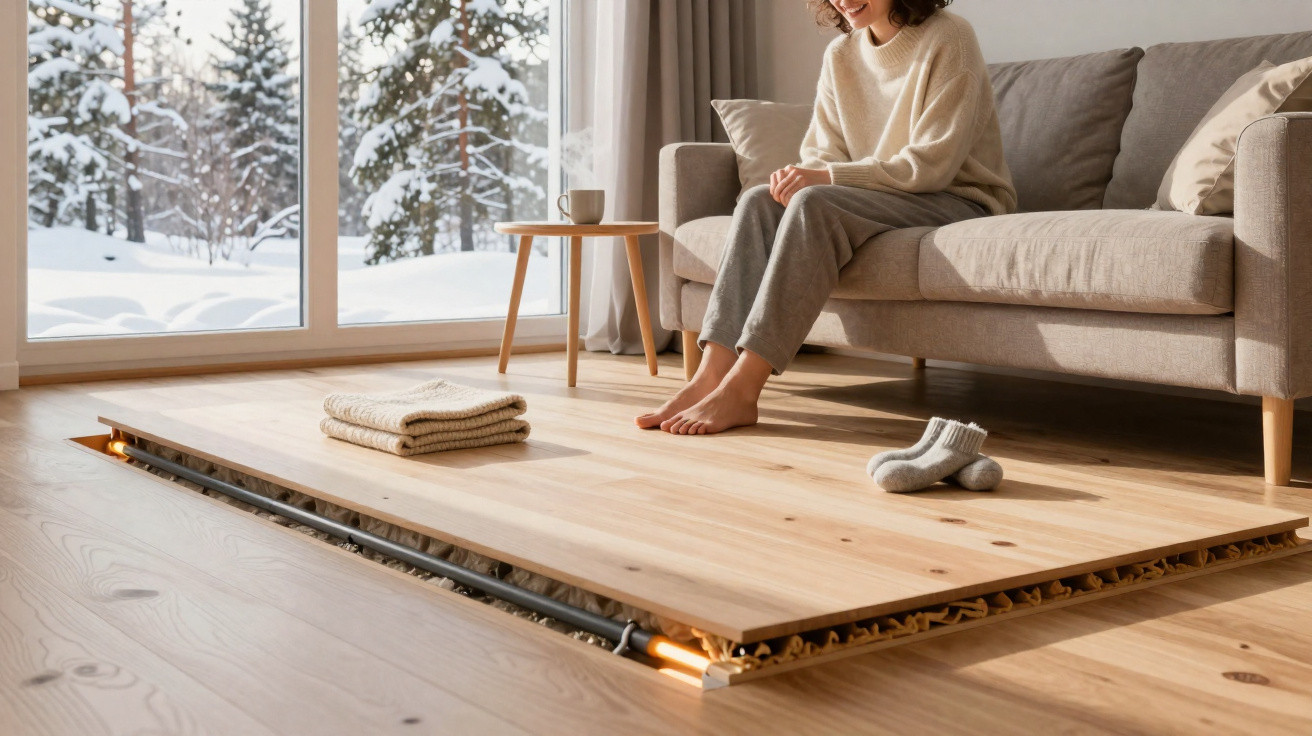
- Floors: within timber joist floors or beneath dry screed
Its relatively low weight also makes the material suitable for existing buildings with limited structural capacity. Many DIY users report that flax batts are much more pleasant to handle than mineral wool, with no itching or burning sensation on the skin.
How does flax compare with competing insulation materials?
Polystyrene, mineral wool and stone wool still dominate builders' merchants. While all three provide solid thermal performance, their environmental credentials and end-of-life disposal remain contentious.
| Material | Thermal insulation | Environmental profile | Recycling |
|---|---|---|---|
| Polystyrene | good | energy-intensive production, petroleum-based | difficult, often incinerated |
| Mineral wool | good | high energy demand during manufacture | recyclable to a limited extent |
| Flax | good | renewable, can be produced locally | recyclable, largely biodegradable |
Flax's major advantage lies in its place within the materials cycle: the fibre is fully reusable and can later be incorporated into other products or used again as insulation. Ideally, this creates an almost closed loop without hazardous waste.
For now, the price remains slightly higher than for conventional insulation materials. However, costs are moving closer together as demand increases, technology advances and policy requirements for climate-friendly buildings develop. Government grant schemes for energy-efficiency renovations and low-CO₂ building materials can partly offset the additional expense.
How flax insulation can affect property value
Energy-efficiency ratings are becoming ever more important in property valuations. A house with effective insulation, low heating costs and a clearly documented environmental profile will generally sell more quickly – and at better prices.
Anyone renovating with sustainable insulation materials today not only improves comfort, but also positions their property for the future market.
Younger generations of buyers in particular are placing greater emphasis on environmental factors. They ask about energy labels, CO₂ balance and construction materials. Clearly documented use of natural insulation such as flax can therefore become a persuasive point in negotiations.
Who could benefit from switching to flax?
Flax insulation is especially well suited to:
- timber construction projects and lightweight upward extensions
- energy-efficiency renovations focused on healthy indoor living
- architect-designed homes and positive-energy house concepts
- people who value local economic value creation
However, the switch can also make sense for a straightforward roof renovation on a detached home. Anyone already paying for scaffolding, tradespeople and new roof covering is changing only a comparatively small part of the overall budget through their choice of material – with a long-term effect on energy costs and living quality.
What homeowners should check before deciding
Despite its many advantages, the full construction system needs careful assessment. Not every structure is suitable for every type of insulation. Designers and energy advisers should check, among other things:
- What does the complete wall or roof build-up look like?
- Is the construction genuinely vapour-open, allowing moisture to escape?
- Which fire-safety requirements apply to the specific project?
- Which grant schemes provide incentives for ecological materials?
Flax is generally treated with natural or approved fire retardants to meet legal requirements. The technical data sheets are also worth checking, especially where the aim is to create an interior with as few harmful substances as possible.
Practical examples and possible combinations
Several useful combinations are already being used in practice:
- Flax between timber studs, clay plaster internally and timber cladding externally – popular in ecological new builds.
- A loft conversion using flax batts between the rafters, supplemented externally with wood-fibre boards for protection against summer heat.
- Sound insulation in apartment buildings: flax in partition walls and ceiling voids to reduce impact noise.
Anyone renovating a typical existing property can ask an energy adviser to calculate how different insulation options affect heating costs, CO₂ balance and available grants. In many scenarios, flax may not have the lowest material price, but it can perform surprisingly well when assessed as a whole – thanks to improved living comfort and a future-ready choice of building material.
Ultimately, flax insulation is more than simply another item on a materials list. It represents a trend emerging across Europe: a move away from solutions based purely on low cost, towards buildings that conserve energy and resources while enabling healthier living. Those renovating or building today have an option that can make daily life more comfortable while supporting the long-term value of their property.




Comments
No comments yet. Be the first to comment!
Leave a Comment