
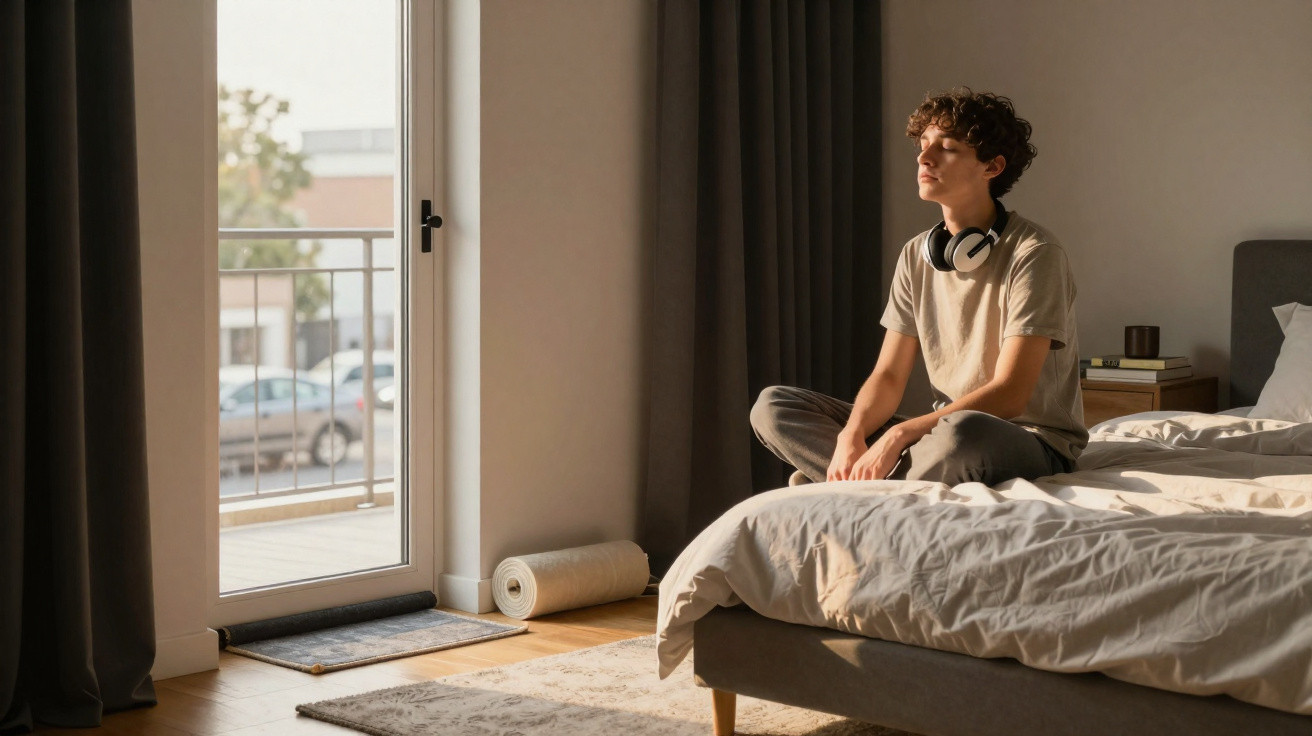
The neighbour’s television was on again.
Tinny gunfire cut through the wall, while a canned laugh track seeped directly towards your pillow. You check the time - 00:47 - already knowing tomorrow’s meeting will feel like trudging through wet concrete. The sound is not particularly loud. It is the relentless nature of it that drains you.
By morning, builders are outside drilling into the pavement. At midday, your flatmate is on Zoom. At night, a scooter revs beneath the window. Instead of a sanctuary, your room feels like a poorly insulated railway station.
You browse quotes for “professional soundproofing” and nearly splutter into your coffee. Hundreds of pounds, sometimes thousands, just to get some peace. Looking at the flimsy walls and rattling window frame, you think there must be another option.
You are right. The solution is right in front of you.
Why your room is so noisy (and what’s really going on)
Most rooms are not built with your brain in mind. They are designed to be inexpensive to construct, straightforward to clean and easy to repaint every five years. The result is hollow doors, thin plasterboard, hard flooring and bare walls. Ideal for a landlord, perhaps, but far less helpful when the neighbour upstairs starts tap-dancing in heels at 23:00.
Noise does not simply “appear”. It moves along particular routes: through air gaps, beneath doors, through floorboards and even within the walls themselves. Once you understand this, your room becomes less mysterious and more of a practical question: where exactly is sound getting in?
Try this on a quiet afternoon. Sit in the middle of the room, close your eyes and listen. You may pick out several layers: the low drone of traffic outside, muted television voices and the sharp click of heels in the hallway, intensified beneath the door. These are three distinct kinds of noise, and each calls for a slightly different affordable solution. That is where things become interesting.
For many people, the pandemic was the real breaking point. One UK survey found that almost half of people working from home said noise significantly damaged their concentration. They did not all move home or rebuild their walls. Instead, they adapted the space they already had.
Consider Emma, a junior lawyer living in a shared London flat. She had no spare room, only a small bedroom with paper-thin walls. Her neighbour’s evening exercise sessions disrupted her Zoom calls. With roughly £70 and no DIY ability, she transformed the room over a weekend into a soft, makeshift cocoon: a rug bought through Facebook Marketplace, old bookcases stacked against the party wall and two thick blankets pinned behind the curtain pole.
Did it create studio-grade silence? Not at all. Yet her neighbour’s thumps became quiet, remote bumps, and street noise faded into a low hiss. That psychological change - from “I’m exposed” to “I’ve done something about this” - mattered as much as the reduction in decibels.
Physics shows why modest changes like these can help. Sound is vibration. Blocking it requires mass and airtightness, while reducing echo calls for soft, irregular surfaces. A hollow door with a gap beneath it is effectively an open invitation: noise, come in. A poorly sealed window acts like a miniature loudspeaker aimed towards your bed.
Adding a heavy rug, bookcase or rolled-up towel at the door does two jobs. It makes vibration more difficult to transmit, and it prevents sound from ricocheting around the room like a ping-pong ball. Low-budget soundproofing is not about magical materials. It is about positioning ordinary items so that they do more for you.
Cheap soundproofing moves that make a real difference
Begin with the room’s main culprit: the door. Interior doors are usually lightweight, often hollow, and tend to have a gap large enough to slide your fingers beneath. That opening is a noise superhighway. The cheapest answer is a thick draught excluder, or simply a rolled towel firmly pressed along the bottom whenever quiet matters.
If you can spend slightly more, an online door sweep strip costs only a few pounds and can be screwed or stuck along the base. Put a sturdy hook on the rear of the door and hang a dense blanket or winter coat from it to add instant mass. It may look almost laughably simple, but it works because your flimsy door has become more like a padded barrier.
Then turn your attention to the windows. Glass is thin, frames can warp over time, and air enters around their edges carrying road noise with it. An easy tactic is to create a second layer: hang a thick curtain, or even a duvet, on hooks across the entire window area rather than only over the pane. For renters, removable adhesive hooks can be invaluable. Draw the curtain tightly against the wall to make a pocket of trapped air. Oddly enough, that air becomes useful: an inexpensive buffer between outside chaos and your pillow.
For plenty of people, the key improvement comes from treating one wall rather than attempting to fix the entire room. Prioritise the “noisy wall” - the wall shared with a neighbour or facing the street. You do not need professional acoustic panels for a noticeable result. You need mass, depth and some imagination.
One straightforward approach is pushing a full bookcase, wardrobe or chest of drawers directly against that wall. Fill it up: books, folded clothing, boxes and even old blankets. All that everyday clutter becomes a dense, layered barrier that absorbs a surprisingly large amount of sound.
Social media is full of videos showing people attaching cheap foam tiles everywhere. Let’s be honest: nobody covers their entire flat in foam and leaves it that way for longer than a month. Foam panels alone do not block much noise from neighbours; their main role is reducing echo within your room. Pair a heavy item of furniture against the wall with a few soft layers over it - a suspended blanket, cork board or canvas - and you get both benefits: less sound transmission and a more settled acoustic environment indoors.
The problem for most people is expecting perfect results. They make one minor adjustment, still hear their neighbour’s music and give up. This is not an “on/off” situation. The aim is to gradually reduce sound from “I can hear every lyric” to “faint background I can ignore”.
Your bed can either worsen the issue or help solve it. When your headboard sits directly against a shared wall, you are essentially connecting yourself to it like a human sensor. Moving the bed 10–15 cm away can make identical noise seem dramatically quieter. Where space is limited, placing even a thick cushion or folded blanket between the headboard and wall can reduce mechanical vibration.
One sound engineer I spoke to put it like this:
“Don’t ask, ‘How do I make this room silent?’ Ask, ‘How do I make this specific noise less annoying?’ The second question is where cheap fixes start to work.”
Here are simple steps you can take tonight:
- Seal the largest air gaps first: beneath the door, around the window and in cracks around the frame.
- Put heavy, dense items against the noisiest wall: bookcases, wardrobes or stacked storage.
- Add soft layers wherever sound reflects: rugs, curtains, throws and cushions.
- Keep your bed and desk slightly away from shared walls, or place a soft buffer between them.
- Bring in “active” support where necessary: white noise, a fan or a phone app playing rain sounds.
On a difficult night, an inexpensive white-noise playlist and a rolled towel at the door can feel like a small miracle. That is not an exaggeration. It is what happens when your nervous system finally stops preparing itself for the next interruption.
Making your quiet last (and sharing the space with others)
Affordable soundproofing has an unexpected advantage: it makes you more conscious of your own habits. After sealing the gap beneath the door and adding thicker curtains, you may start noticing when your own sounds are escaping too. You walk a little more quietly through the hallway, use headphones in the evening and close cupboards gently instead of slamming them.
That awareness can achieve more social soundproofing than foam tiles ever will. In shared flats, one straightforward conversation alongside a few practical adjustments can change the atmosphere of the whole home. “Hey, my desk is right by that wall, can we avoid loud calls after 10?” is received differently when you have already put effort into your side of the wall.
The purpose is not to build a padded cell. It is to create a room that supports the version of you who needs to concentrate, sleep or simply lie quietly without feeling intruded upon. Those budget layers - the rug, draught excluder and overloaded bookcase - communicate something subtle every time you enter: this space is cared for.
You will probably find that routine is your strongest ally. It need not be a complicated checklist, only a handful of quick rituals you can use whenever necessary. Before a deep-work session, place the towel by the door, pull across the heavy curtain and turn on the fan for gentle background sound. Before sleeping, move your phone away from your head, lower the lights and let the room sound… softer.
One reader put it bluntly in an email: “Soundproofing wasn’t about silence for me. It was about not feeling at the mercy of everyone else’s life.” The line stays with you because it is uncomfortably true. We live closer together, stacked in flats and surrounded by thin walls and busy roads. There is an ongoing, invisible negotiation over whose noise takes priority.
We have all experienced the moment when the upstairs neighbour chooses midnight to assemble flat-pack furniture, leaving you to count screws rather than sheep. You may not be able to change their behaviour. But you can alter what the noise hits and how much of it reaches your nervous system.
The appeal of cheap solutions is that they are personal and reversible. Today, you might use them to block street noise while sleeping. Next year, the same curtains and furniture arrangement could create a bubble of concentration in a noisy shared house. The materials remain, while their purpose changes.
Once you have experienced the contrast between a harsh, echoing room and one that is gently muffled, it is difficult not to notice it everywhere. You begin identifying sound leaks in hotel rooms, at your parents’ home and even in cafés. You learn to take your own small version of quiet with you: an eye for gaps and a habit of softening the edges.
| Key point | Detail | Benefit for the reader |
|---|---|---|
| Find air leaks | Gaps beneath doors, around windows and cracks in walls allow noise to travel freely. | Gives you easy, low-cost places to start, with immediate results. |
| Add mass and softness | Heavy furniture against noisy walls, plus thick curtains, rugs and textiles. | Turns ordinary household items into an effective sound barrier. |
| Create quiet rituals | Small, repeatable actions before sleep or focused work sessions. | Makes soundproofing a sustainable habit rather than a one-off task. |
FAQ:
What’s the single cheapest way to reduce noise in my room? Start with the door. Block the gap underneath using a draught excluder, rolled towel or door sweep, and shut it completely whenever you need quiet. For almost no cost, this is often the quickest and most noticeable improvement.
Do cheap foam panels from the internet really work? They may reduce echo inside the room, making your own voice and devices sound quieter. By themselves, they will not do much to stop a neighbour’s music or road noise coming through the wall.
How can I sleep better if I can’t change the walls at all? Choose movable options: thick curtains or a duvet over the window, a rug on the floor, white noise from a fan or app, and a buffer between your bed and any shared wall. Earplugs can also provide useful backup on difficult nights.
Is white noise really helpful, or just a fad? For many people, a constant sound such as a fan, rain recording or white-noise machine makes sudden noises less startling. It does not eliminate the noise, but masks it so your brain does not react as strongly.
How do I deal with noisy neighbours without starting a war? Start by doing what you can on your own side: seal gaps, reposition furniture and soften the room. Then have a calm, specific conversation, mentioning the times and kinds of noise involved and suggesting modest changes. Offering a compromise usually gets further than making a general complaint.






Comments
No comments yet. Be the first to comment!
Leave a Comment