
That unpleasant smell can start developing while your home is empty and quiet.
Temperatures rise, pipework dries out, and the plumbing is left unused. Without attention, the system designed to block odours may stop working. One easy trick can slow this down while you are away enjoying the sunshine.
Why drains smell after a hot spell away
A sink prevents smells escaping through the water seal in its U-bend. This curved section retains a small amount of water, stopping sewer gases from travelling back into the kitchen. During hot weather, however, this water may evaporate quickly. Once the bend is dry, air from the waste pipe can pass through freely, bringing a sour, sulphurous smell with it. Biofilm within the pipes can also give off gases when the system is not used. With the house shut up, those odours remain indoors until you come home.
Bathrooms are affected in exactly the same way. Showers, baths and floor drains all rely on similar traps. A lengthy summer break gives a U-bend ample time to dry out, so prevention needs to happen before you set off.
Keep the U-bend wet and you keep the stink out. Protect the water seal, and the house greets you with clean air.
The glass and paper trick, step by step
This simple cover reduces evaporation from the trap. It takes around a minute and costs virtually nothing.
- Let the tap run for 10–15 seconds to replenish the U-bend.
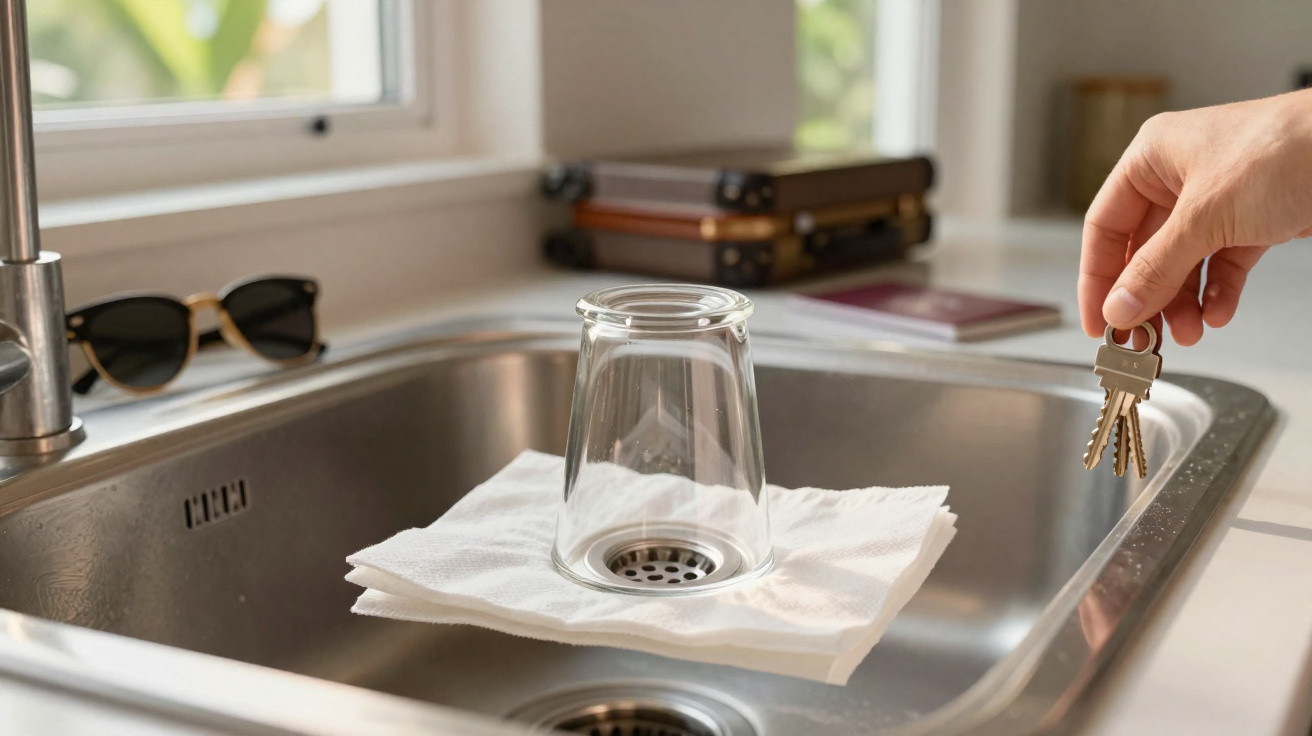
- Place a piece of damp kitchen paper across the sink waste.
- Turn a clean glass or mug upside down over the paper, covering the opening.
- Position it firmly against the sink to reduce airflow around the waste.
- Do the same for utility sinks, baths and showers, using a larger cup or bowl where needed.
The method works because heat and circulating air make water evaporate faster. The glass restricts air movement around the plug-hole, while the paper retains moisture and closes small gaps. Combined, they form a still, humid space above the water, helping the U-bend remain wet much longer.
A damp sheet plus an upturned glass makes a near-airtight cap, which slows water loss from the trap for weeks.
When a plug works even better
Where you have a proper rubber plug, use that instead. Put roughly 2.5 cm of water in the basin before inserting the plug. The water provides an extra seal over the waste and adds weight. A basket strainer with a close-fitting seal can work just as well. For a shower, a silicone drain cover creates a tidy seal without requiring tape.
Other quick moves before you lock the door
Combining a few straightforward measures can further lower the likelihood of odours.
- Put a teaspoon of vegetable oil into every drain to create a light film over the trap water.
- Flush the loo and tightly stretch cling film over the bowl to slow evaporation. Take it off when you get back.
- Clean the sink strainer and discard all food debris to prevent smells close to the drain.
- Add half a cup of bicarbonate of soda to the sink, followed by a cup of warm white vinegar. Once the fizzing has finished, rinse through with hot water.
- Tip a cup of water into infrequently used floor drains, then add a few drops of oil there too.
- Leave the doors of dishwashers and washing machines slightly open to avoid musty smells inside the cabinets.
The eco and cost angle
These measures lessen the need for strong deodorisers. Most rely on products already found in a typical kitchen. They may also help you avoid a call-out caused by a dried trap that has begun to smell.
| Method | Where to use | Upfront cost | Time | Notes |
|---|---|---|---|---|
| Glass + paper cap | Kitchen, utility, bath, shower | £0–£1 | 1 min | Best quick fix for airflow control |
| Plug and shallow water | Sinks with a tight plug | £0 | 1 min | Strong seal, check for slow leaks |
| Vegetable oil film | Any trapped drain | Pennies | 30 sec | Slows evaporation on hot days |
| Bicarb + vinegar rinse | Sinks and showers | £0–£2 | 10 min | Loosens organic build-up before you go |
| Cling film on loo | Toilet bowl | £0–£1 | 1 min | Keep pets and kids away |
| Neighbour trap top-up | Whole house | Tea and thanks | 2–3 mins | Great for trips over two weeks |
How long a water seal actually lasts
A small trap may dry out within a week when conditions are warm and dry. A deeper bath trap can last longer, although moving air speeds up evaporation. By limiting airflow, the glass cap delays the process. In many properties, this can extend the period to several weeks. Humidity makes a difference too: a cool, shaded kitchen will lose less water than a loft bathroom exposed to sunshine.
Risks to watch and what to avoid
- Never leave bleach sitting in the trap, as it may harm metal components and seals.
- Do not use metal cups that could rust; choose glass, ceramic or plastic for the cover.
- Keep the surrounding area uncluttered so the glass cannot be knocked over before departure.
- For extended trips, turn off the mains stopcock to reduce the risk of leaks elsewhere.
- If your property has a septic tank, use vinegar sparingly and avoid heavy-duty chemical cleaners.
- Hard water may leave limescale, so a quick descale before travelling keeps outlets looking tidy.
Bathrooms and little-used drains need the same care
Showers are often the first to smell because hair traps and soap residue provide bacteria with material to feed on. Flush the trap with hot water, then use either a silicone cover or the glass-and-paper cap. For baths, shut the pop-up waste and leave a shallow covering of water above it. Floor drains in utility areas can dry out unnoticed, so top them up and add a few drops of oil to preserve the seal.
Appliances and hidden odours
Dishwashers and washing machines are connected to the waste pipework. If a filter becomes stale, it can make the entire run smell. Clean the filters, remove any standing water and leave the doors ajar. During the week before you travel, run an empty hot wash with soda crystals. The waste hose will thank you later.
A simple pre-holiday checklist you can keep
- Refill U-bends by running water for 10–15 seconds.
- Put the glass-and-paper cap over sinks and showers.
- Seal baths and retain a shallow layer of water.
- Add a teaspoon of vegetable oil to every trap.
- Clean strainers and filters, and throw away scraps.
- Refill floor drains and leave appliance doors slightly open.
- Close the stopcock if you will be away for weeks.
If you like the engineering angle
Commercial premises use trap primers, which release a small amount of water into traps when the system detects use. It is possible to retrofit a domestic primer to a floor drain, but the glass-and-paper trick provides much of the same benefit. A quick visit from a neighbour can achieve the same outcome without any equipment.
A quick home test if you love numbers
Fill two matching sinks so their U-bends are wet, then cover one using the glass-and-paper arrangement. Weigh the kitchen paper before and after 24 hours, or simply smell both drains. The covered sink should retain moisture, whereas the uncovered one will seem drier. In hotter conditions, the difference becomes more pronounced more quickly.
Small extras that add comfort
A drop of essential oil on the paper beneath the glass can provide a light scent when you return. A silicone drain cover can stay in a drawer and be used throughout the year. Keeping a spare rubber plug costs very little and avoids plenty of faff when you are packing in a hurry.




Comments
No comments yet. Be the first to comment!
Leave a Comment