
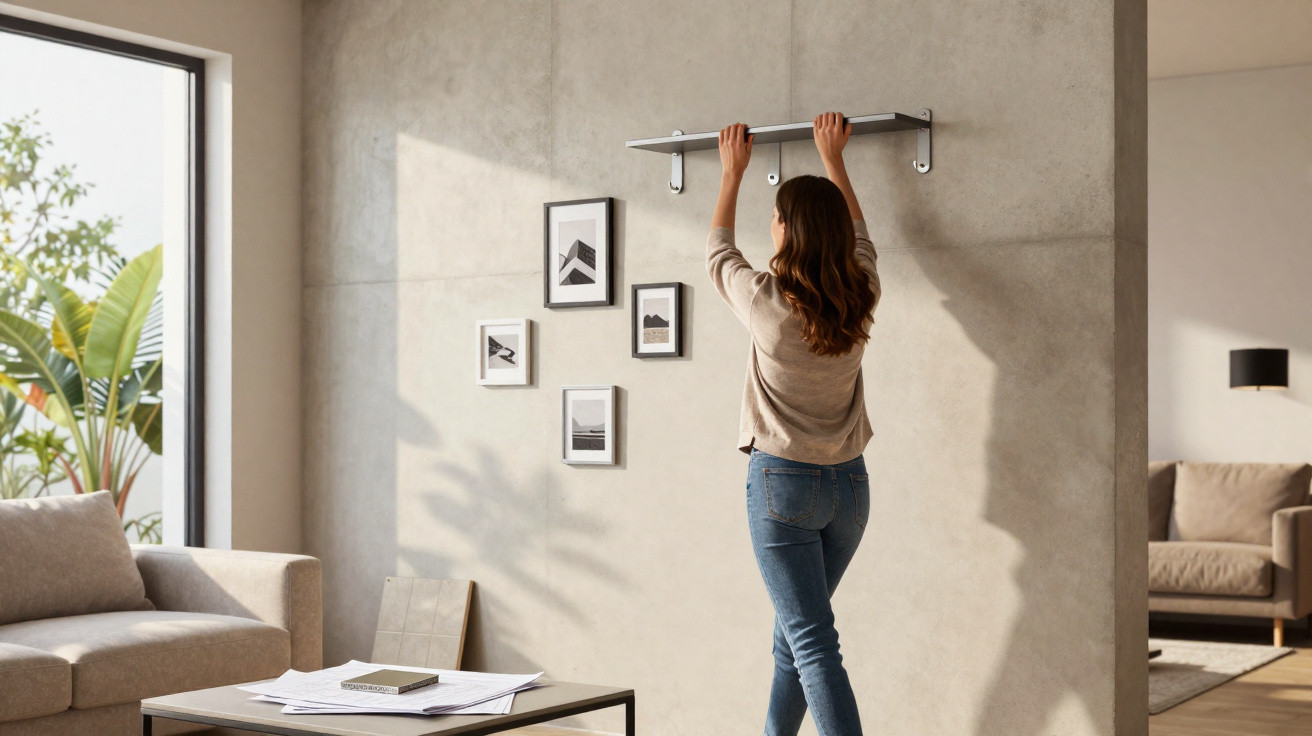
Organising spaces without damaging surface structures is a constant challenge for residents and professionals. Creating a versatile coating makes it possible to secure pictures and tools to any vertical surface with safety, eliminating drilling, dust and complications during home renovations.
How does magnetic cement work on surfaces?
Developed as an innovative solution, the product combines traditional cement with metallic particles that create passive ferromagnetic attraction. This system allows objects fitted with magnets to remain attached to the wall without cables, nails or additional metal supports.
The coating is applied in much the same way as a conventional finish and is compatible with masonry and modern structures. This technology turns rooms into functional panels, allowing accessories to be rearranged every day with complete convenience, without wearing down the structure.
How can you hang tools and pictures on a wall without drilling holes?
An innovative coating made with metallic particles makes it possible to secure heavy objects to the surface using high-power magnets… Read more
What are the advantages for rented properties and renovations?
Tenants often face contractual restrictions that prevent them from drilling into surfaces to hang decorative items. Using magnetisable cement removes the need for drills, preserving the property’s original structure and making it easier to restore the walls when handing back the premises.
As well as avoiding dust and excessive noise during installation, this passive ferromagnetic coating offers a highly durable solution. Residents gain complete freedom to reposition pictures, wall niches and utensils without causing aesthetic damage to surfaces.
Below is a video from the Treasure’s Workspace YouTube channel that explores the points discussed in this topic in greater depth:
Which types of construction can magnetic cement be applied to?
The versatility of this magnetic cement allows it to be used across different construction methods, including traditional masonry and drywall. This compatibility makes it easier to incorporate into contemporary architectural projects, ensuring perfect adhesion and effective support for high-power magnets.
Systems based on steel framing and wet-construction structures can also receive the coating without losing their technical properties. This broad flexibility makes the technology suitable for both small residential renovations and large corporate and commercial projects.
Magnetic Cement Essential Kit
Main applications
Key features of the functional coating technology:
- Compatibility with drywall, steel framing and wet construction;
- Passive ferromagnetic coating with no energy consumption;
- Supporting capacity for high-power magnets on internal walls.
Where can magnetic cement be used every day?
Workspaces and workshops benefit directly from the organisation enabled by ferromagnetic surfaces. Tools, holders and noticeboards remain within easy reach without taking up useful worktop space, improving productivity while maintaining a clean, functional environment.
In kitchens and classrooms, the coating enables knives, utensils and teaching materials to be attached quickly. The mobility of the accessories brings a new dynamic to daily life, combining modern aesthetics with intelligent use of internal walls.
See the main settings that benefit from this residential and professional innovation:
- Home kitchens for attaching knives and magnetic spice holders;
- Workshops and garages for organising heavy metal tools;
- Offices, classrooms and studios for mounting pictures and noticeboards.
What impact will Ironplac have on the future of architecture?
Created by the young Marco Agustín Secchi, Ironplac represents a significant advancement for interior architecture. Combining magnetisable cement with straightforward application introduces new functional concepts to the contemporary civil construction market.
Growing interest in sustainable, clean renovations is driving the continued adoption of this innovative coating. This trend profoundly changes residents’ everyday relationship with their spaces, integrating passive technology and intelligent design to create functional surfaces.






Comments
No comments yet. Be the first to comment!
Leave a Comment