
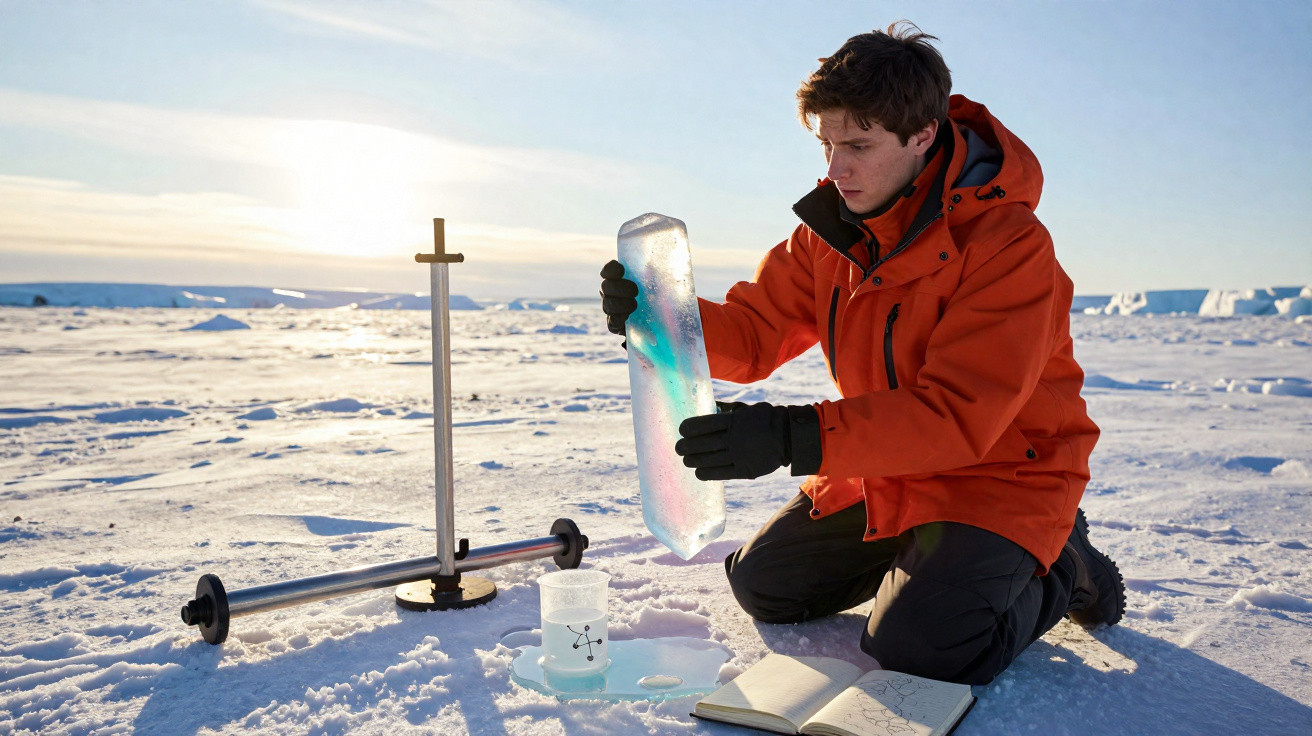
A new study has connected CFC substitute gases with most of the forever chemical deposited in rainfall and Arctic ice.
Their degradation products continue accumulating long after the gases were originally released. This rise is also likely to persist for decades because many of these gases stay in the atmosphere for years before they begin to break down.
Evidence of CFC substitutes in ice cores
Samples of rainwater and Arctic ice cores show that concentrations of the same pollutant have increased year after year.
Lucy Hart, a doctoral researcher at Lancaster University, matched these records against atmospheric data and linked the deposits to refrigerants and anaesthetics.
Hart found, too, that the annual quantity of this chemical deposited by rain and snow increased by roughly 3.5-fold during the study period.
As chemical degradation takes years between release and deposition, refrigerant decisions made today can continue increasing concentrations of this pollutant in the future.
Naming the pollutant
Chemists refer to the deposited compound as trifluoroacetic acid (TFA), a fluorinated acid that does not readily degrade naturally.
After TFA is created in the atmosphere, it readily dissolves in cloud water before falling as rain or snow. In contrast with many pollutants, it does not evaporate from water again, meaning that rivers and lakes retain it.
This persistence makes removal difficult and increases the importance of every gas capable of forming TFA.
From gas to TFA
Industry replaced ozone-damaging chlorofluorocarbons (CFCs) - older cooling gases that harm the ozone layer - with newer fluorinated chemicals.
Sunlight and reactive gases break these molecules down, while the remaining fragments rearrange into this durable acid as they travel through the atmosphere.
Hospitals are also part of the picture, as certain inhaled anaesthetics have comparable chemistry and can degrade into the same compound.
Certain source gases decompose in several stages, with every stage still able to generate the same long-lasting by-product.
Why TFA pollution persists
The Montreal Protocol, the international agreement that phased out ozone-depleting chemicals, led industry to adopt replacement gases.
Many of those alternatives remain in the atmosphere for decades, allowing them to continue degrading and producing acid.
The highest yearly TFA production could occur at any point between 2025-2100 because these gases are retained in the atmosphere for so long.
“This really highlights the broader risks that need to be considered by regulation when substituting harmful chemicals such as ozone-depleting CFCs,” said Hart.
Arctic TFA deposits traced
Annual TFA layers are retained in Arctic ice, as snow captures the material delivered by clouds and air each year.
Although it is distant from industrial sites, the Arctic receives these chemicals because long-lived gases can travel for years before eventually breaking down.
Hart’s team determined that long-lived CFC replacements accounted for virtually all of the recorded increase in Arctic TFA deposits.
“Studies have found increasing TFA levels in remote Arctic ice-cores and our results provide the first conclusive evidence that virtually all of these deposits can be explained by these gases,” stated Hart.
New refrigerants complicate
Europe’s mobile air-conditioning directive, an EU rule restricting car coolants with high warming effects, moved new vehicles away from older refrigerants after 2017.
For many cars, manufacturers adopted a newer coolant that can degrade in sunlight and ultimately produce the same persistent TFA chemical.
Beyond the polar regions, the Lancaster team observed that this newer chemical was becoming a significant source of atmospheric TFA in mid-latitudes.
This compromise requires regulators to balance climate aims against the long-term chemical accumulation that may result from current technology choices.
Rain drives delivery
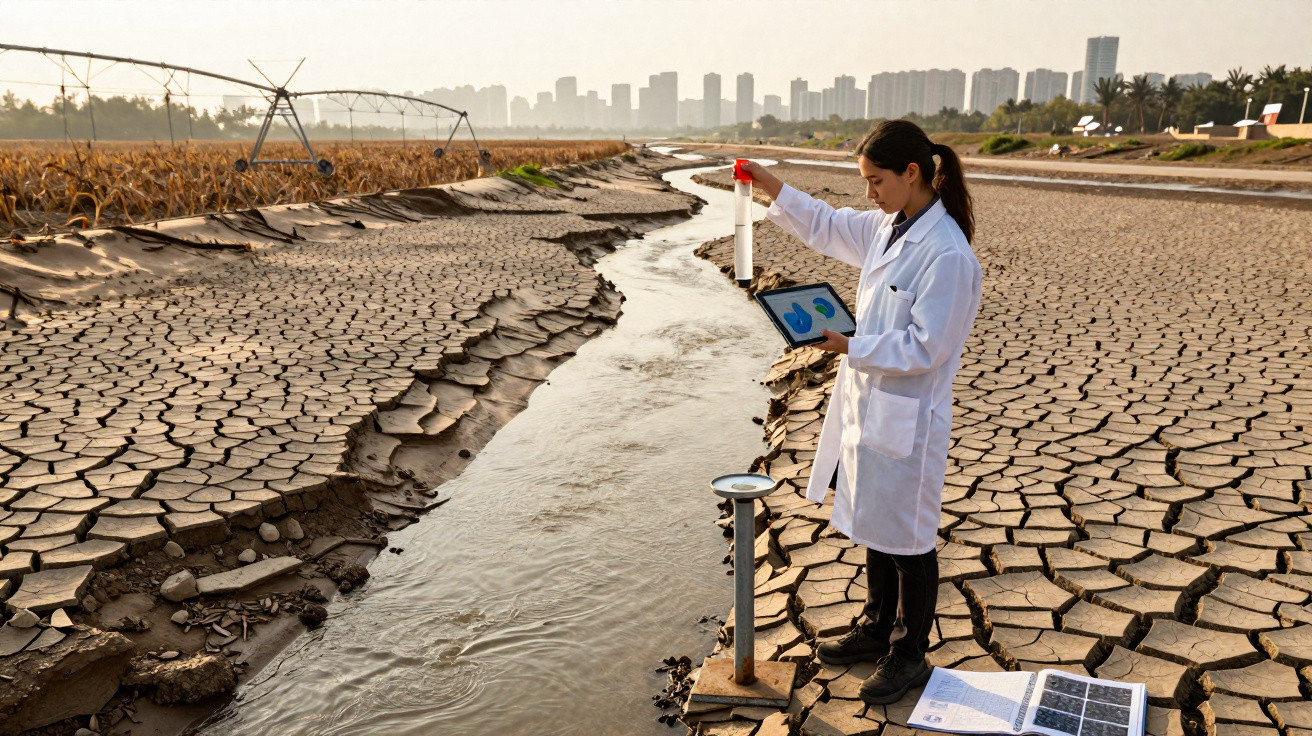
Storms transport TFA rapidly, while rainfall removes it from clouds before winds have a chance to disperse it.
In dry periods, some chemicals may be deposited directly on soil and water surfaces even when no rain falls.
Tropical and mid-latitude areas commonly receive greater deposits because intense sunshine and frequent rainfall together accelerate conversion and washout.
Reducing local emissions can cut nearby deposits, although long-distance transport still distributes part of the burden between countries and across oceans.
What regulators weigh
One review characterises TFA as extremely persistent and mobile, making containment difficult once it has been released.
European regulators already classify it as long-lasting and harmful to aquatic life on the basis of available evidence.
Germany has also submitted a proposal to classify TFA as toxic to reproduction, which would impose stricter controls on its handling.
Although certain measurements remain below current health targets, growing deposition narrows the margin and makes reversal more difficult.
CFCs, TFAs, and the future
TFA can also be produced outside the atmosphere when pesticides and other agricultural chemicals degrade in soil and water after application.
Some fluorinated components remain stable during the initial stages of degradation, before eventually becoming TFA and washing into groundwater.
Field data from Germany in that research found higher TFA concentrations in groundwater beneath agricultural land than beneath other types of land use.
These additional sources help account for why rain and rivers at mid-latitudes can at times contain more TFA than models considering only the atmosphere predict.
The connection between everyday cooling and anaesthesia and TFA demonstrates how this pollutant can repeatedly return in rain, rivers and polar ice.
More robust monitoring and stricter controls for new refrigerants could curb future increases, but gases already in the atmosphere will continue producing TFA molecules.




Comments
No comments yet. Be the first to comment!
Leave a Comment