
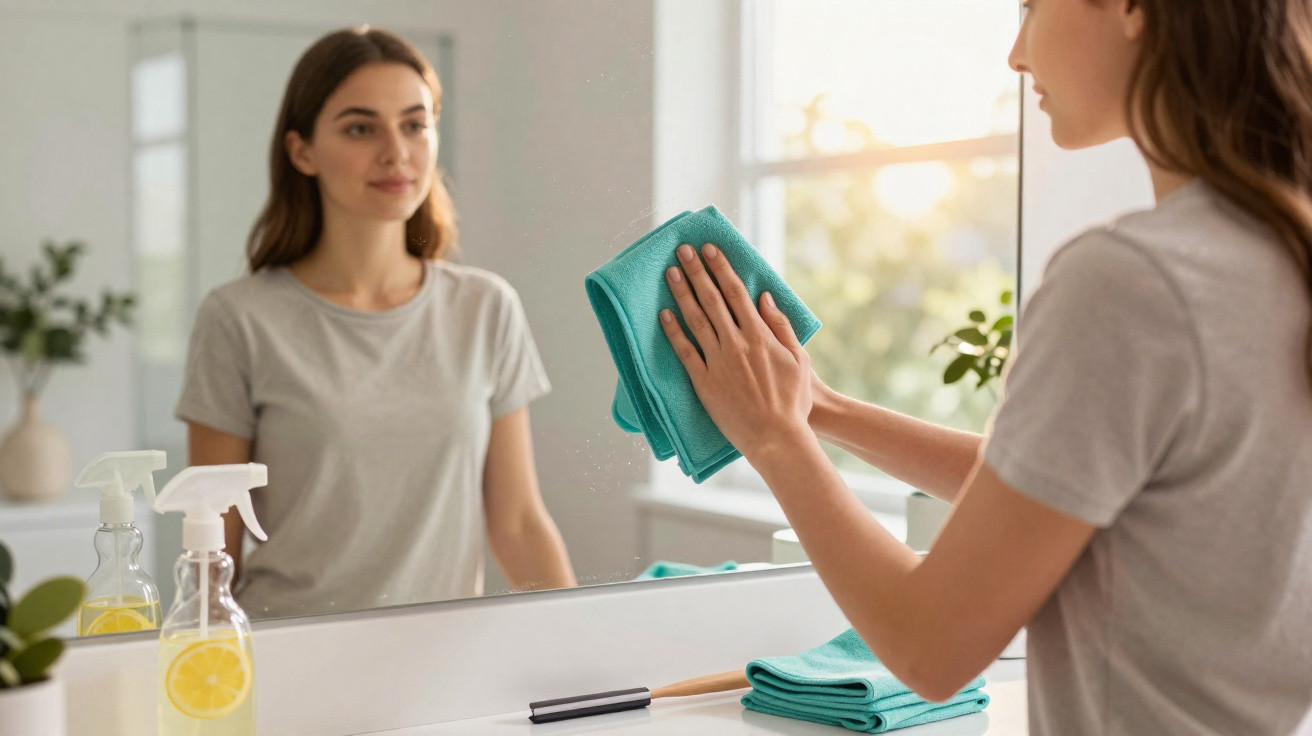
Sometimes, all it takes is a late-afternoon shaft of sunlight to reveal what you would rather overlook: circular marks on the hall mirror, drips on the patio doors, or a light greasy haze across the bathroom mirror. You wipe once, then again, yet the finish can seem almost worse than it was before. We have all leaned in close and wondered where those marks came from when the glass has only just been cleaned. The cleaner is not always to blame. Often, the issue comes down to a tiny detail: the cloth, too much liquid or cleaning at the wrong time. Once you know the right technique, however, it becomes surprisingly straightforward.
Why streaks return even after thorough cleaning
A bathroom mirror can look spotless while the room is dark. Then the morning light comes on or the blinds are opened, and every splash seems to reappear by magic. This irritating effect is usually caused by a familiar combination of dust, limescale, soap residue and cleaning product that has not been properly removed. Glass does not need to be very dirty to look dull: an almost invisible layer is enough to disrupt reflections and catch the light. This creates the greyish film that can easily be mistaken for ageing glass.
At a friend's home, the large hallway mirror was cleaned several times a week with scented wipes. It smelled fresh and looked tidy at first glance, but long streaks appeared whenever sunlight crossed it. The explanation was simple: these wipes often leave behind a slightly greasy coating, designed to create an instant shine. According to manufacturers, a standard pane of glass can receive dozens of tiny droplets during one overly generous cleaning session. The excess does not dry properly, attracts dust and turns the next cleaning session into an uphill struggle.
The professional approach is based on one straightforward principle: clean without soaking the surface. The more product you spray, the more you need to remove, and that is when streaks develop. Window cleaners use very little liquid, clean equipment and steady strokes rather than frantic movements in every direction. A mirror needs to be cleared of grime and then genuinely dried, not merely rubbed until it looks acceptable. Shiny glass is not glass that smells of household cleaner; it is glass where light moves across the surface without catching.
The ultra-quick professional method that changes everything
Start with two clean microfibre cloths: one lightly damp and the other completely dry. In a spray bottle, combine warm water with a small drop of washing-up liquid, or use a window cleaner without wax or polishing agents. Spray the solution onto the cloth, never directly onto the mirror or glass, especially near frames. Wipe from top to bottom in straight strips with the damp cloth, without going over the same area repeatedly. Immediately take the second cloth and dry using the same motion. Together, these two cloths deliver the much-sought-after streak-free finish.
The most common habit is to use large circular motions, as seen in adverts. They may look satisfying, but they are less effective in real life: circles spread residue around and make marks harder to identify. Use vertical strokes indoors and horizontal strokes outside; if a streak remains, you will immediately know which side it is on. To be honest, hardly anyone does this every day. Even so, this simple guide prevents you from wasting five minutes rubbing the wrong side of a patio door.
For stubborn marks, such as dried toothpaste splashes or children's fingerprints on French doors, place the damp cloth over the area for a few seconds before wiping gently. Do not scrape with an improvised blade or use the abrasive side of a sponge: scratches on a mirror remain noticeable for a long time.
“Good cleaning removes the film; it does not add artificial shine,” explains a window cleaner used to working on shopfronts.
- Use two separate microfibre cloths: one for cleaning and one for drying.
- Work in the shade or away from a radiator so that the product does not dry too quickly.
- Wash the cloths without fabric conditioner, as it can leave a film on glass.
- Always begin with the corners and edges, where residue builds up.
Small details for genuinely spectacular results
The timing matters more than you might think. Glass in direct sunlight heats up quickly, causing the product to evaporate before you have time to dry it. This is ideal conditions for water marks. Wait for softer light, partly close the blind if necessary, or clean windows early in the morning. Steam is the trap with mirrors: after a hot shower, wait a few minutes for the surface to become dry and cool again. It may seem like a minor step, but it prevents a large proportion of streaks.
White vinegar can help tackle limescale, provided it is heavily diluted with water and used sparingly. With an old mirror, a delicate frame, treated glass or a surface close to natural stone, it is best to proceed carefully: acidic products are not compatible with every material. A good-quality microfibre cloth and warm water will already solve many situations. The best product is often the one used in a very small amount, without an overpowering fragrance or miracle claims.
There is also something pleasantly immediate about this routine. The living room looks brighter, the bathroom appears cleaner, and the view through the window suddenly regains colours you had stopped noticing. This is not about turning housework into a performance or chasing a flawless home at every hour of the day. Clear glass simply changes the feel of a room, as though the walls had been moved out by a few centimetres. Many people now keep two microfibre cloths in a drawer near the entrance: the habit takes less than two minutes, and the result is visible straight away.
| Key point | Detail | Benefit for the reader |
|---|---|---|
| Use little product | Spray onto the cloth rather than the glass | Fewer drips and less visible residue |
| Two microfibre cloths | One damp cloth to lift grime, one dry cloth to finish | Clean, quick drying, even on large mirrors |
| The right time | Avoid direct sunlight and hot steam | Brighter windows without persistent water marks |





Comments
No comments yet. Be the first to comment!
Leave a Comment