
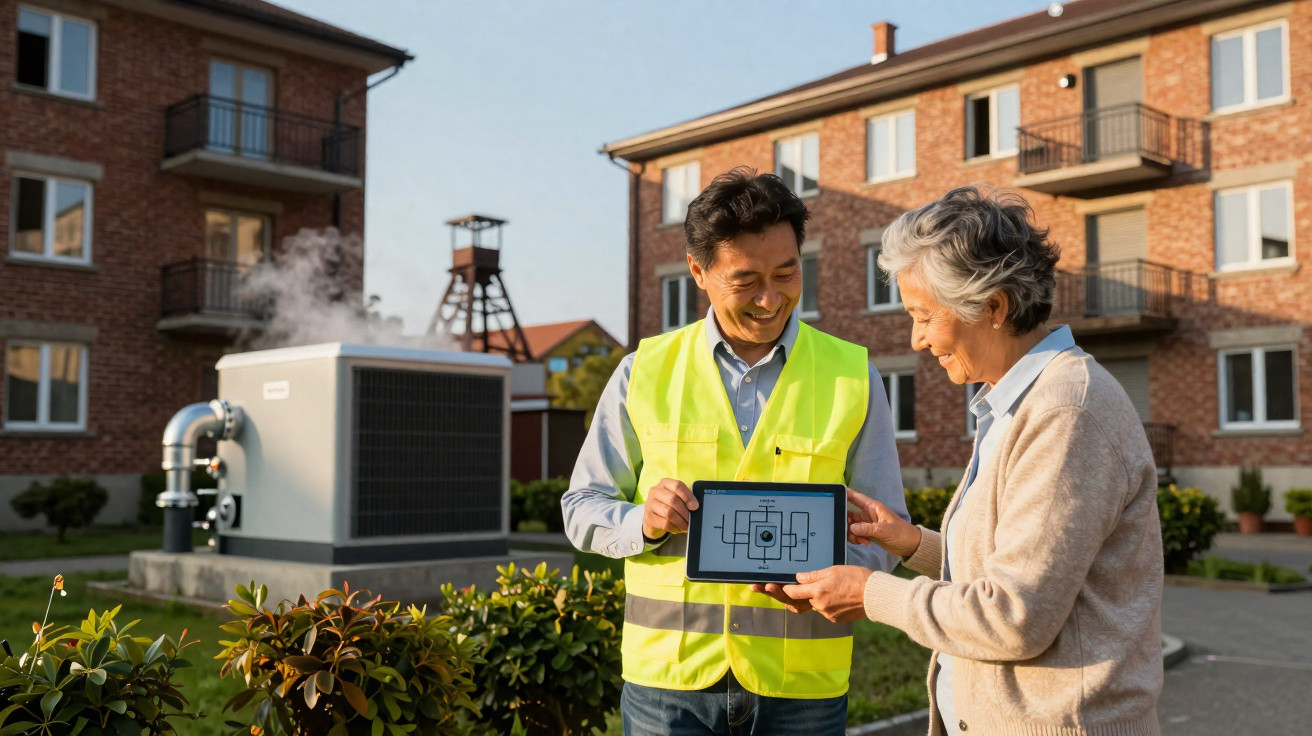
As radiators begin humming again and energy bills make everyone around the table wince, an unobtrusive source of heat is already flowing beneath some streets. At a depth of 150 metres below the town, water stored for decades in flooded former coal-mine workings now supplies 350 homes and several public buildings. There is nothing to see from the pavement: no dramatic chimney or vast power station. Instead, a technical network recovers heat that was long regarded as wasted. In the connected flats, people turn on the tap, adjust the thermostat and get on with everyday life. Yet beneath residents’ feet, an old industrial legacy is still proving useful. This time, however, it is no longer blackening the sky.
Hidden heat where nobody thinks to look
We all know the moment when the cold reaches a room before winter has officially arrived. In this town, part of the answer comes not from imported gas or a brand-new boiler, but from lukewarm water trapped within former mine seams. At that depth, temperatures remain fairly consistent throughout the year, making the resource particularly well suited to heat pumps. The water is brought to the surface, its energy is extracted, and it is then returned through a controlled circuit. There is no magic involved: it is physics, along with a great many pipes.
The scheme already provides heating for around 350 homes, as well as public facilities that often have substantial demand, including schools, council offices, community halls and administrative buildings. For residents, the difference may feel almost ordinary. Their radiators stay warm, hot water runs from the taps, and roads are not dug up every week. Behind this apparent ease, engineers monitor flow rates, water temperature and the condition of the network. A former mine is therefore being turned into a local energy reserve, with no need to reopen a single extraction shaft.
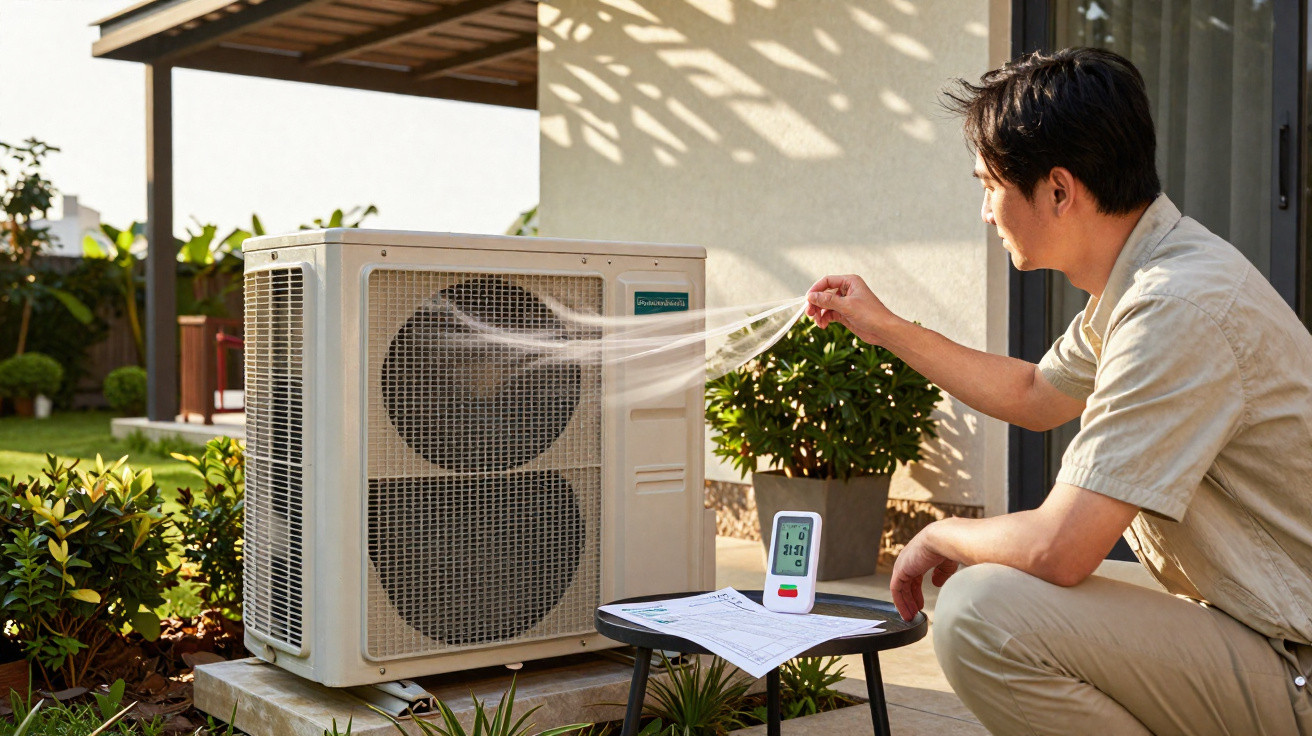
The system is based on a straightforward fact: abandoned galleries have gradually filled with water, which absorbs the natural heat of the ground. A heat pump does not generate that energy; it captures it and raises it to a temperature that buildings can use. Electricity is still required to run the installation, but the arrangement avoids burning as much fossil fuel for every degree of warmth gained. Beneath the town, the industrial past ceases to be an inert burden. Almost in spite of itself, it becomes infrastructure.
How former coal mines can reshape neighbourhood life
Replicating this kind of network begins with a precise understanding of what lies underground. Mining maps, operators’ records, old boreholes and water levels must all be compared before the first equipment is installed. A local authority cannot simply note that a mine once existed there. It must establish the depth, available volume, temperature and condition of the workings. The sensible approach is to plan the network from the outset, linking nearby homes and public buildings with regular heating requirements.
A common mistake would be to assume that warm underground water is enough to solve every problem. Let us be honest: nobody really does that every day, not even the most committed technical teams. Boreholes need funding, heat pumps must be fitted, buildings have to be properly insulated, and reliable maintenance must be arranged. A poorly insulated house will swallow heat whatever its source. The project works best as part of a wider refurbishment programme, involving less energy-hungry buildings and usage that is monitored over time.
The real challenge is also a human one. Works must be explained, residents’ concerns addressed, and the fact accepted that the energy transition is never simply a slogan pasted onto a construction-site sign.
“The least visible energy is sometimes the one that most lastingly transforms life in a neighbourhood.”
- Identify former mining sites before considering a new heat source;
- Bring together homes, schools and public buildings to make demand more stable;
- Plan building insulation alongside the heat network;
- Give residents clear figures on costs, works and the expected benefits.
Closed mines, but not necessarily useless ones
This example highlights a truth that is often overlooked: industrial areas still hold resources, even after headframes have vanished from the landscape. For years, former mining districts have been defined by closures, derelict land and lost jobs. This underground water offers a different story, one that is less nostalgic and more practical. It cannot replace an entire town’s energy production, nor the necessary efforts to reduce consumption. Even so, it provides a robust local option that is difficult to relocate elsewhere.
The figure of 350 homes may seem modest when set against the needs of a whole urban area. Nevertheless, it has tangible value for the families involved, public services and elected representatives seeking options less dependent on international markets. A network of this scale also makes it possible to learn: how to manage cold-weather peaks, which buildings should be connected first, how losses can be reduced, and how costs should be shared. Such details often determine whether a project succeeds. Major energy promises rarely begin anywhere other than in a neighbourhood.
Behind the valves, heat exchangers and kilometres of pipework lies an almost personal question: what should be done with what earlier generations left beneath our feet? Some towns see only an expensive legacy that must be made safe. Others are beginning to recognise an opportunity. Mine water does not tell a story of revenge on the past, but rather of clear-eyed adaptation. It encourages us to view brownfield sites differently, discuss local resources and imagine what the forgotten underground spaces of our own towns might become.
| Key point | Detail | Added value for the reader |
|---|---|---|
| Water at 150 metres | Flooded mine workings retain a stable temperature that can be used by a heat pump. | Understand how an invisible resource can heat buildings every day. |
| 350 homes and public services | The network supplies homes and nearby community facilities. | Assess the value of a local project at neighbourhood scale. |
| A practical transition | The system must be paired with insulation, maintenance and dialogue with residents. | Avoid the misleading idea of a miracle solution requiring no work or preparation. |




Comments
No comments yet. Be the first to comment!
Leave a Comment