
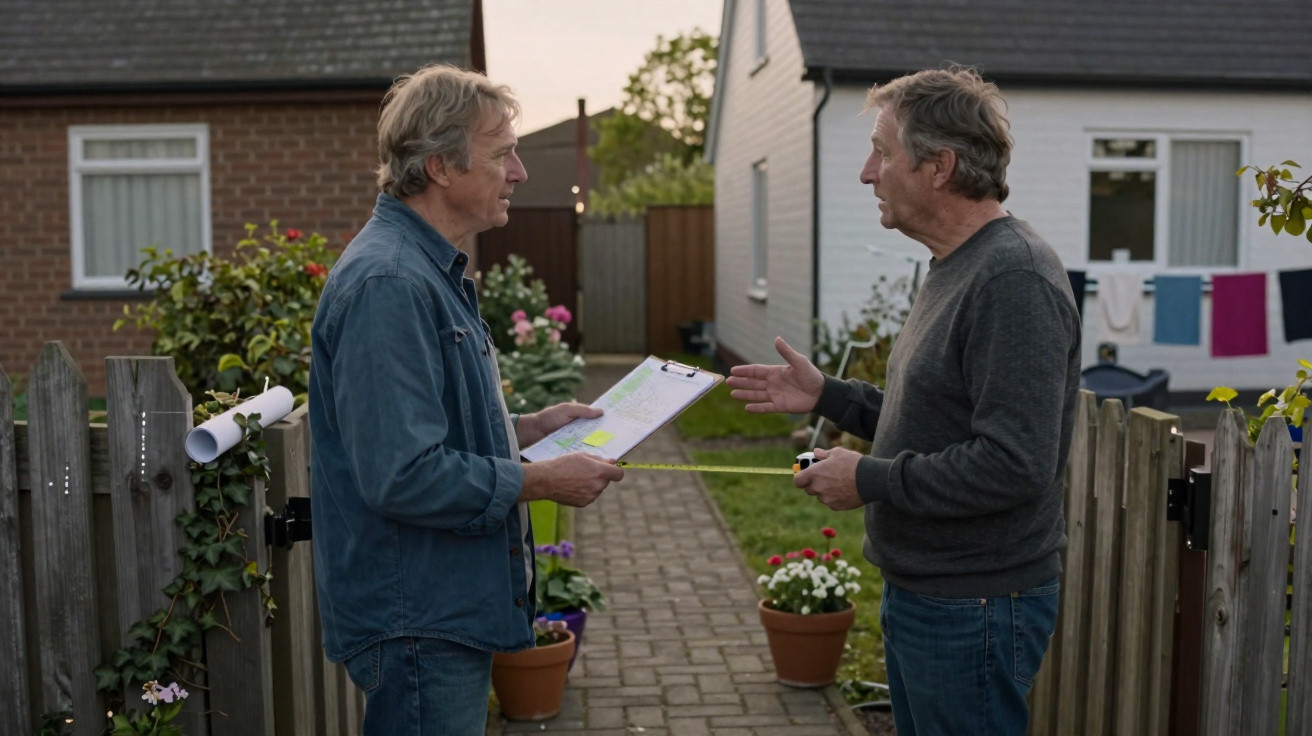
On a spring Saturday, Marc opens his gate, as he has done for fifteen years. His neighbour’s tyres crunch over the gravel as he crosses a strip of land scarcely wider than a car to reach his garage. At first, the arrangement seemed straightforward: two houses, a convenient route, a handshake and a wish to avoid spending thousands of euros on groundworks. Then routines took hold, hedges grew and vehicles changed. When Marc decides to sell part of his garden, his neighbour reminds him that “the track belongs to him too”. Suddenly, everything hinges on a few square metres that neither of them had truly considered for years. The old promise has abruptly become a serious burden.
A favour that gradually comes to look like a right
We all know the moment when offering a favour seems easier than starting a difficult conversation. In 2009, Marc agreed to let his neighbour Alain cross his land rather than create a separate access route, which was estimated at almost €12,000 at the time. Marc saw it as a temporary answer, pending possible building work. Yet something temporary that lasts for fifteen years soon starts to resemble an established rule. The gate was moved, gravel was laid and even a letterbox was installed near the entrance. Individually, none of these changes appeared significant. Taken together, they created a new way of using the site.
Initially, the two men maintained the track in turns. Alain drove along it in his car, occasionally towing a trailer, and Marc made no objection: he too valued having a neighbour available while he was away. Over time, though, small sources of tension emerged. A branch cut down without permission, a vehicle left parked for too long, guests using the route without understanding where the property boundaries lay. Depending on the circumstances, a few square metres can hold a great deal of frustration. The issue is not always the ground itself. It is what that land eventually comes to symbolise: privacy, the freedom to make decisions at home and, sometimes, the feeling of being treated with respect.
Under French law, allowing someone to travel across your plot does not automatically establish a right of way. An easement may be set out in a notarised deed, arise from a formalised agreement or, in certain specific situations, result from land being inaccessible. However, a verbal agreement, even a long-standing one, is fragile when memories no longer align. Marc says he lent temporary access; Alain describes a permanent arrangement made “between people who trust each other”. Time does not sign paperwork on an owner’s behalf. When the value of a house, a sale proposal or an inheritance becomes part of the picture, words exchanged over coffee years earlier are no longer enough.
What to check before neighbour relations become strained
The first step is to locate the records that genuinely set out the land’s history: the title deed, cadastral plan, previous deeds, any boundary agreement, correspondence and invoices relating to work on the track. The cadastre can help to show the plots visually, but it does not by itself determine a property’s legal boundaries. For that, a chartered land surveyor is often the most helpful professional. They take measurements, compare existing markers and can prepare a mutually agreed boundary determination if both neighbours are willing to take part. Naturally, this comes at a cost. Even so, a structured discussion almost always costs less than a dispute that drags on.
A common mistake is to wait for the first recorded-delivery letter before looking into what was agreed. People assume that everyone knows the position, that relations are good and that a neighbour will never challenge something they have always accepted. Honestly, nobody deals with these matters every day. However, where access is shared, the terms need to be set out before emotions take their place. The width of the route, permitted times, maintenance, authorised vehicles and costs should all be discussed calmly. This is not about mistrust. It is a practical way to protect a relationship that often matters more than a strip of gravel.
When disagreement arises, it is best to start with a measured conversation, ideally with clear evidence available to both sides. A court conciliator may also help restore dialogue before each neighbour retreats behind their solicitor.
“Peaceful neighbour relations are not based on conflicting memories, but on rules that everyone can read again,” notes a chartered land surveyor experienced in boundary disputes.
- Check whether the title deed contains an easement;
- Ask a professional to clarify the boundaries if there is any uncertainty;
- Put any agreement concerning use, maintenance and costs in writing;
- Arrange mediation before beginning lengthy and expensive proceedings.
When a few square metres expose fifteen years of unspoken tensions
In Marc and Alain’s case, the trigger was not a dramatic argument. It began with a ‘for sale’ sign placed at the far end of the garden. Marc wanted to transfer a buildable strip of land to his daughter, who hoped to build a small home there. Alain then realised that his usual route might disappear. He spoke of unfairness, Marc accused him of betraying his trust, and their wives stopped greeting one another. What began as a helpful gesture turned into a territorial dispute. Neighbour disputes often begin in silence, long before the first raised voice.
The most difficult aspect of this kind of situation is that both people can honestly believe they are in the right. Alain has helped maintain the track, contributed towards buying the gravel and used it daily without opposition. Marc, meanwhile, has never sold or given away this section of his land; in his view, he has shown patience, not made a lifelong commitment. When judges are asked to decide, they do not rule on the basis of likeability or how long a practice has existed. They consider the deeds, evidence, layout of the land and legal requirements for any possible right of way. A handshake remains a fine thing. It does not necessarily replace a signature.
There is also a more personal reality: living only metres away from someone you are in conflict with can be exhausting. Every gate slammed feels like a message, while every car parked too close can seem like a provocation. A written agreement also safeguards everyday peace. For Marc and Alain, mediation ultimately made it possible to consider limited access, with a contribution towards costs and a clearly specified width. Nothing can entirely erase the resentment that has built up, but an understandable rule can stop it from taking over everything. The land itself has not moved. It is the expectations surrounding it that have changed.
| Key point | Detail | Benefit for the reader |
|---|---|---|
| Verbal agreement | It may create an established practice without necessarily creating a lasting right. | Avoid confusing neighbourly tolerance with an official easement. |
| Documents to check | Title deed, easement, boundary agreement, plans and written correspondence. | Find evidence before the disagreement escalates. |
| Peaceful solution | Mediation, a chartered land surveyor and a written agreement governing use of the track. | Protect your land without permanently sacrificing neighbourly relations. |






Comments
No comments yet. Be the first to comment!
Leave a Comment