
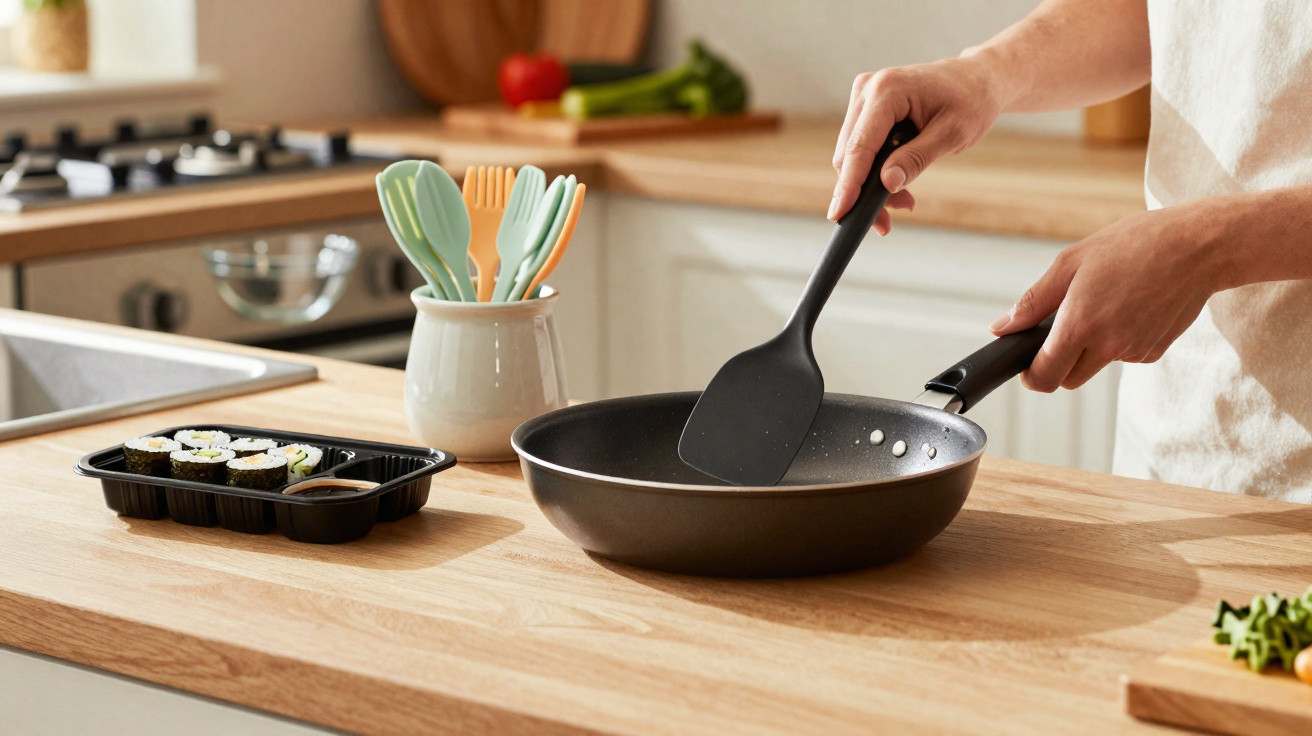
When you enter any kitchen, whether professional or domestic, one of the first things that stands out is the vast range of gadgets and utensils that support our cooking. Yet, among those plastic items, could there be hidden risks to your health?
A recent study examined black plastic kitchen utensils and containers in particular. The issue is not how well they work, but what they may contain.
Plastic hazards in everyday kitchens
This ordinary but indispensable kitchenware caught the attention of researchers at Duke University, who set out to discover whether these products contain more than they appear to.
Their focus was toxic flame retardants. Because many flame retardants have been linked to a higher cancer risk, hormone disruption and effects on neurodevelopment, they have been withdrawn or banned in many cases.
However, traces of them could remain in the plastic implements used every day to stir, serve and store food.
Chemicals from plastic utensils
As the world continues its well-meaning move towards increased recycling, it may unintentionally be creating an invisible loop in which chemicals are repeatedly reused.
Flame retardants are added to products such as televisions, where there may be a fire risk. In the recycling process, these substances can end up in kitchenware, including spatulas and ladles, even though such products do not need this protection.
Dr Heather Stapleton is a professor of environmental sciences and policy at Duke University's Nicholas School of the Environment.
“If you find these chemicals in a plastic spatula, does that mean it’s getting out of the spatula and into your food? We don’t have that answer yet,” said Dr. Stapleton. “Is it possible? Absolutely.”
Dr Stapleton noted that heating plastic causes it to release chemicals into its surrounding environment, including a favourite chilli or stir-fry.
Some foods, especially those with a high fat content, may pull out greater quantities of these chemicals, prompting concerns over everyday exposure.
Sushi trays: convenient but concerning
Supermarket sushi trays were identified as notable sources of harmful chemicals.
These handy containers contained high concentrations of toxic substances which, alongside lengthy contact with food, may result in possible exposure.
“As an exposure scientist thinking about contact with food and the likelihood these chemicals will leach out in significant amounts, I think there could be some exposure there,” said Dr. Stapleton. “But I don’t know that it’s going to be significant enough to raise concern.”
More research is required, and Dr Stapleton has already started analysing sushi trays.
Plastic spatulas and food trays
The findings did not cause the researchers to panic. Instead, they made personal adjustments while considering the wider problem.
Megan Liu, the study's lead author, stressed the need for policy changes that would make recycling processes transparent and remove these chemicals at their source.
Both researchers recognised that companies must take action and that governments need to ban these hazardous substances.
Following the study, Liu replaced her black plastic storage containers with glass alternatives.
Dr Stapleton, meanwhile, has kept one black spatula in her kitchen to protect her non-stick pan. She combines practicality with caution, advising people to be moderate and not become overly worried.
Steps to keep your kitchen safe
People looking for reassurance after these troubling findings can make several changes immediately.
It is advisable to throw away black plastic takeaway containers marked “No. 6”. They seem to contain particularly high levels of harmful chemicals.
Another constructive measure is to support businesses making positive progress in their handling of hazardous substances.
In light of the study's findings, choosing wooden or stainless-steel utensils may be a safer option.
What about silicone?
Silicone utensils, which are frequently marketed as a safer choice, also deserve closer scrutiny.
Because this material can attract chemicals from its surroundings, they could unintentionally make their way into food. Washing may help, but it might not remove many airborne chemicals.
Considering all these points, it may be worth reviewing plastic and other kitchen utensils for more than their usefulness, including their possible effects on food and health.
For anyone intending to change their kitchenware, wooden, stainless-steel and bamboo utensils are non-toxic alternatives to consider.
The complete study was published in the journal Chemosphere.





Comments
No comments yet. Be the first to comment!
Leave a Comment