
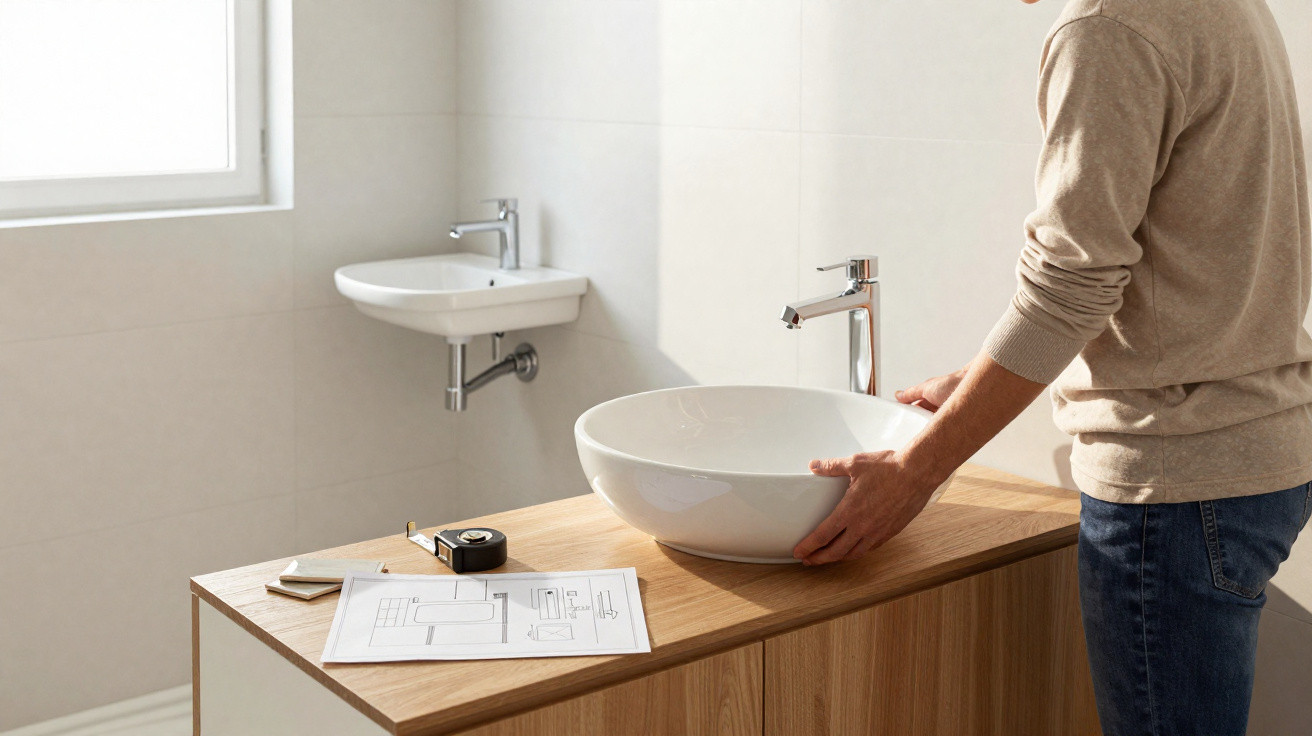
The traditional undermount basin, fitted beneath the worktop, is increasingly sharing bathroom space with countertop designs and wall-hung versions. These alternatives can make a refurbishment easier, free up the lower part of the bathroom and suit compact rooms more effectively, without requiring the entire existing unit to be replaced.
Why is the undermount basin becoming less common in bathrooms?
An undermount basin creates a seamless, understated surface, yet fitting one relies on precise cut-outs and a compatible worktop. If damage occurs, the basin size changes or an update is needed, part of the cabinet may have to be dismantled and the finish redone.
The bowl also takes up space inside the unit. In small bathrooms, the area beneath the basin is often needed for storing toiletries and cleaning products, while a deep bowl can significantly reduce this storage capacity.
How can a countertop basin reduce refurbishment costs?
A countertop basin sits on top of the surface, so only the waste fitting and pipework need to pass through the worktop. In many situations, the existing cabinet can remain in place, provided its structure can carry the weight and is protected from moisture:
- Check that the worktop is sturdy and level;
- Alter the opening for the waste valve if needed;
- Select a tall tap or one fitted directly to the wall;
- Make sure the finished height will be comfortable for everyday use;
- Apply suitable sealing around the base of the basin;
- Leave enough room to clean the surface.
What is the benefit of a wall-hung basin in a small space?
A wall-hung basin is secured directly to the wall, removing the need for a worktop or a cabinet reaching the floor. With the area below left open, the bathroom feels less crowded, offers more comfortable access and makes it easier to clean with a cloth or floor squeegee.
This type can also be paired with a small shelf, towel rail or a more discreetly finished trap. The wall must be in good condition and fitted with suitable wall plugs and brackets, as the fixing will support the full weight of the ceramic and water.
Which shapes work best in compact bathrooms?
Rounded or oval designs, as well as those with reduced depth, take up less visual space and lower the chance of knocking into them in narrow areas. The choice should account for more than the basin width: door clearance, room circulation and the distance to the toilet must also be considered:
- Small round basins for narrow worktops;
- Oval models with soft, minimally projecting edges;
- Corner wall-hung basins for compact cloakrooms;
- Shallow pieces when the cabinet needs to retain internal space;
- Wall-mounted taps to free up the worktop surface;
- Light colours to lessen the visual weight of the overall arrangement.
The new solution avoids replacing the entire unit
Changing the basin can be more economical when the existing worktop remains sound, level and free from leaks. Fitting an above-counter basin involves fewer alterations than a full refurbishment, although the pipework position, tap height and load-bearing capacity of the material still need checking.
Alternatives to the traditional undermount basin make better use of the worktop or leave the floor completely clear. Between a countertop basin and a wall-hung basin, the best option is the one that reduces obstructions, maintains circulation and makes the bathroom easier to clean.




Comments
No comments yet. Be the first to comment!
Leave a Comment