
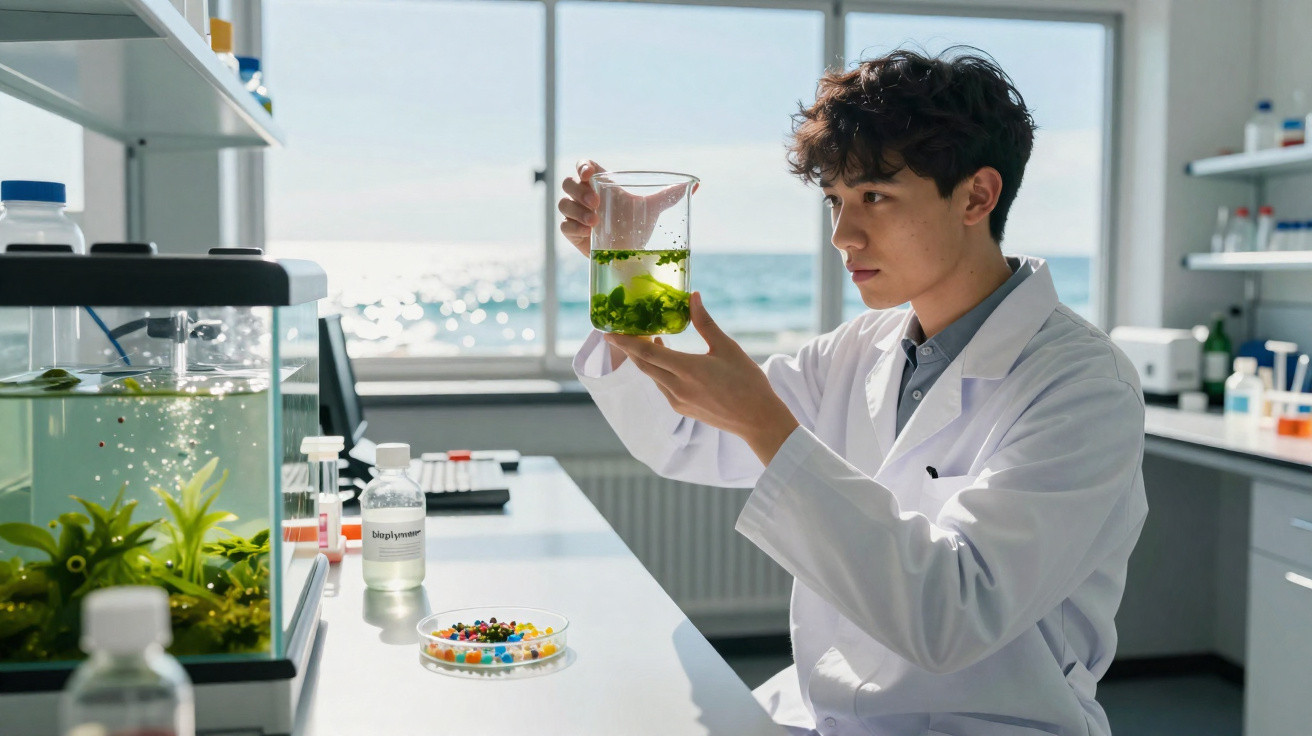
Harmful algal blooms – ranging from poisonous “red tides” to expansive green surface scums – are appearing ever more often in waters worldwide.
These events are not merely unattractive. They can kill marine organisms, force beach closures, interfere with fisheries and pose major risks to public health.
In southern Australia, for instance, a toxic bloom has lasted for about nine months, extending along a huge area of coast and contributing to large-scale deaths among marine species.
For many decades, researchers have mainly attributed such events to nutrient pollution. Run-off from fertilisers, sewage and other sources of surplus nutrients can accelerate algal growth until ecosystems become unbalanced.
However, new research by UC San Diego identifies a subtler, less apparent factor that could be helping these blooms become established: plastic pollution.
Plastic pollution reaches every environment
Microplastics have already spread throughout the planet, from sediments on the ocean floor to polar ice. Their presence is no longer solely an environmental concern: minute plastic particles have been found in human blood and organs including the brain and lungs.
Biodegradable plastics have been promoted as a less harmful option in response. The UC San Diego researchers set out to examine how these newer materials compare with conventional fossil fuel-based plastics under realistic, ecosystem-like conditions.
“We see all this plastic out there, but how is it changing populations of algae, bacteria, seabirds, or fish? We really don’t know,” said biological sciences professor Jonathan Shurin, the senior author of the study.
“Algal blooms are partly due to nutrient pollution, but this study shows that some blooms may also be due, in part, to the effects of plastic on the animals that normally control algae.”
Simulating ecosystems with plastics
Researchers from UC San Diego’s ecology and chemistry departments conducted a three-month experiment using 30 tank ecosystems designed to resemble ponds.
They assessed standard polyurethane plastic made from fossil fuels against a biodegradable plastic. The biodegradable material included a product created at UC San Diego.
A large share of research into algal blooms examines “bottom-up” pressures. When additional nutrients enter water, algae grow rapidly; after the algae die, their decomposition removes oxygen and produces dead zones.
Instead, this research examined another route: a “top-down” breakdown, in which algae proliferate after the animals that graze on them disappear.
These grazers are commonly zooplankton – tiny animals that drift through the water, feed on algae and are themselves eaten by fish and other organisms. Healthy zooplankton populations provide a natural restraint on algal growth.
Petroleum plastics fuel algae
Tanks containing petroleum-based plastic underwent an immediate, striking shift, with zooplankton populations falling steeply.
As the number of grazers declined, algae increased rapidly – the precise sort of surge that can create conditions for blooms.
The tanks with bio-based plastic responded differently. Scientists recorded a far smaller reduction in zooplankton, alongside less disturbance across the wider ecosystem.
“The petroleum plastic seemed to have a strong negative effect on the zooplankton populations,” said study first author Scott Morton.
“They appeared to either die off or reduce their reproduction very quickly. Bioplastic didn’t have the same effect, and that cascades down to the algae.”
“In the petroleum tanks, fewer zooplankton consuming algae meant more algae remained in the system, which led to the algal blooms we observed.”
Put simply, plastics may do more than place additional strain on ecosystems. They may also remove crucial organisms that would ordinarily stop algae from dominating.
How microbes respond to plastic
The team also detected shifts in microbial communities, including bacteria and algae, according to the type of plastic present.
Different bacterial communities appeared to grow on or around the plastics, although the researchers do not yet know precisely what causes those variations.
The central finding is that microplastics could push ecosystems towards conditions that favour blooms by disrupting food-web interactions and microbial equilibrium.
The results indicate that microplastics may shift environmental conditions towards algal blooms and, more broadly, demonstrate that microplastics – particularly petroleum-derived plastics – can disrupt the structure and function of microbial communities.
Bioplastics have fewer effects on algae
The researchers stress that biodegradable plastics should not be considered free of impacts. Any material introduced by humans into natural environments can bring about change.
Even so, the findings indicate that reducing reliance on petroleum-derived plastics could lessen some of the most harmful ecological effects in aquatic settings.
That change may be particularly significant if conventional plastics are removing the organisms that usually keep algal growth under control.
For years, co-author Michael Burkart and his team have developed bio-based plastics intended to degrade in natural conditions and be used for everyday items including surfboards, flip-flops and phone cases.
“It is critical for us to understand how these new materials compare to traditional petroleum plastics when discarded in the environment,” Burkart said.
The authors noted that their findings suggest microplastics may shift environmental conditions in favour of algal blooms.
Collectively, the findings demonstrate that microplastics – especially petroleum-derived plastics – can destabilise microbial community structure and function.
Expanding plastic research
The experiment represents an initial step rather than a definitive answer. The researchers are now evaluating further types of biodegradable plastics, including a “living plastic” concept containing bacterial spores intended to help the material break down once its useful life ends.
Should the results be confirmed across additional materials and real-world conditions, they would indicate that harmful algal blooms can have several causes.
Nutrients may drive algal growth, while plastic pollution could be undermining the natural controls that normally keep algae in balance.





Comments
No comments yet. Be the first to comment!
Leave a Comment