
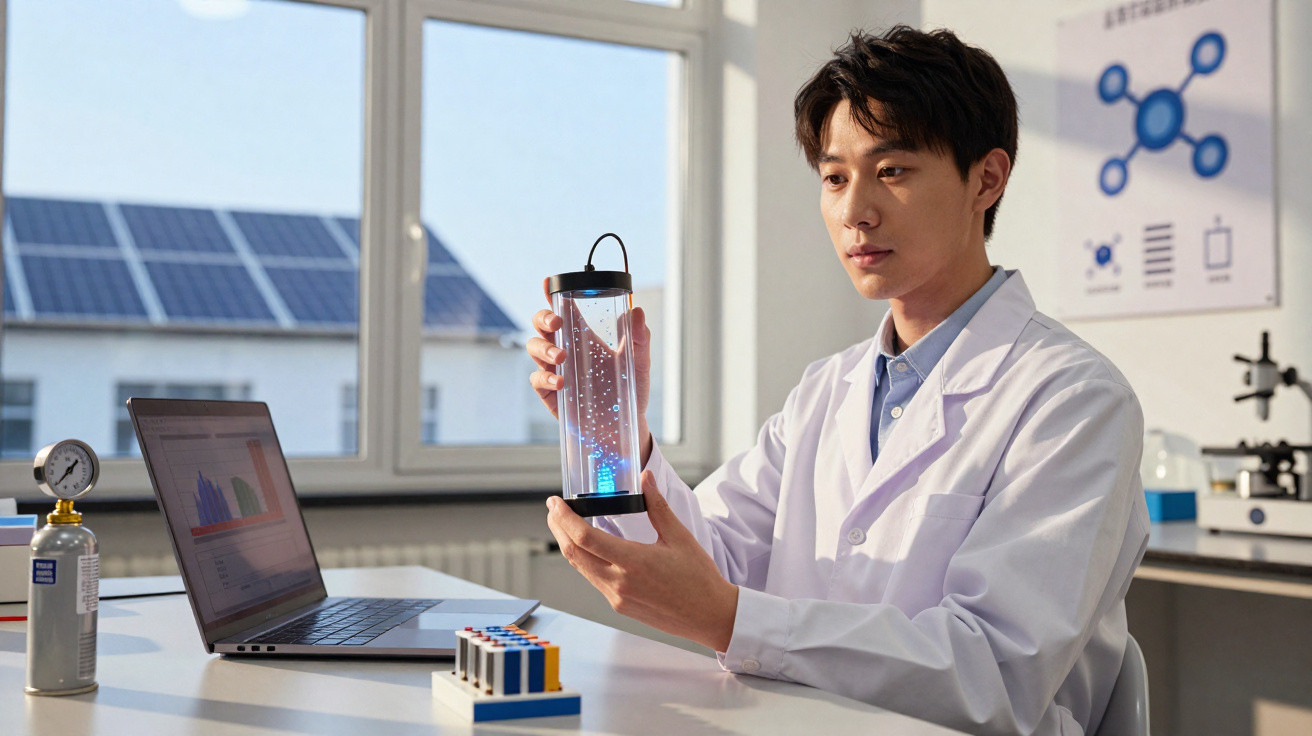
The search for energy-storage sources is driving remarkable scientific progress across Asia. A recent innovation from China could transform the electricity sector by efficiently combining the storage of electricity and hydrogen without the need for high pressure.
How does the new hydride-ion battery work?
Created by leading researchers, this experimental design relies on an innovative gas-solid system. While discharging, the gas is transformed into specific ions that react directly with metallic magnesium, producing magnesium hydride within the device itself.
This process functions like a chemical sponge, trapping the element in a solid material. It is fully reversible during charging, enabling the system to provide dual storage for electricity and clean fuel in a safe and highly practical way.
How can battery waste be turned into green hydrogen?
A new method can reuse the acid and plastics from old batteries to produce clean fuel... Read more
What were the prototype's main results?
Laboratory trials revealed an impressive initial capacity for the tested device. The technology also retained more than seventy per cent of its original capacity after sixty operating cycles, demonstrating promising stability for future applications in the energy market.
Another notable result was the energy-efficiency rate delivered by the proposed process. It reached ninety-three point nine per cent, overcoming historic limitations and paving the way for integrated solutions on a large industrial scale without requiring expensive equipment.
Below is a video from the SciTech Daily YouTube channel that examines the points discussed in this topic in greater depth:
Why does this hydride-ion battery remove the need for high pressure?
Conventional systems require extreme compression or cryogenic cooling to store the gas. The new chemical cell avoids these constraints by binding the molecules within a solid structure, ensuring much safer operation while lowering infrastructure-related operating costs.
A specific solid electrolyte is essential for conducting the ions. This intermediate layer stabilises the entire system and prevents hazardous leaks, setting a new safety benchmark for the sustainable technology sector.
Essential technology kit
Innovative components
The principal elements underpinning this battery's efficiency include:
- An innovative solid electrolyte with the formula 3CeH₃@BaH₂;
- A metallic magnesium anode for the reversible reaction;
- A gas-retention mechanism that does not require high pressure.
Who is behind this scientific discovery?
The project was led by researchers at the Dalian Institute of Chemical Physics. This distinguished institution is affiliated with the Chinese Academy of Sciences, where specialist teams directed by scientist Chen Ping work on the development of solutions for the energy future.
Co-operation between chemists and engineers made it possible to overcome complex challenges in synthesising solid materials. This advance marks a major milestone in next-generation battery research and strengthens Asia's leading role in the transition towards clean energy sources.
The key pillars supporting this scientific advance are highlighted below:
- Direct chemical integration between magnesium and hydride ions;
- The removal of any need for high-pressure compressors;
- A high rate of capacity retention throughout recharging.
What does the future hold for energy storage?
Bringing electricity and hydrogen together in one system creates promising opportunities for renewable electricity grids. The ability to store resources without significant losses can help address the intermittency of solar and wind plants, maintaining stable supply for urban and industrial uses.
Although the prototype still faces scaling stages, its current results provide a strong foundation for further research. Improving these gas-solid batteries could reshape the global energy mix, speeding worldwide adoption of alternatives with low environmental impact and high efficiency.





Comments
No comments yet. Be the first to comment!
Leave a Comment