
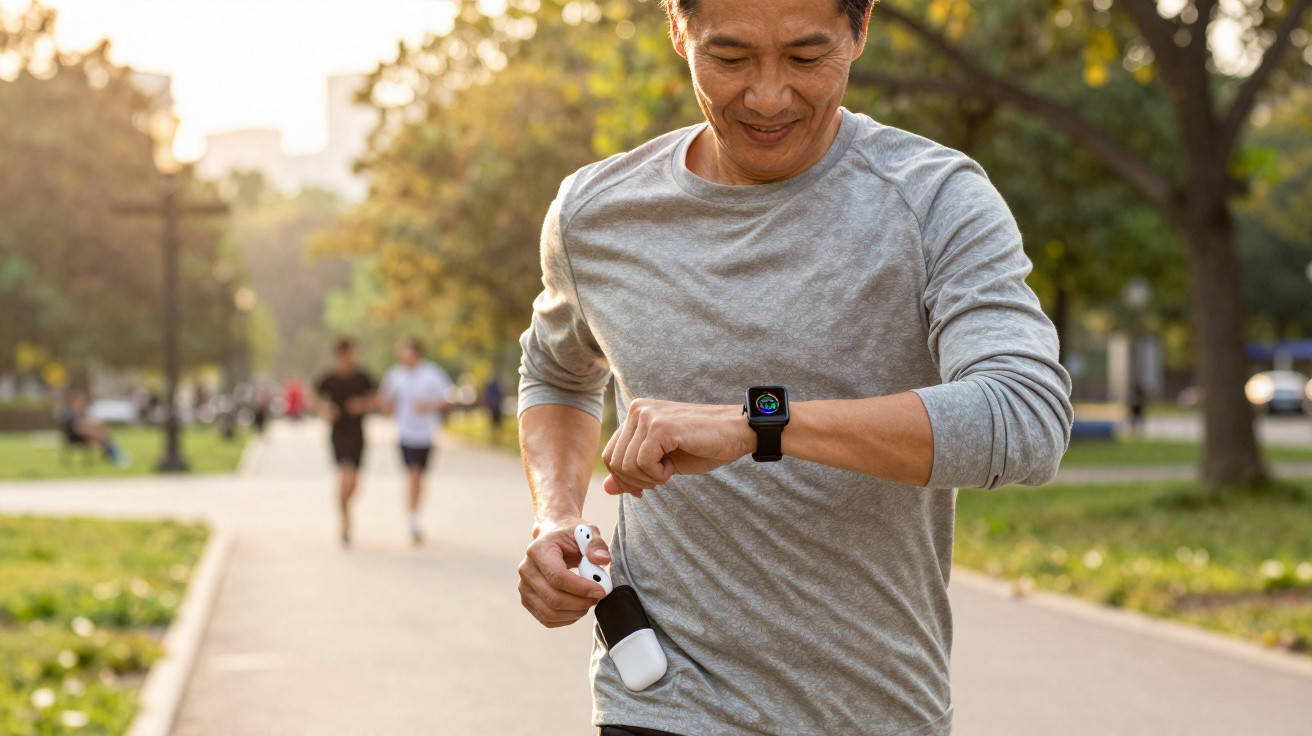
The biggest challenge in any exercise routine is maintaining it. About half of people who begin an exercise programme give up within six months.
However, our latest research showed that wearables, including smartwatches, do more than encourage people to begin exercising. Compared with people who did not use a smartwatch, users were seven times more likely to remain active after six months.
Our research examined adults recently diagnosed with type 2 diabetes. Physical activity is central to managing type 2 diabetes because it can help control blood sugar, promote cardiovascular health and enhance quality of life.
Nevertheless, roughly 90% of people with type 2 diabetes do not achieve the recommended weekly amount of physical activity. Frequently reported obstacles are limited motivation, uncertainty about which activities are safe, and insufficient personalised support.
We evaluated a new method designed to address these barriers through wearable technology and remote coaching. Participants following a remote coaching programme supported by a smartwatch were 10 times more likely to begin an exercise routine than those receiving remote coaching alone.
The study included 125 adults, aged 40 to 75, in the UK and Canada who had recently received a type 2 diabetes diagnosis. Every participant collaborated with an exercise specialist to create an individualised six-month physical activity plan.
The plans aimed to steadily raise both moderate-to-vigorous exercise, targeting 150 minutes each week, and everyday lifestyle activity. Participants received support remotely by telephone or video call.
Half of the group were randomly allocated wearable technology to help them follow their tailored activity plans. Their smartwatch included movement and heart-rate sensors, a mobile app for recording activity, and personalised text messages informed by their recent progress. Participants could also contact their coach, get real-time feedback and alter their activity plans when needed.
The findings were notable. Relative to the control group, smartwatch recipients were ten times more likely to exercise regularly, seven times more likely to remain active after six months, and three times more likely to still be active after one year – including after the support had finished.
By the programme’s end, more than 50% of the smartwatch group met recommended activity levels. Just 17% of the control group did so.
Participant feedback indicated that flexible plans, tailored messages and data from the smartwatch were important sources of motivation. Although some people initially experienced difficulties using the technology, most adjusted rapidly.
These results add to increasing evidence that wearable technology can support people in becoming, and remaining, more active. Although our study involved people with type 2 diabetes, comparable effects have been found among the wider population.
For instance, one trial reported that inactive adults aged 45-75 who received pedometers alongside walking guidance added approximately 660 steps to their daily total after 12 weeks, compared with a control group. Those given a pedometer also remained more active three years afterwards.
Wearable technology has developed considerably since then. Today’s smartwatches measure a broader set of indicators than step counts alone, including heart rate and activity intensity.
A 2022 systematic review and meta-analysis of more than 160 randomised controlled trials concluded that fitness trackers and related devices increased physical activity by an average of about 1,800 steps a day. Crucially, the improvements that lasted longest were seen when wearables were combined with personalised feedback or behavioural support.
Taken together, this research indicates that wearables may be valuable tools for lasting behaviour change, helping us adhere more effectively to fitness goals.
Wearable fitness trackers can be highly useful – but only when they are used with intention. Our findings, together with evidence from other research, suggest that wearables work best when they enable proven behaviour-change strategies.
Here are evidence-based ways to make the most of your device:
1. Set realistic, specific goals
Decide precisely when and how you will be active. Apps may help you establish targets for each day or week. Evidence suggests that turning broad ambitions, such as "get fit", into manageable, specific actions makes motivation easier to sustain and prevents you from feeling overwhelmed.
2. Schedule activity and follow through
Create a dependable routine with reminders or calendar alerts. Regularity creates habits, while planned activity makes it less likely that you will miss exercise because you forgot or failed to prepare.
3. Track your progress
Keeping an eye on your activity can strengthen both motivation and accountability. Seeing that your efforts are having an effect can raise motivation, reinforce your sense of control and increase accountability.
4. Use small rewards
Many devices offer features including badges and streaks that recognise progress. Marking small successes creates a feeling of achievement, encouraging you to continue and supporting the development of long-term habits.
5. Share with others
Sharing your progress with a friend or coach may improve commitment. When other people know about your goals, you may feel more motivated, receive encouragement and find it easier to deal with difficulties.
6. The tracker is a tool, not the solution
A tracker will not alter behaviour by itself. Its benefit comes from the way it assists your goals and supports the creation of enduring habits.
These approaches do more than promote short-term change: they foster motivation, confidence and routine, all of which are essential to sustaining healthy habits over time.
Our research indicates that wearable technology can have a meaningful impact when it forms part of a structured and supportive programme – particularly for people managing conditions such as type 2 diabetes.
Combining wearable technology with individualised coaching and established behaviour-change methods may give you a better chance of maintaining your physical activity goals.
Matthew Cocks, Reader, Exercise Physiology, Liverpool John Moores University and Katie Hesketh, Assistant Professor in Exercise Prescription, University of Birmingham
This article is republished from The Conversation under a Creative Commons license. Read the original article.



Comments
No comments yet. Be the first to comment!
Leave a Comment