
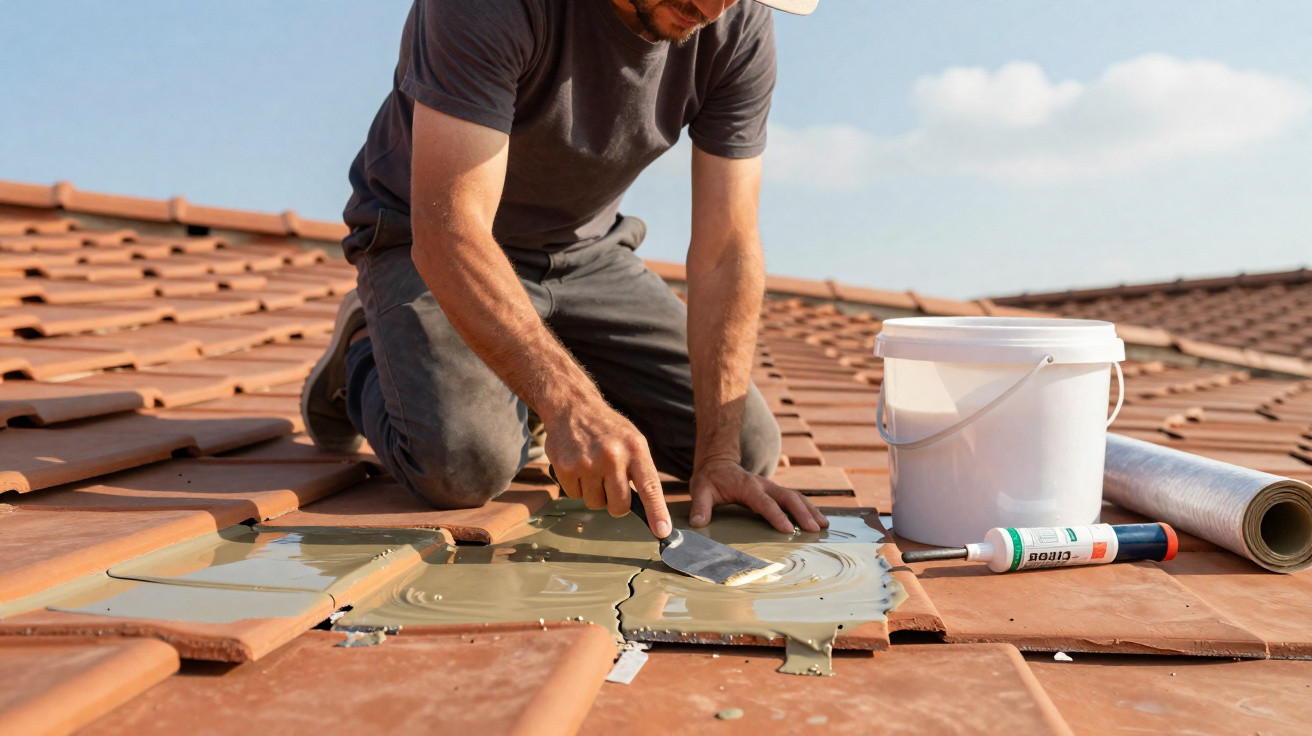
Plastic roof sealant is an acrylic paste designed to fill cracks, joints and areas vulnerable to water ingress. Applied before waterproofing, it bonds to the substrate, accommodates minor movement in the building and helps stop rainwater from reaching the inside of the roof slab.
What is acrylic plastic cement?
Acrylic plastic cement is a paste-like repair compound, usually water-based, for fixing small openings in external surfaces. It can be applied directly with a filling knife and serves as a preparation stage before the waterproofing product is used.
Areas that commonly receive the product include:
- Surface cracks in concrete roof slabs;
- Joints and seams between different materials;
- The bases of water tanks, pipes and skylights;
- Junctions between walls, roof tiles and roof structures;
- Small areas where moisture has started to penetrate.
Why does the material withstand rain and temperature changes?
Its acrylic formulation retains a degree of flexibility after drying. As a result, the layer can follow minor expansion and contraction caused by heat, cold and normal roof movement without immediately coming loose.
Some products also contain reinforcing fibres, which increase the paste's strength and help it bridge the crack. Rain resistance, however, relies on full curing: the sealant must not be applied during rainfall or onto a saturated substrate.
How do you apply sealant directly to a crack?
The surface must be sound, dry and free from dust, grease, loose material or peeling waterproofing. Applying the paste over dirt can prevent adhesion, causing the seal to detach along with the old coating.
- Open up and thoroughly clean the crack;
- Remove loose particles using a brush;
- Press the product into the opening with a filling knife;
- Smooth the paste across the edges of the crack;
- Place reinforcing mesh between two coats in areas under greater stress;
- Allow the stated drying time before waterproofing.
When will the paste not solve the problem on its own?
Acrylic plastic cement is intended for ordinary cracks and localised repairs. Wide gaps, holes, broken components or cracks that continue to grow need to be repaired with a suitable building material before the repair compound is applied.
Certain signs suggest that the leak may have a deeper cause:
- A crack that returns soon after repair;
- Concrete sections breaking away or showing rust;
- Standing water caused by insufficient falls or drainage;
- Water ingress spread across a large area of the ceiling;
- Noticeable movement between slabs, walls or roof tiles.
Sealing works best before waterproofing
Sealant deals with specific areas, but it does not replace the roof's complete waterproof layer. Once the repair has dried, applying a compatible system protects the entire surface and limits water entering through pores and other cracks that are still difficult to spot.
The outcome depends on cleaning, the applied thickness and adherence to the drying time, which can vary according to the product and weather conditions. When used on a properly prepared substrate, acrylic repair compound strengthens cracks and joints before rain turns minor defects into drips and damp stains.






Comments
No comments yet. Be the first to comment!
Leave a Comment