
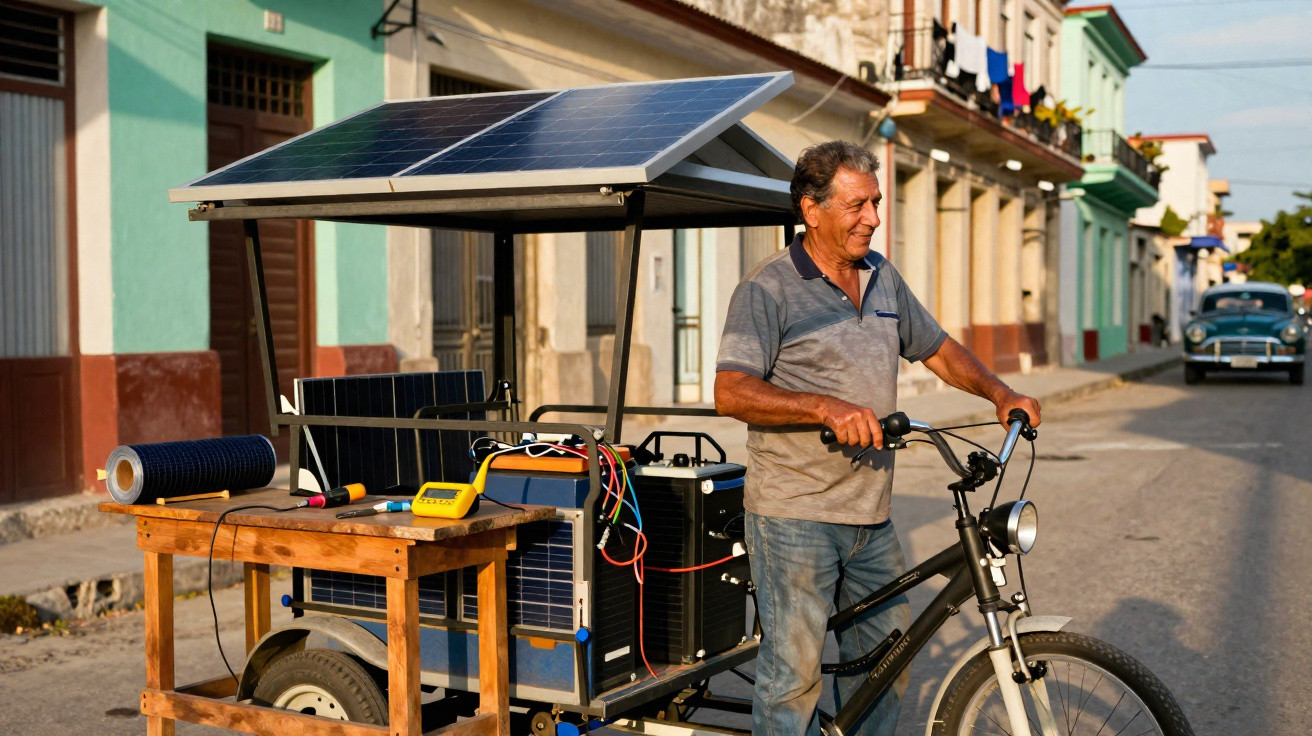
Cuba’s severe energy crisis has prompted creative solutions on the streets of Havana. A young entrepreneur has created a home-made system that can supply commercial vehicles, protecting local workers’ livelihoods by harnessing clean solar energy.
How are these solar panels made at home?
Working on the outskirts of Havana, young entrepreneur Yadán Pablo Espinosa has set up a family workshop without government subsidies. Together with relatives and a friend, he makes the metal structures required to secure the equipment to electric tricycles, operating entirely independently.
In under a month of uninterrupted work, the small team successfully fitted more than fifteen urban vehicles. This pioneering initiative stands out for its practical speed, with key features illustrating the ecological project’s genuine impact on the community:
- Power: 550- to 650-watt panels mounted directly on the vehicles.
- Charging: Electricity is generated continuously while the transport is moving.
- Structure: Iron brackets are handmade in the family workshop.
- Protection: The metal frame also provides shelter from heat and rain.
- Autonomy: It reduces the fear of the battery running completely flat during a working day.
What are the real benefits for drivers?
Acute fuel shortages and repeated power cuts have made getting around the city a daily challenge. Photovoltaic panels therefore provide vital financial relief to those who rely on Havana’s streets to carry goods and secure stable earnings.
Local drivers say the system prevents them from losing valuable fares at the end of their shifts. Constant charging while they work in intense sunshine improves vehicle performance, enabling the extra journeys needed to support their families with greater security and peace of mind.
How does Cuban solar radiation support the project?
Cuba has an excellent natural geographical advantage for using renewable energy sources. The island receives significant daily solar radiation per square metre, supporting the immediate technical viability of this type of vehicle charging mechanism.
Solar energy data in Cuba
Radiation and government targets
Average solar radiation across the island reaches around 4.95 kilowatt-hours per square metre each day. This abundant resource underpins the full operation of the systems developed by Yadán’s workshop.
The Cuban government has set a target of producing 24% of its total electricity from renewable sources by 2030, including solar parks and large hydroelectric plants.
Although solar panels cannot independently power heavy motors in full, they provide valuable ongoing support. In ideal weather conditions, the electricity produced eases pressure on the national power system through the following verified technical parameters:
- An additional generation of 2.6 to 3.2 kilowatt-hours per day.
- Use of five daily hours of peak, intense sunshine.
- Direct relief for the accumulated load on the trikes’ original batteries.
What challenges does the family workshop face?
Despite its considerable practical success, the creators face serious supply limitations in Cuba. Imported components are expensive, while reliable logistical access to global supply chains remains restricted, making it difficult to expand the service to every worker interested in the technology.
Beyond the purely economic barriers, strict technical criteria concern the day-to-day safety of urban passengers. Hand-built vehicle installations require continual maintenance and thorough inspections on public roads because of the following recurring physical obstacles:
- Strong vibrations caused by potholed roads and streets.
- The risk of loose brackets on heavily travelled routes.
- Direct exposure to storms and high summer temperatures.
What is the main lesson of this community innovation?
The initiative clearly shows that the energy transition does not need to rely solely on major government infrastructure projects. This decentralised adaptation demonstrates how people can develop rapid solutions when official systems progress slowly, fostering valuable local energy autonomy.
While the handmade panels do not fully solve Cuba’s widespread power cuts, they perform an invaluable social role. The project protects jobs and keeps drivers active on the streets for longer, proving that every recharged battery represents a real victory.
References: Electric tricycles with solar panels: Cuban ingenuity sharpens amid the oil blockade – SWI swissinfo.ch



Comments
No comments yet. Be the first to comment!
Leave a Comment