
On a dull Tuesday morning, Sam stood in his garage looking at a jumble of copper pipework, a used hot-water cylinder and a well-worn toolbox. Somewhere, an uninsulated valve was making a steady drip-drip-drip, a small metronome for his growing uncertainty. He had read countless forum posts claiming a homemade hot-water system could “beat any boiler on the market” and cut a gas bill by 50%. It was an appealing prospect. Almost a noble one.
Then the day’s first shower lost its heat halfway through, and the truth became clear. The water had been hot. The energy existed. It simply... got away.
This is the issue that most DIY enthusiasts, and even plenty of professionals, would rather avoid discussing. Generating heat is not the real challenge. The real fight is preventing it from escaping at three crucial points.
Why homemade hot-water systems rarely beat boilers on their own
The first surprise usually arrives when households compare their energy bills. They fit an inventive homemade system – perhaps solar thermal panels, a converted heat pump or a makeshift thermal store – and wait for the dramatic savings. The water is warm and the equipment looks convincing, yet the reduction in costs is frustratingly modest.
The cause is generally out of sight. Heat escapes through uncovered pipes, poorly insulated cylinders and draughty cupboards well before a tap is turned on. Suddenly, the boiler does not seem quite so “inefficient”. It is merely shedding less heat on its journey.
Consider Emma and Louis, who lived in a 1970s semi-detached house. They replaced their old gas boiler with solar thermal panels and a large second-hand cylinder, which they installed themselves with considerable pride. Their bills fell slightly in the first month, then barely moved in the second. By winter, expensive bills and brief showers had returned.
One evening, a friend brought round a thermal camera. Its images were unforgiving. Their hot-water cylinder cupboard shone vivid orange, while the pipes beneath the floor appeared like fluorescent veins. Heat was pouring into parts of the house that nobody occupied, around the clock.
The physics becomes almost tediously obvious once examined. Hot water is stored energy. When that energy has numerous simple routes out – narrow copper pipe runs, uncovered fittings and leaking valves – it gradually disperses into the surrounding environment. Boilers often “win” not because they perform some efficiency miracle, but because their tanks and pipework tend to be shorter, more contained and better insulated from the outset.
A homemade system can certainly surpass a boiler in both running costs and carbon footprint. However, one condition is essential: heat loss must be aggressively reduced at three bottlenecks – the cylinder, the pipework and the standby controls that quietly keep the system hot when there is no need.
The three places where heat quietly disappears
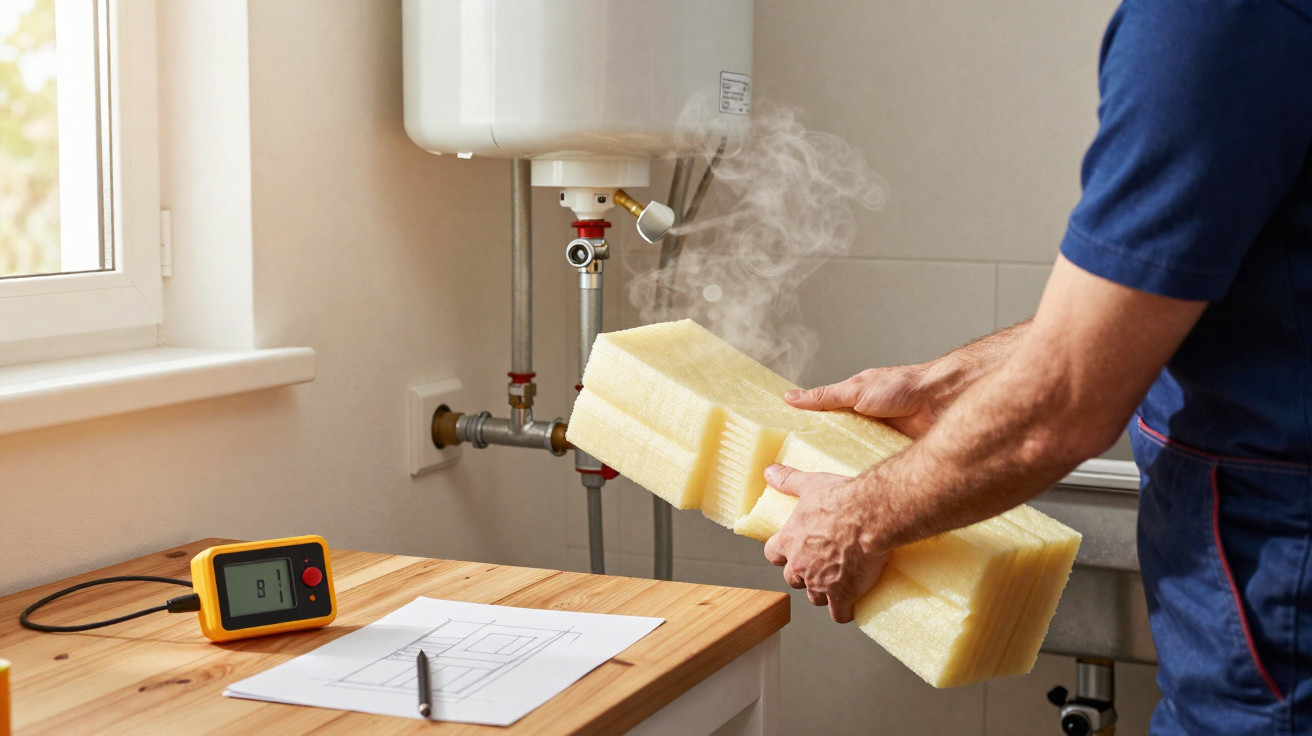
Begin with the system’s core: the hot-water cylinder or storage tank. That large metal vessel in a loft or airing cupboard can act either as an enormous flask or an enormous radiator, depending on its treatment. Older cylinders with a thin foam jacket, or no jacket at all, can lose an alarming quantity of heat each hour.
The first solution is almost absurdly straightforward: insulate it properly. A modern factory-insulated cylinder or a thick, close-fitting jacket can reduce cylinder heat loss by half or more. This is not just a theoretical gain. It can mean reheating a full cylinder twice daily instead of merely replacing the slow trickle of heat that escapes.
Next come the pipes: the overlooked lengths winding through voids, lofts and spaces below floors. Homemade systems often require lengthy routes between solar panels and cylinders, or between thermal stores and bathrooms. Each metre of exposed hot pipe is much like leaving a window slightly open throughout winter.
Most people recognise the experience of opening a tap and wasting litres while waiting for hot water to arrive. That delay is more than an inconvenience. It shows how much energy is being released into walls and cavities rather than reaching the shower. Reducing pipe lengths, fitting thicker lagging and removing unnecessary detours can dramatically improve both the feel and cost of a DIY setup.
The third source of loss is less obvious: standby and control loss. To avoid the dreaded cold shower, many homemade systems remain switched on all day. Thermostats are set excessively high, timers are left untouched after installation, and pumps keep circulating water through loops that ought to remain cold. In reality, hardly anyone alters a hot-water timer three times per day.
That easy default quietly destroys efficiency. Boilers commonly have more closely integrated controls. By contrast, a DIY system requires intentional routines: practical temperature settings, heating periods aligned with everyday life and smart valves that isolate circuits when demand is absent. Without this approach, the system continues feeding heat into a network that is cooling slowly, hour after hour.
How to actually cut heat loss so your DIY system beats a boiler
The most useful step is also remarkably unglamorous: measure first, then insulate. When the system is operating, run a hand along accessible hot-water pipes and notice how rapidly they shed warmth. Buy good-quality insulation sleeves matched to the pipe diameter and cover every accessible length, particularly those in unheated areas such as lofts, garages and crawl spaces.
Carry out the same visual assessment on the cylinder. If it appears thinly insulated, damaged or seems to radiate warmth into the room, deal with it. A substantial modern jacket, or a replacement cylinder with integral insulation, can make a decisive difference. Nothing added to the heat-production side – larger panels, additional pumps or sophisticated controls – will matter if the cylinder and pipework are losing heat all day.
The following change concerns behaviour, and it is where people can feel a little uncomfortable. Many households programme hot-water timers “just in case”: early morning, lunchtime, early evening and late at night. It becomes a permanent fallback. The system then spends longer maintaining heat than supplying water that is actually used. If this sounds familiar, you are far from alone.
Run a trial for one week. Narrow the programme to suit actual household habits: perhaps a 60–90 minute period before the first shower and another before evening baths. Reduce the cylinder thermostat by a few degrees, then find out whether anyone notices. Most families learn that they were overheating their water to manage anxiety rather than meet genuine demand.
“Once we stopped treating the cylinder like a bottomless cauldron and more like a battery we had to protect, the numbers changed,” said Marc, a DIYer who reworked his solar hot-water system. “The tech didn’t change. Our attention did.”
Prioritise the tank
A properly insulated cylinder with a sensible thermostat setting can sharply reduce standing losses before any other work is undertaken.Lag all exposed hot pipes
Concentrate on lofts, garages, underfloor pipework and lengthy runs between the heat source and taps, where heat loss is at its worst.Adopt smarter control routines
Shorter heating periods, lower temperatures and isolating valves on rarely used branches can move homemade systems into genuinely high-efficiency territory.
When homemade hot-water systems finally pull ahead of boilers
The shift often happens without much drama. The equipment is unchanged: the solar collectors remain the same, the cylinder still sits in the same cupboard and the pumps continue humming. Yet the cylinder has better insulation, the pipes no longer shine in thermal-camera images, and the hot-water programme reflects real household routines rather than indistinct worries.
Bills gradually begin to fall from month to month. The system no longer short-cycles. Showers become more reliable. What once resembled a homemade science project starts to feel like a system calibrated for the home rather than for a brochure.
This is when the figures can genuinely outperform a boiler, rather than only doing so on idealised laboratory charts. Heat from the sun or a low-temperature heat pump is stored with care rather than waste. Energy that previously disappeared into lofts and cupboards finally reaches taps and radiators. The divide between theoretical performance and lived experience becomes smaller.
There is a broader question for anyone considering DIY energy: are you pursuing new technology, or are you prepared to undertake the quiet, unglamorous task of protecting the heat you have already paid for? The strongest homemade systems are rarely the most complicated. They are the systems in which somebody has paid attention to every degree that could otherwise vanish unnoticed.
| Key point | Detail | Value for the reader |
|---|---|---|
| Tank insulation | Upgrade or wrap cylinders to reduce standing losses substantially | Hot water remains useful for longer with less energy required |
| Pipe lagging | Insulate lengthy and exposed hot-water pipework, particularly in unheated areas | Hot water reaches the tap faster and total heat loss falls |
| Smarter controls | Use shorter heating periods and realistic temperature settings | Lower energy bills without reducing comfort |
FAQ:
Question 1: Where are the three critical points of heat loss in a homemade hot-water system?
They are normally the tank or cylinder, the distribution pipes – especially exposed or lengthy runs – and standby/control settings that keep the system hot when nobody is using water.Question 2: Can a simple cylinder jacket really rival a new high-efficiency boiler?
Not by itself. Alongside effective pipe insulation and smart controls, it can help a DIY or hybrid system equal – and occasionally exceed – a boiler’s real-world performance.Question 3: How thick should pipe insulation be to reduce heat loss effectively?
For hot water, many experts recommend insulation at least as thick as the pipe diameter, particularly in unheated locations such as lofts and garages, to reduce losses significantly.Question 4: Is it worth replacing an older uninsulated cylinder?
Where a cylinder is poorly insulated and stored hot water is used heavily, replacing it with a modern factory-insulated model will often repay the cost through reduced running costs and improved comfort.Question 5: What timer strategy works best for a DIY hot-water system?
Begin with one or two heating periods that fit genuine routines – morning and evening – and then adjust them gradually instead of keeping the system hot all day “just in case.”


Comments
No comments yet. Be the first to comment!
Leave a Comment