
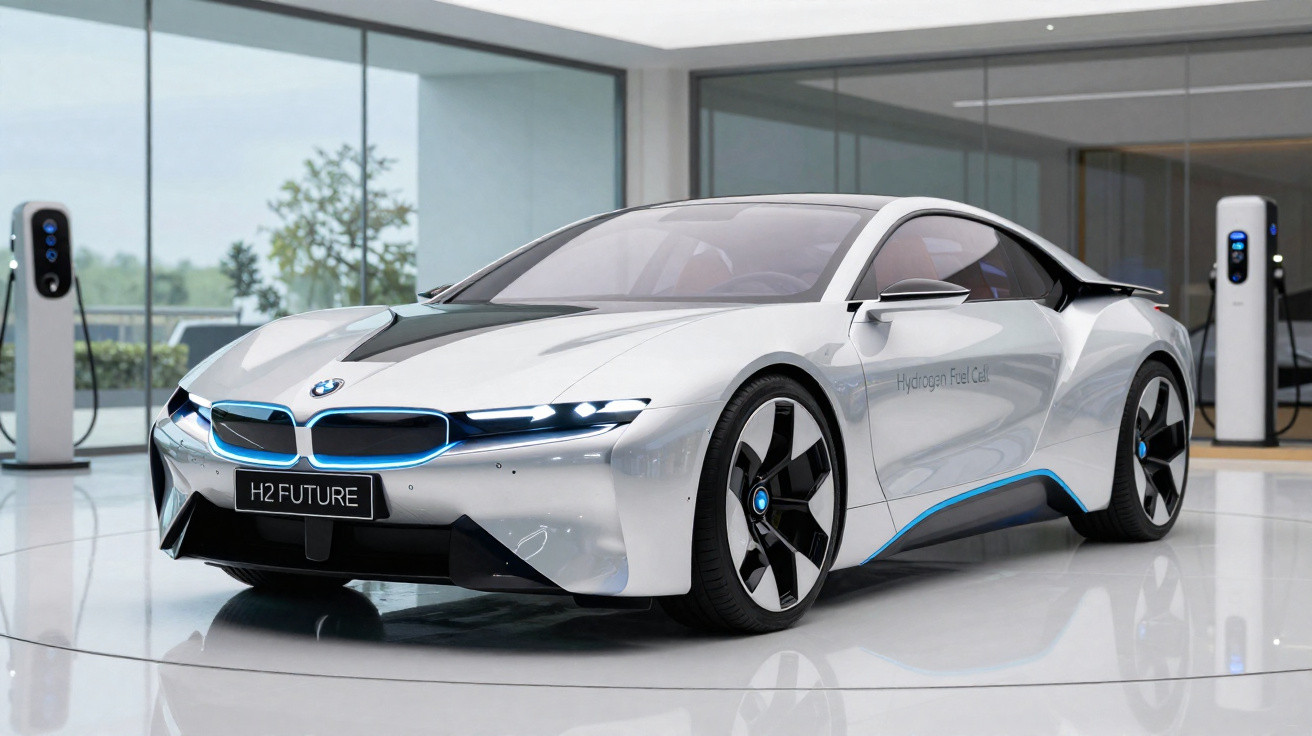
Oliver Zipse, chief executive of the BMW Group, has again underlined the importance of hydrogen - fuel-cell technology - to the company’s long-term strategy, while criticising the European Union’s decision to focus solely on 100% battery-electric vehicles.
“An manufacturer like us needs every propulsion system,” Zipse said. “We cannot restrict ourselves to just one. Flexible platforms, where the same car can use different types of propulsion, are the right way forward.” He added that customers should be able to select the powertrain that best meets their requirements.
According to the executive, battery-electric vehicles alone will not be enough to achieve the EU’s decarbonisation targets (source: Automotive News Europe), particularly in markets with inadequate charging infrastructure or limited access to renewable energy.
Zipse also criticised the EU’s narrow emphasis on tailpipe emissions, rather than including manufacturers’ other decarbonisation efforts when calculating their carbon footprint. These include building zero-emission factories and using low-carbon steel in vehicle production.
BMW and hydrogen propulsion
Europe risks falling behind
BMW is currently among the few carmakers continuing to invest in hydrogen passenger vehicles, with Toyota as its partner. “All other technologies have limited capabilities and that is why hydrogen will play an increasingly important role,” Zipse added.
The chief executive also warned that other countries are moving ahead. “Key investments in this technology are taking place in China, Japan, South Korea and now also in California. If we do not invest, others will,” he said.
Several Chinese manufacturers, Toyota and Hyundai are stepping up their investment in hydrogen fuel-cell technology. Zipse wants to use this opportunity to put BMW at the forefront of the technology among European manufacturers.
The German government is backing this effort. Germany’s Ministry of Transport and the Bavarian government will invest €273 million to support BMW’s development of hydrogen powertrain systems for passenger cars that are compatible with existing vehicle architectures.
Is hydrogen the way forward?
Although Zipse regards hydrogen fuel-cell electric vehicles as a viable alternative to battery-electric cars, there are critical voices. Peter Mock, managing director for Europe at the International Council on Clean Transportation, says fuel-cell vehicles are still less mature and far more expensive than battery-electric vehicles.
“The future is electric,” Mock said, arguing that 100% electric vehicles are currently the most efficient and economical way to decarbonise transport. The absence of a public hydrogen refuelling network remains the biggest barrier to the widespread uptake of this technology.






Comments
No comments yet. Be the first to comment!
Leave a Comment