
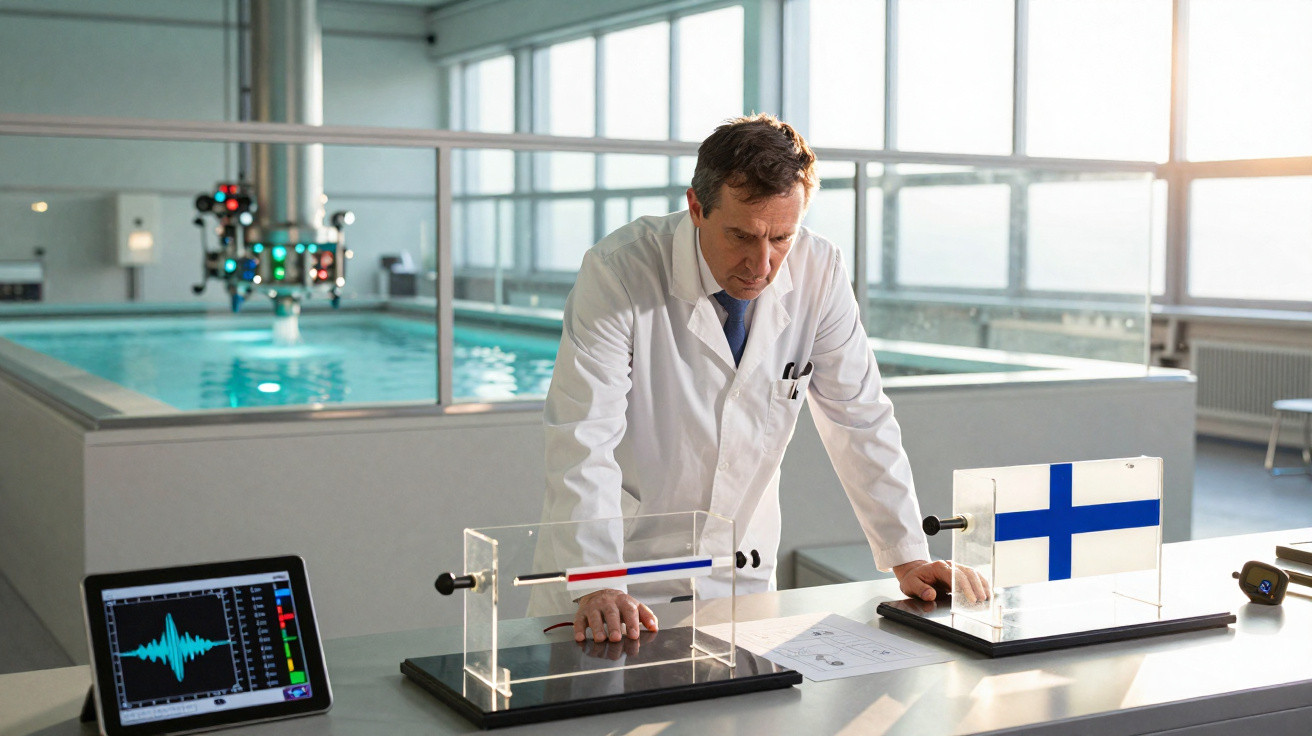
Traditional nuclear power stations are encountering political resistance, while a more discreet contest is taking shape in Europe around reactors that will never supply a single light bulb.
France and Finland are entering an unusual nuclear arena, investing in reactors intended not for electricity networks but for medicine, research and fuels for future reactors. The contest may determine which nations control some of the nuclear industry's most strategically important technologies in the decades ahead.
From megawatts to neutrons: a different kind of nuclear race
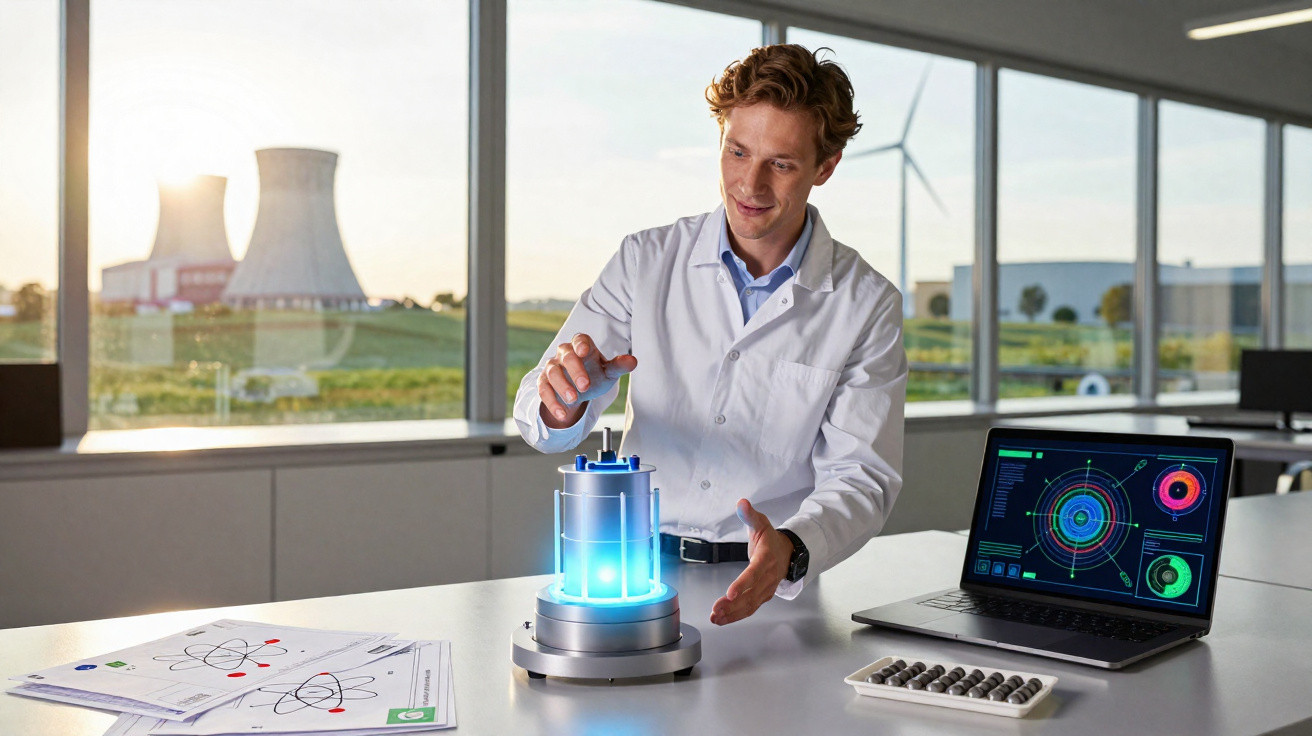
For many people, the term “reactor” brings to mind vast cooling towers and electricity flowing into national grids. The facilities driving the French-Finnish rivalry are fundamentally different. They are research and isotope reactors, principally constructed to create neutron flux and scarce radioactive materials.
Rather than supplying electricity cables, they serve hospitals, laboratories and experimental fuel programmes. In real-world terms, they can provide life-saving medical isotopes for cancer care or recreate test environments for fuels intended for future small modular reactors (SMRs) and advanced fast reactors.
Control over non‑power reactors means influence over medical isotopes, advanced fuels and key safety research for decades.
France and Finland both recognise this strategic advantage. Each has a long nuclear history, though built on different foundations. France depends substantially on nuclear-generated electricity, while Finland has earned a reputation for strict regulation, deep geological waste disposal and openness with the public. In the competition for next-generation non‑power reactors, these respective strengths meet.
Why a reactor that makes no electricity is so strategic
The most straightforward reason is healthcare. Europe's existing research reactors are ageing, with many expected to close during the coming decade. At the same time, demand for medical isotopes is increasing as cancer screening and targeted treatments become more common.
Technetium‑99m, which is used in millions of diagnostic procedures annually, relies on a vulnerable worldwide supply chain. A limited group of reactors in Canada, Europe, Russia and South Africa provides several essential isotopes. When one reactor is taken offline, hospitals on multiple continents feel the effects.
France and Finland recognise that the country hosting the next central group of production reactors secures:
- Preferential access to medical isotopes for its own healthcare system
- A strong export opportunity in high-margin nuclear medicine products
- Influence over regulatory and technical standards for isotope production
- A draw for international researchers, students and industrial partnerships
New research reactors also provide testing grounds beyond medicine. They can reproduce the demanding neutron conditions anticipated in advanced SMRs, fast reactors and fusion blankets. Engineers can therefore assess materials, coolants and fuel designs well before commercial deployment.
The country that runs tomorrow’s key test reactors helps set the pace - and the rules - for the next nuclear technologies.
France’s ambitions: reaffirming nuclear leadership
France approaches the contest with an extensive network of nuclear bodies, including the CEA (French Alternative Energies and Atomic Energy Commission), Orano and EDF. Its objective extends beyond retaining a fleet of power reactors: it is seeking to restore a complete ecosystem encompassing research, fuel, waste and exportable technology.
Proposals for new non‑power reactors align with this broader approach. High-performance reactors able to produce intense neutron flux could enable France to:
- Aid the development of advanced fuels, including accident-tolerant fuels
- Provide a dependable portion of Europe’s medical isotope requirements
- Train engineers and operators for future SMR and fast-reactor schemes
- Improve its negotiating position in European energy-policy discussions
French policymakers also regard these schemes as a means of renewing an industrial base weakened by delays and cost overruns on major power-reactor projects. Research-focused, smaller reactors may be quicker to construct, less costly in absolute terms and easier to justify politically, particularly when their health benefits are explicit.
Political stakes for Paris
Announcements of new power reactors backed by the presidency frequently make headlines, yet lower-profile decisions on research-reactor funding may define influence over the longer term. French policymakers understand that a country which loses research capability becomes reliant on overseas data, materials and approvals.
As Europe becomes more divided between governments supportive of nuclear power and those sceptical of it, Paris aims to establish itself as the scientific and industrial centre with which others must engage, even where domestic preference is for renewables.
Finland’s counter‑move: small country, strong nuclear reputation
Finland operates considerably fewer reactors than France, but has influence beyond what its size might suggest. Its deep geological repository at Olkiluoto, intended to hold high-level waste for thousands of years, has established its credibility in nuclear governance internationally. Finnish regulators are widely regarded as exacting but practical.
Building on that reputation, Helsinki is wagering that hosting a state-of-the-art research reactor would secure a strategic position well beyond its scale. Such a facility would provide support for:
| Objective | Benefit for Finland |
|---|---|
| Medical isotope production | Secure supply for Nordic hospitals and export income |
| Material testing | Evidence to support Finnish and overseas reactor vendors |
| Waste and fuel cycle research | Stronger leadership in long-term waste solutions |
| Education and training | A regional centre for nuclear engineering expertise |
Finland also has comparatively strong public acceptance of nuclear energy, particularly relative to certain Western European neighbours. This creates a political opportunity to pursue projects that could attract more intense opposition elsewhere.
For Helsinki, a next‑generation research reactor is a chance to turn regulatory credibility into technological influence.
Nordic pragmatism and European politics
Finnish officials commonly present nuclear initiatives through the lenses of security of supply, climate objectives and technological pragmatism. In European debates concerning energy taxonomies and green finance, Finland has consistently supported nuclear power alongside renewables.
A research reactor located in Finland and serving several European customers could act as a link between nuclear-supporting and nuclear-opposed states. Nations uneasy about hosting reactors themselves could nevertheless use Finnish facilities for isotopes and safety data. Such an outcome would give Finland soft power beyond the generation of electricity.
Collaboration, competition or both?
France and Finland have a complicated relationship in this area. They are aligned in maintaining that nuclear power should feature in Europe’s low-carbon strategy. However, they are also rivals for funding, skilled people and international contracts associated with new reactor designs.
In practical terms, Europe is too small and these projects are too costly to sustain a completely fragmented strategy. Joint ventures, shared programmes, and cross-border fuel and waste arrangements already feature in discussions. Even so, every reactor’s location, design and operator bears a national identity, and that symbolism has domestic political significance.
European institutions must strike a difficult balance. Funding several reactors could distribute risk and improve resilience, but available budgets are constrained. Supporting just one could create a monopoly and estrange member states left out. France and Finland both contend that their own approach best serves Europe’s interests.
Risks behind non‑power nuclear expansion
Although these reactors do not supply power grids, they involve substantial risks. Safety remains paramount, covering accident prevention, cyber protection and emergency arrangements for nearby communities. Regulators must adjust to new reactor models and higher neutron-flux levels, presenting challenges distinct from those of large power stations.
There is a non-proliferation issue as well. In certain configurations, high-performance research reactors may use enriched fuels or generate materials requiring close oversight. France and Finland are both subject to stringent international safeguards and say their projects will comply with these restrictions, but critics demand the greatest possible transparency.
Cost overruns are also a persistent financial concern. Recent experience with large European reactors demonstrates how rapidly projected budgets can grow. Non‑power reactors are smaller but remain complex. Governments supporting them must balance the long-term public-health and research benefits against billions in initial investment.
Key terms and what they mean for readers
A number of technical expressions regularly appear in discussions of this French-Finnish competition. Knowing what they mean makes the real stakes clearer.
- Research reactor: A nuclear reactor used for scientific research, training and isotope production rather than grid electricity.
- Neutron flux: The level of neutron radiation within a reactor, essential for material testing and isotope production.
- Medical isotopes: Short-lived radioactive atoms used for scans and cancer treatments; dependable availability can affect waiting times for tests.
- SMR (small modular reactor): A compact power-reactor design, often made in factories, promoted as simpler to deploy than large plants.
- Fuel cycle: The entire process from uranium extraction through fuel manufacture, reactor operation, reprocessing and waste storage.
For patients in the UK or US, choices made in Paris or Helsinki may eventually affect how rapidly hospitals obtain particular isotopes for cancer treatment. For policymakers and investors, these projects indicate which countries may establish standards for nuclear safety, waste and new reactor data over the next 30 years.
One credible outcome is a two-hub Europe: a French reactor centred on advanced fuels and industrial partnerships, alongside a Finnish facility focused on waste research and security of medical supply. Both could serve a wide international customer base, including non-European nations seeking data for their own SMR programmes.
In this context, the contest is not so much about prestige as about who creates the technical rulebook. The reactors might never generate one watt of electricity, but the isotopes and knowledge they produce could drive a significant share of nuclear power’s future - while shaping healthcare and climate policy well beyond the borders of France and Finland.

Comments
No comments yet. Be the first to comment!
Leave a Comment