
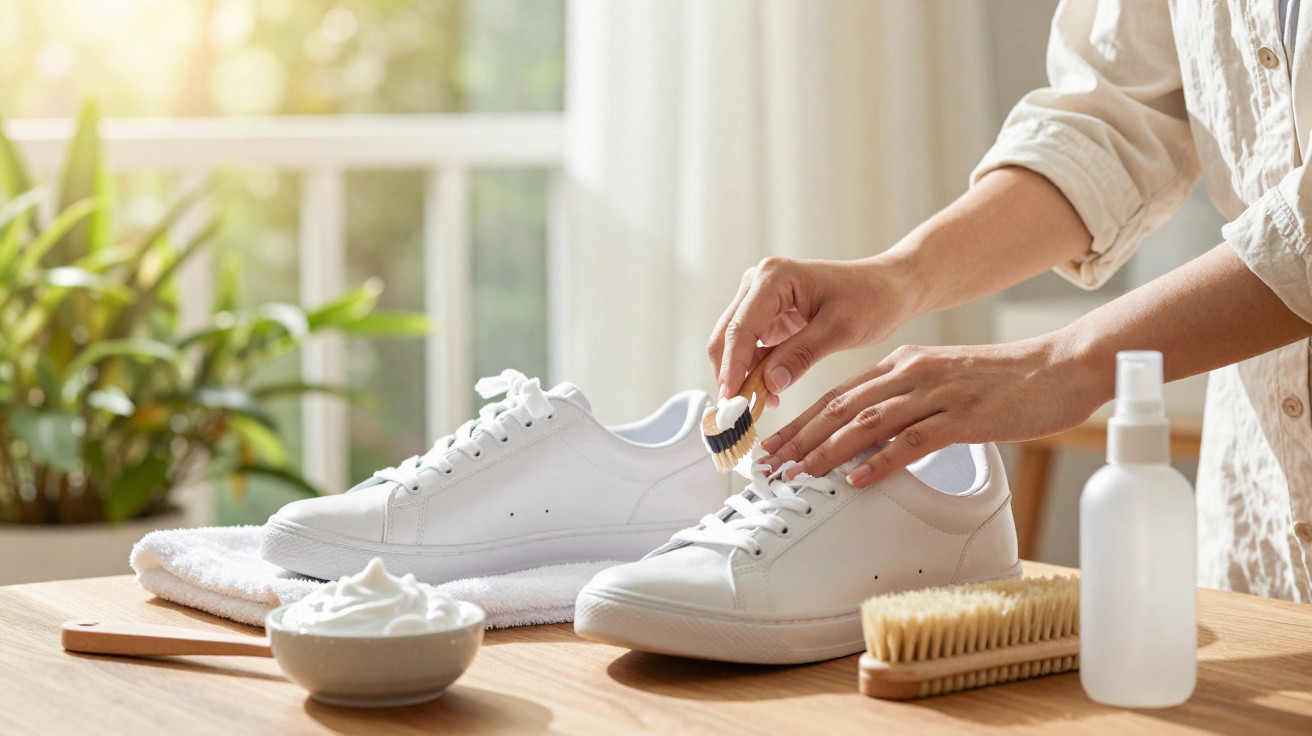
Spring calls for lighter outfits – and white trainers.
It is frustrating, then, when your favourite shoes come out of the cupboard looking more grey than white.
In desperation, many people put their trainers in the washing machine. They may look cleaner for a short while, but the damage often appears later: detached soles, yellowed edges and brittle materials. Yet a straightforward blend of two household staples can make white trainers look properly fresh again – gently, affordably and without specialist products.
Why the washing machine damages white trainers
Heat, friction and moisture: disastrous for glue and stitching
A delicate wash cycle may sound safe, but it is not. Inside the drum, your shoes are exposed to:
- heavy mechanical stress from constant spinning
- prolonged exposure to moisture
- extra heat generated by the wash programme
Together, heat and friction attack the adhesive that bonds the sole to the upper. The glue softens and loses its grip, while the stitching is put under strain it was never designed to withstand. Although the trainers emerge looking clean, they will often have a much shorter lifespan.
They look clean at first – then unattractive yellow marks appear
There is also the appearance to consider. Water penetrates deeply into fabric or leather, and rather than simply washing dirt away, it can spread it around. As the shoes dry, yellowish tide marks and stains can form, leaving white footwear looking dull and worn. Any detergent left behind in the fibres can even attract fresh dirt more quickly. It is hard to believe until you have seen it happen.
Regularly throwing white trainers into the washing machine saves time – but it considerably shortens their lifespan.
The winning combination: two household products for white trainers
Sodium bicarbonate: gentle abrasion with powerful brightening
Sodium bicarbonate, commonly sold as baking soda or bicarbonate of soda, is the key ingredient in this method. Its fine crystals provide very mild abrasion. They lift dried-on dirt and residue from rubber, fabric and synthetic leather without scratching the surface. At the same time, the powder visibly brightens yellowed areas, such as sole edges or creased sections around the front of the shoe.
Black soap: removes grease and conditions the material
The second ingredient is soft black soap in paste form. It is generally made from vegetable oils, including olive or linseed oil. This traditional soap can:
- remove greasy marks caused by road dust or bicycle chains
- draw grass stains and street grime out of the material
- lightly replenish leather and synthetic materials, helping them stay supple
This conditioning effect is particularly valuable for leather and synthetic-leather trainers, as it helps to prevent the material from drying out and becoming brittle.
The “paste” for white trainers: how to prepare it
It takes only moments to make the mixture, and you need just two ingredients:
- 2 tablespoons of sodium bicarbonate (bicarbonate of soda / baking soda)
- 1 tablespoon of soft black soap
The ideal texture: more toothpaste than liquid soap
Place both ingredients in a small bowl and mix thoroughly. You are aiming for a thick, creamy paste, similar to firm shaving cream or thick toothpaste. If it becomes too runny, stir in a little more bicarbonate of soda. Should it be too crumbly, add a tiny amount of water or a touch more soap.
This thicker texture offers a clear benefit: it stays precisely where you apply it, instead of running into the shoe or soaking it unnecessarily.
Why a liquid solution does not belong on trainers
Excess water is generally the enemy of trainers, especially when they have:
- foam layers inside the sole
- multi-layered materials
- delicate types of leather
A thick paste works on the surface, exactly where the dirt and yellowing are found. The interior of the shoe remains largely dry, substantially reducing the risk of distortion, adhesive damage and yellow drying marks.
How to apply the mixture correctly
Start with trouble spots: sole edges and creases
Before cleaning, remove the laces and brush away loose dust with a dry brush or cloth. Then focus on the finer details:
- Pick up a small amount of paste with an old toothbrush or soft nail brush.
- Work it over the sole edge in small circular motions, concentrating on areas with a yellowish appearance.
- Do not overlook creases around the front of the shoe or the tongue, as hidden dirt often gathers there.
The more textured the shoe, the more carefully you should work the brush into grooves and seams. With canvas or mesh trainers in particular, grime tends to settle deep between the spaces.
Leave it to work for the best result
Do not wipe the shoes straight after brushing on the paste. Leave it on the material for around 15 minutes. During this time, the soap components loosen grease and road dirt, while the bicarbonate brightens and neutralises odours. For heavily soiled soles, you can extend this to 20 minutes.
The waiting time replaces harsh scrubbing: allowing the mixture to work protects the material and stitching.
Wiping and drying properly – where most mistakes happen
Never hold them under a running tap
To remove the paste, lightly dampen a microfibre cloth and wring it out well. Wipe the trainers clean gradually, section by section. Rinse the cloth repeatedly as you go, so that loosened dirt is not spread back over the shoes.
Avoid the following:
- holding the shoes directly under running water
- scrubbing with excessive pressure
- following up with harsh multi-purpose cleaners
Controlling the amount of moisture prevents dirt from penetrating deeply again and protects vulnerable glued sections.
Dry gently, away from heat sources
Choose a drying spot that is shaded, well ventilated and at room temperature. A hallway or bedroom is better than placing them on a radiator or outside in strong sunlight. Intense heat can:
- harden the material and cause it to crack
- warp the sole
- encourage yellow marks to form again
To help the trainers retain their shape, loosely fill the inside with paper. Newspaper will do; tissue paper is gentler still. Kitchen roll is best reserved for emergencies, as it tears easily.
How to keep white trainers clean for longer
Water-repellent spray as an invisible shield
Once the shoes are completely dry and white again, applying a water-repellent spray is worthwhile. It creates a fine layer over the material that allows water and dirt to bead away. This is especially useful in towns and cities, where splashes, dust and road grime are less able to cling to the surface.
Apply the spray evenly from a slight distance, then allow it to absorb briefly. Textile trainers require different products from leather footwear, so checking the label is helpful.
A mini routine after every wear
Anyone who loves white trainers can make upkeep much easier by taking a moment after wearing them:
- remove loose dust with a dry brush
- dab fresh marks with a damp cloth or a dirt eraser
- refresh sole edges from time to time using a little bicarbonate of soda and water
This stops a thick layer of dirt from building up in the first place, avoiding a more laborious clean later. You will need the bicarbonate of soda and black soap “paste treatment” less often, while its results will last longer.
More than appearance: why this method pays off twice
Looking after your trainers saves money over time. Every season in which a pair can be rescued is one less pair that needs replacing. Higher-quality models with thick soles, specialist cushioning or limited colour combinations can be worn for much longer this way.
There is an environmental benefit too. Trainers are made from mixed materials that are difficult to recycle. Each extra season reduces footwear waste – a small but tangible contribution. Compared with expensive specialist cleaners, the simple blend of bicarbonate of soda and black soap also creates less packaging waste and usually avoids harsh chemicals.
If you wear sensitive materials such as nubuck or suede, test the method first on an inconspicuous area and use the paste only on smooth sections and soles. For trainers made entirely from fabric or synthetic leather, however, it is a remarkably effective rescue treatment: a few minutes of work, a little patience, and those white classics can look as though they have earned a fresh chance for spring.




Comments
No comments yet. Be the first to comment!
Leave a Comment