
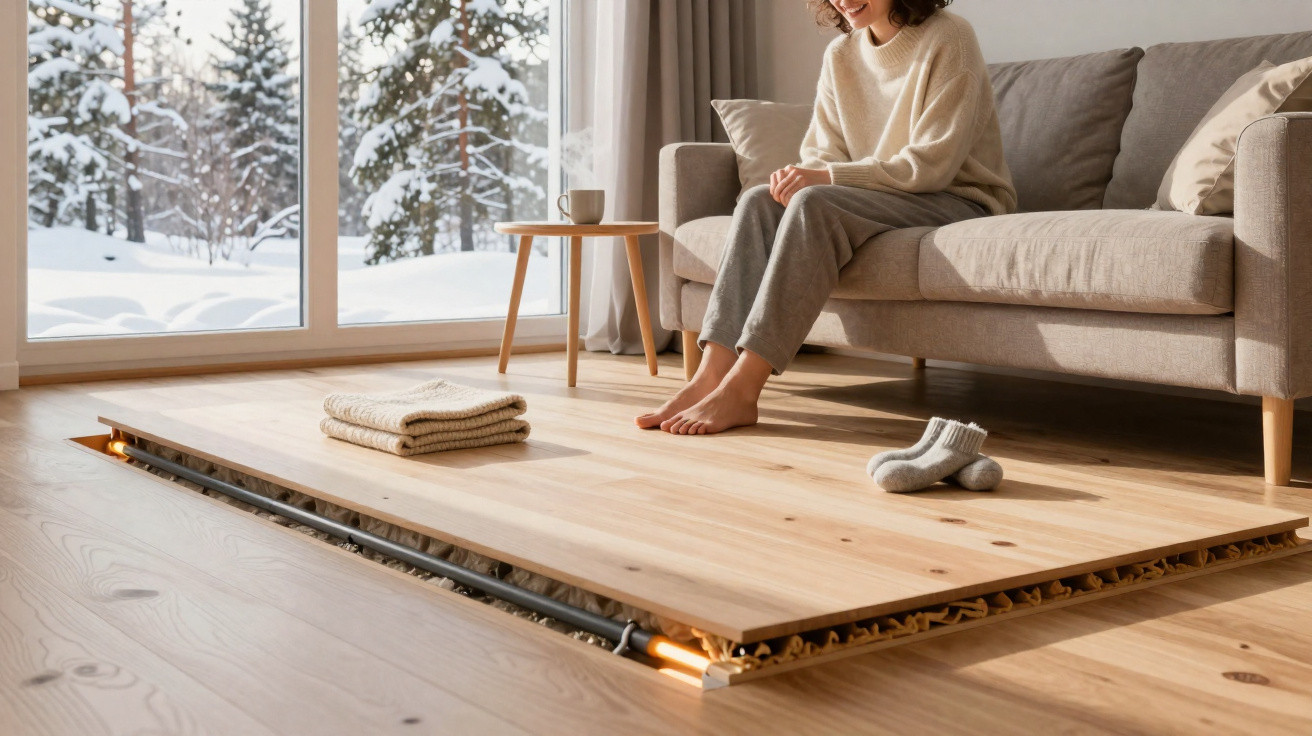
Outside, the temperature is -15°C and still dropping, with the cold stinging your face. Yet indoors, the warmth is calm and silent. There is no boiler humming away or white metal radiators taking up wall space. Instead, a gentle, consistent heat surrounds you like a blanket. The windows stay clear, the air is not parched, and no portable electric heater is hiding in a corner. Looking around, you may wonder where the heat is coming from, until your host laughs and gestures towards something you have at home as well: an everyday object you scarcely notice. In Finland, it takes centre stage in home heating.
The hidden heat source beneath Finnish feet
In many Finnish homes, the first sign of warmth is not on the walls but beneath your socks. The floor feels faintly heated, rather like timber warmed by the sun after a long summer day. From the hall to the kitchen and on to the bathroom, that same mild heat remains with you. There are no scorching patches and no icy corners - only an even, restful warmth that makes the entire home feel more welcoming.
Bulky radiators do not intrude on the furniture layout, pipes do not clatter, and no burst of dry hot air fills the room. The surfaces look entirely ordinary - tile, laminate or wood - yet they perform an exceptional task. The unremarkable household object that becomes the heating system is the floor itself.
In Finland, underfloor heating is not a premium extra found only in spa-style bathrooms or glossy interior magazines. It is installed in everyday flats, newly built homes and refurbished older properties. In Helsinki, in particular, modern developments commonly include electric or water-based underfloor heating as standard. Enter a Finnish bathroom in winter and there is no need to brace yourself for freezing tiles. You can stay comfortably still. Heat rises quietly through the floor, warming your feet before spreading through the rest of your body. It is a modest design decision that substantially changes how a home feels every day.
Imagine an ordinary morning in Tampere. It is -20°C outside when a family wakes. Barefoot, the father walks into the kitchen and makes coffee on the warm floor. The children head into the bathroom without complaining about “freezer tiles” beneath their feet. The heating has not suddenly thundered into action: it has been working gradually and consistently throughout the night. The house is not overheated; it is simply steady, at about 21°C or sometimes lower. Everyone remains comfortable because their feet are warm and cold air is not collecting at floor level.
By the figures, Finland is a major user of efficient heating. District heating serves a large proportion of urban homes, while underfloor systems can make use of it by moving warm water through pipes below the surface. Electric underfloor heating is widespread in smaller properties and remote areas, especially in bathrooms, halls and kitchens. Some surveys indicate that, in newer Finnish homes, having underfloor heating in at least one part of the house is more the norm than the exception. What may begin as a minor improvement - “let’s warm the floor too” - develops into a whole approach to getting through winter.
The principle is straightforward and closely suited to human comfort. As heat rises naturally, beginning at floor level creates a vertical temperature pattern that corresponds with how the body feels warm: warm feet, a neutral torso and a slightly cooler head. Your face is not roasting while your toes remain cold. Since the entire floor surface is gently heated, high temperatures are unnecessary. A large area is warmed a little rather than a small radiator being heated intensely. Rooms also avoid the dramatic shifts between “too cold” and “too hot” whenever a boiler starts up. In a country where winter can occupy half the year, reducing those fluctuations is not merely a technical efficiency measure; it helps preserve your sanity.
How Finns make underfloor heating a silent heating system
Beneath the finished flooring in many Finnish homes lies a network of narrow pipes or electric cables. In water-based systems, warm water moves slowly through plastic tubes embedded in concrete or fitted into a specialist board. In electric systems, cables or heating mats run below tiles or laminate. Once installed, the system requires little fuss. You choose the thermostat setting, wait while the floor warms gradually, and then allow it to retain and release heat quietly, like a stone that has been sitting in sunshine.
Daily routines adjust around this arrangement almost unnoticed. Sofas tend to sit slightly higher, allowing heat to circulate. Rugs are usually smaller or lighter rather than covering the entire floor. Following a snowy day, people place wet gloves and socks directly on the floor to dry. When you arrive with slush on your boots, the small puddle can vanish quietly within minutes. Nobody hurries to turn up a radiator. The heating remains in the background, nearly invisible. That’s the point.
Reproducing the Finnish sense of being “heated without radiators” begins more with a change of perspective than with costly building work. The aim is gentle, constant, low-temperature warmth close to the part of the body that notices it most. Even without installing a complete hydronic underfloor heating system, its logic can be adopted. Electric underfloor mats in a bathroom alone can make cold mornings feel entirely different. A heated section of floor near the entrance can make damp winter weather less of a chore.
Many Finns recognise that floors respond slowly and take time to heat up, so they account for this in advance. Thermostats are set to timers. Temperatures are reduced only a little overnight instead of being turned off completely. Heating acts more like a background soundtrack than a control you hit whenever you feel cold. Once this is understood, you no longer expect warmth to work like a light switch. The home begins to feel more settled as well.
There is a subtle skill in the way Finns use heated floors. They avoid covering them with heavy insulation from above. Thick, dense rugs are used sparingly or placed where no heating pipes run. Furniture formed as solid units down to the floor is less common than sofas and beds with legs. Air needs a few centimetres of open space so warmth can drift upwards. These uncomplicated choices allow the floor to keep “breathing” as a heating surface.
Let’s be honest: nobody obsessively inspects every chair leg or measures each rug. Over time, people simply learn what works and what does not feel right. Place a huge chest over a central heated zone and you notice the difference: the room feels a little colder and somehow less comfortable. Shift it elsewhere and the space seems to come alive again. This is not a detached engineering exercise; it is a relationship with the home, refined over long winters.
When people in other countries try to follow the Finnish approach, the most frequent mistakes often come from impatience. They turn the underfloor thermostat to its highest setting while expecting radiator-like speed. They use it as a rapid “boost” heater rather than as slow, continuous background warmth. Or they cover every square metre with thick rugs for a cosy look, then question why the system appears ineffective.
There is also a small cultural lesson about comfort and control. Underfloor heating requires you to relinquish a little control: to accept that warmth arrives gradually, to plan an hour or two ahead, and to live with gentler, more stable changes. On an exhausting evening, this can feel unexpectedly comforting.
“When you stop fighting the cold minute by minute,” a Finnish architect in Espoo told me, “winter becomes something you live with, not battle.”
For those interested in bringing some of this Nordic calm into their own homes, several central ideas stand out:
- Heat from the ground up – keep warmth near your body instead of blasting it down from the ceiling.
- Think surfaces, not points – a broad warm surface at a low temperature is better than one small, very hot radiator.
- Design for quiet comfort – create less noise, fewer hot-and-cold fluctuations and more consistently comfortable days.
What Finnish underfloor heating quietly changes in daily life
Warm floors subtly influence how people use their homes. Children can play on the ground without hearing the familiar warning to get off cold tiles. Pets stretch out in the middle of the room instead of pressing themselves against one sizzling radiator. People sit on floor cushions for board games, stretch after a run or simply look out at the snow through the window. During winter, the floor stops being a no-go area and becomes a genuine part of the living space.
Most people know the feeling of stepping from a hot shower on to an icy bathroom floor and instantly tensing their whole body. In many Finnish homes, that small shock is absent. Mornings are gentler. Returning after dark, you do not stand freezing in the hallway while dealing with boots and coats. The house feels like a dependable, patient host rather than a machine that needs constant attention from switches and thermostats.
This is not solely a matter of technology or architecture. It reflects a different way of thinking about warmth. Instead of “blast it on when I’m cold, turn it off when I’m hot”, the Finnish floor-heating mindset resembles keeping a small campfire alive. Flames are not visible everywhere, but you can sense that the embers remain lit somewhere close by. In a world seeking to use energy more wisely, that idea has importance.
| Key point | Detail | Benefit for the reader |
|---|---|---|
| Floor as heater | Underfloor systems transform an ordinary floor into a mild, radiant source of heat | Demonstrates how you can reconsider what already exists in your home |
| Steady low heat | Lower temperatures are distributed across a larger surface | Helps you feel warmer with less energy and fewer temperature fluctuations |
| New habits | Less furniture blocks the heat, rugs are lighter and people spend more time on the floor | Encourages small behavioural adjustments that can deliver major comfort improvements |
FAQ:
- Do I need to rebuild my whole house to use underfloor heating? Not always. Many systems can be fitted while renovating a single room, particularly bathrooms, kitchens or entrances.
- Is electric underfloor heating very expensive to run? This depends on insulation and electricity prices, but keeping temperatures low and steady while heating limited zones helps keep costs under control.
- Can I use rugs on a heated floor? Yes, although thin, breathable rugs are preferable because they do not trap too much heat beneath them.
- How long does underfloor heating take to warm a room? It often takes a couple of hours, and sometimes longer, because it is intended to provide gradual, stable comfort rather than rapid bursts of heat.
- Is underfloor heating safe for children and pets? Yes. The surfaces become warm rather than hot, so they do not create the burn risk associated with very hot radiators.





Comments
No comments yet. Be the first to comment!
Leave a Comment