
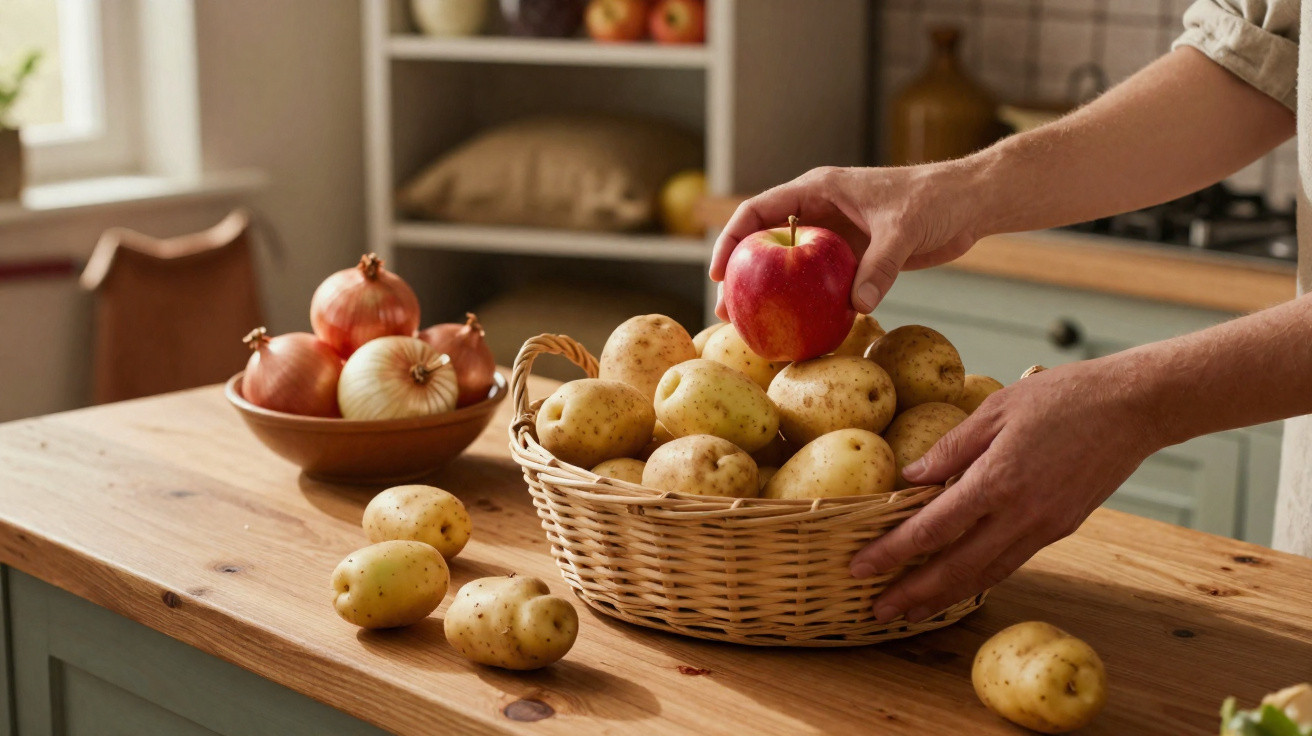
Potatoes stay firm for longer when they are shielded from light, heat and built-up moisture. A ventilated container, keeping them apart from onions and promptly removing spoiled ones can limit sprouting, green patches and rot while they are stored.
Where should potatoes be stored?
A cool, dark, airy place, such as a ventilated larder or a cupboard away from the hob, is best. Paper bags, baskets and boxes with openings allow air to circulate, whereas sealed plastic packaging traps moisture around the tubers.
Light encourages the skin to turn green and may increase levels of glycoalkaloids, including solanine. Potatoes are tubers that continue to respire after harvesting, so they need ventilation even when in storage.
- Select a dark place away from windows;
- Avoid warm areas near the oven or hob;
- Use paper bags, slatted boxes or baskets;
- Do not wash the tubers before storing them;
- Remove any potatoes that are damp, bruised or rotten.
Why should potatoes be kept away from onions?
Potatoes and onions release moisture and volatile compounds during storage. If they are piled together in the same container, the conditions may encourage sprouting, softening and the spread of rot between the foods. Ideally, keep them in separate baskets and check each group regularly.
Does keeping an apple with potatoes really reduce sprouts?
Apples give off ethylene, a gas that affects the ripening and germination of different vegetables. Ethylene is also used commercially to control potato sprouting, which explains the household practice of placing an apple in the same container.
Results can differ according to the temperature, variety and storage time, so the fruit does not replace proper control of light and ventilation. Storing potatoes near an apple requires frequent checks, as a bruised or rotten fruit can also raise the humidity inside the basket.
- Use only one firm apple with no damaged areas;
- Keep the container open or well ventilated;
- Check weekly for emerging sprouts;
- Replace the apple once it starts to soften;
- Discard any food showing mould or rot immediately.
Is it safe to store potatoes in the fridge?
Refrigeration can extend their storage life and is now regarded as a safe option, provided the tubers are dry, protected from light and kept in ventilated packaging. Low temperatures may raise reducing sugars and affect the flavour or browning during frying, so a cool larder remains preferable when potatoes will be fried or roasted until deeply golden.
Which signs show that a tuber should not be eaten?
Small sprouts can be removed along with a portion of the surrounding flesh, as long as the potato remains firm and has no extensive green areas. Very soft, wrinkled, bitter, mouldy or intensely green tubers should be discarded, as cooking does not completely remove glycoalkaloids.
Correct storage begins with dry, unbruised potatoes kept in a ventilated container and inspected often. By managing light, temperature and moisture, potatoes retain their texture better and remain suitable for boiling, roasting or making mash for longer.


Comments
No comments yet. Be the first to comment!
Leave a Comment