
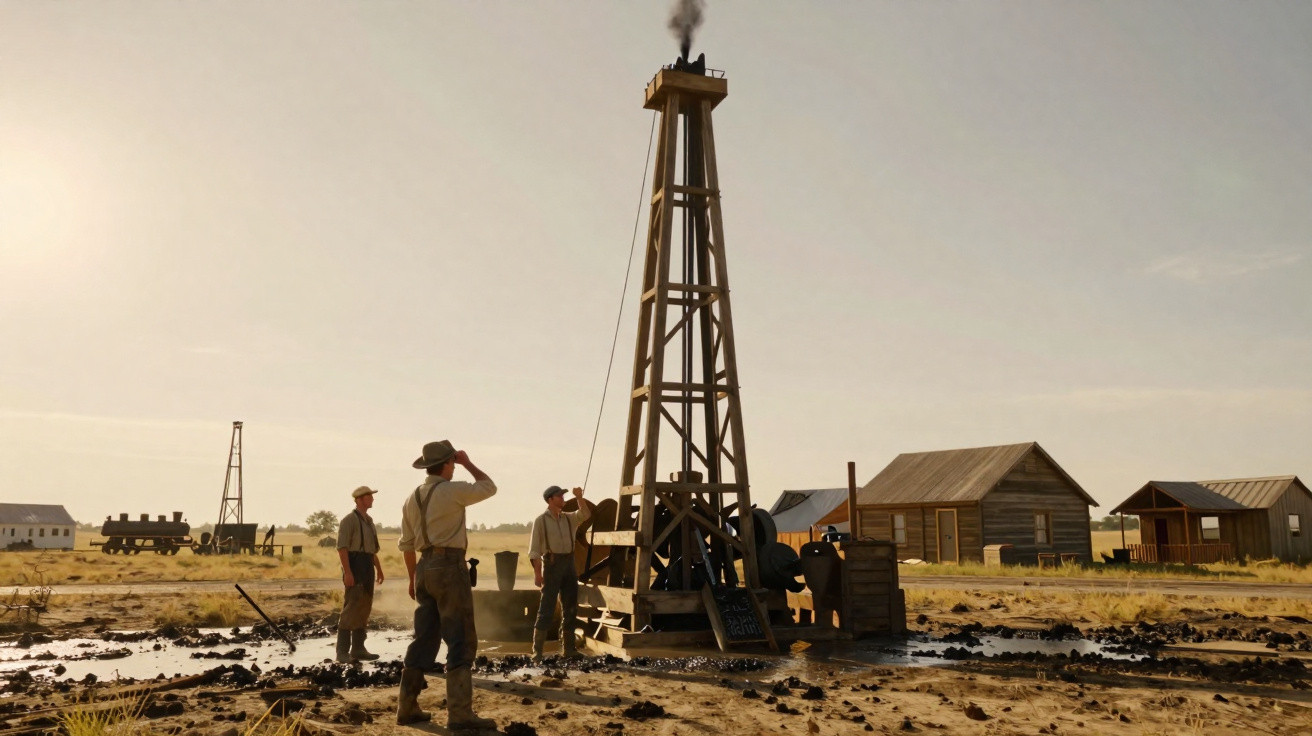
On 10 January 1901, a drilling operation in south-east Texas transformed the landscape within hours. Oil surged from Spindletop with such force that the plume rose more than 30 metres, drawing workers, investors and onlookers. Around the field, Gladys City took on the life of a boomtown, while Beaumont saw its population soar.
What happened at Spindletop in 1901?
The discovery was made on Spindletop Hill, south of Beaumont, when the team associated with engineer Anthony Lucas struck oil at a depth of about 347 metres. The Lucas Gusher sent crude more than 30 metres into the air and, according to regional historical records, could not be brought under control for nine days.
Estimates suggest that the well released roughly 100,000 barrels a day, an exceptional output for the period. The find demonstrated that Gulf Coast salt domes could contain substantial reserves and helped usher in a new era for Texas's oil industry.
How could a town emerge around oil?
Once word spread, the land near the field became far more than a drilling site. Gladys City developed into a classic boomtown, with shops, services and buildings catering for the crowds arriving to find employment, conduct business or seize a chance to become wealthy quickly.
The change extended well beyond the wells themselves. Beaumont, the neighbouring town, welcomed businesspeople, labourers, speculators and companies from across the country. Historical accounts describe how the oil rush changed land prices, shifted fortunes and set the entire region moving at a frantic pace.
How quickly could the population grow in Beaumont and Spindletop?
The demographic impact illustrates the scale of the frenzy. Historical sources connected with Spindletop report that Beaumont grew from around 10,000 to 50,000 people at the height of the rush, although official censuses recorded a smaller permanent population in the following years. Many arrivals had no plans to remain.
This movement was driven by hopes of rapid wealth. A single promising well could bring in drillers, traders, investors and adventurers. Before long, an almost empty area could acquire the features of a town.
- Workers arrived to drill wells and move equipment.
- Traders opened shops, accommodation, bars and other services near the fields.
- Investors competed for land and drilling rights before prices rose further.
- Railways, refineries and pipelines followed the expansion once output proved profitable.
Watch the video shared by the YouTube channel LoneStarHistory, which tells the story of Spindletop in Texas.
Why did Spindletop change Texas so profoundly?
Spindletop was not simply another oil discovery. The field produced around 17.5 million barrels in 1902 and encouraged further searches for salt domes across south-east Texas. Soon afterwards, other places in the region would experience oil rushes of their own.
The money also supported refineries, pipelines and companies that would help establish Texas as a major force in the sector. Oil began to reshape not only small settlements but entire towns, linking previously quiet areas to an industry expanding at remarkable speed.
What remained of the towns created by the oil rush?
Not every boomtown was able to sustain its momentum. Some fields lost output within a few years, and part of the population simply moved on to the next discovery. Spindletop also declined after its early years, showing that a town could expand as swiftly as it lost its main source of activity.
Even so, the impact of that 1901 gusher endured. The story of Gladys City and Beaumont shows how an underground discovery could reshape an entire place almost overnight. These former boomtowns deserve close attention, as many modern towns were born from rushes that were as intense as they were short-lived.





Comments
No comments yet. Be the first to comment!
Leave a Comment