
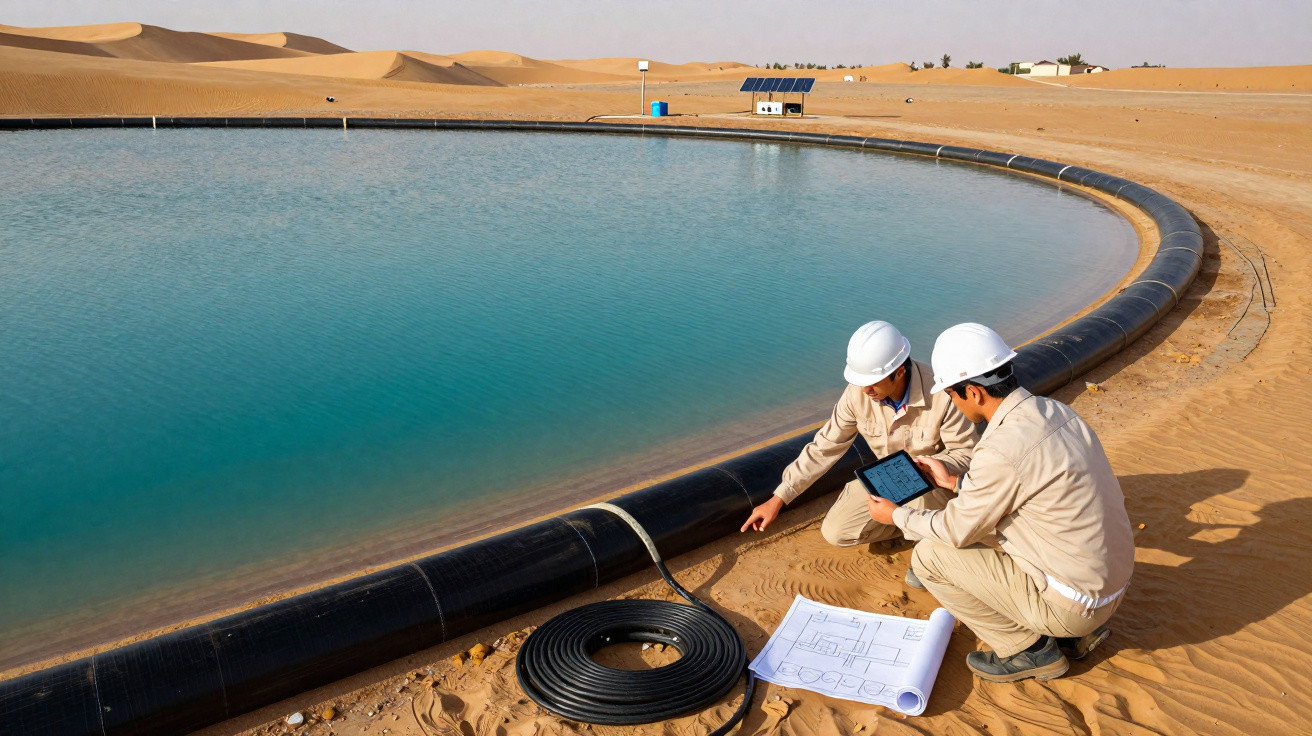
The construction of the Burji-1356 reservoir in the arid Thar Desert marks a historic achievement for Indian engineering. This enormous water infrastructure project was designed to store vast quantities of water, safeguarding supplies for the local population during extreme droughts.
How was the Burji-1356 artificial lake built in the desert?
Situated in Ghantiyali, in Jaisalmer district, the scheme brings the state of Rajasthan into a new era of water management. The structure can hold billions of litres of water, using the surplus produced by regional monsoon rainfall.
With a perimeter of 28 kilometres, the artificial basin was excavated to withstand the harsh desert climate. Local authorities invested in modern technology to ensure the resource is retained and to prevent its early loss into the soil.
How is Saudi Arabia creating a giant lake in the desert?
The country is building three huge dams to hold back water and challenge the laws of nature in the region… Read more
What is the role of HDPE technology in waterproofing the reservoir?
Because the ground is exceptionally sandy, natural seepage would prevent water from remaining in the reservoir for extended periods. A high-density polyethylene liner was therefore fitted across the base and slopes, forming a permanent waterproof shield.
This synthetic barrier stops the stored volume from escaping, allowing the reserve to remain available throughout dry months. The use of specialist geomembrane has made water stability possible in one of the country’s regions most severely affected by heat.
Below is a video from the Drishti RAS YouTube channel that explores the points discussed in this subject in greater depth:
How does the project secure water during the naharbandi period?
The complex is directly linked to the Indira Gandhi Canal, receiving excess flows during months of heavy rain. This water is kept protected in the reservoir to supply the community when the main canal undergoes its customary annual maintenance shutdown.
During the event known as naharbandi, distribution of the canalled resource is halted so operational repairs can be carried out on the network. The Burji-1356 reservoir prevents the system from collapsing and supports the everyday consumption needs of families across the surrounding area.
Reservoir Technical Solutions
Engineering Elements
Explore the core features that ensure the success of the Burji-1356 project:
- High-thickness HDPE geomembrane liner for effective sealing;
- A protective earth layer to prevent damage caused by sun and wind;
- A direct connection to the irrigation canal to capture excess rainwater.
What are the socioeconomic effects of this major water infrastructure?
Security of water supply drives agricultural activity and directly improves public health in rural areas. Regular storage tackles chronic shortages and reinforces government programmes focused on social development in regions with a severe climate.
Projects on this scale reshape local circumstances by reducing reliance on emergency water tanker deliveries during crises. A continuous supply encourages people to remain in the countryside and supports the expansion of small community crops.
See the main benefits delivered by this infrastructure investment:
- Uninterrupted supply for homes during periods of severe drought;
- Lower operating costs for the emergency transport of water resources;
- Stronger progress towards the targets set by the Jal Jeevan Mission initiative.
How can this megaproject provide a model for the future of arid regions?
The combination of advanced civil engineering and synthetic materials shows that valuable resources can be retained in areas once considered unviable. This reservoir model creates opportunities for other nations to address shortages through long-lasting storage solutions.
With suitable planning, desert regions can overcome geographical barriers and secure the sustainability of their communities. Strategic water preservation is becoming the most effective tool for protecting the future and advancing progress in vulnerable territories.





Comments
No comments yet. Be the first to comment!
Leave a Comment