
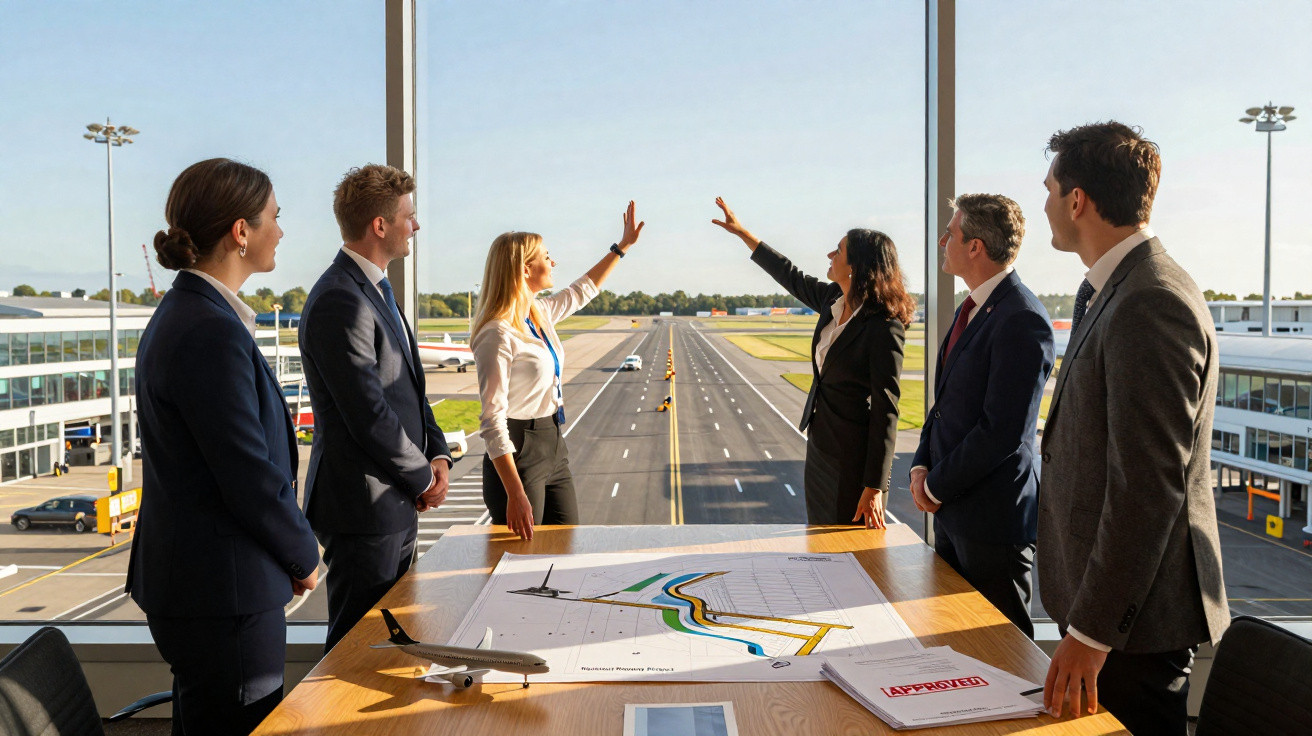
Gatwick Airport has said that the UK courts have conclusively dismissed appeals lodged by groups opposing the Northern Runway Project, bringing an eight-year legal and planning process to a close and allowing the London airport’s expansion to proceed.
The ruling came from the UK Court of Appeal, which upheld the validity of the approval granted in September 2025 by the then Secretary of State for Transport for the scheme’s development.
Northern Runway Project gains final legal clearance
In a statement issued following the judgment, Gatwick Airport chief executive Pierre-Hugues Schmit said the decision once again confirms that the project was approved lawfully and properly. He added that the conclusion of the case is an important milestone for the airport, which can now move into detailed design work and begin construction.
Schmit also said the expansion is expected to deliver substantial economic benefits for the United Kingdom. Airport estimates indicate that the Northern Runway Project will create around 14,000 new jobs and contribute approximately £1 billion annually to the UK economy. It will also include a strategy for education, professional training and business development, aimed at benefiting local communities and the wider Gatwick region.
Gatwick Airport runway changes and increased capacity
Although Gatwick currently has two runways - the 2,565-metre 08L/26R and the 3,316-metre 08R/26L - only the latter is in regular use. It is longer, while the roughly 150-metre gap between the runways is insufficient for simultaneous operations because of aircraft proximity.
As a result, the shorter runway is used only as a taxiway or as a back-up, becoming operational when the larger runway is undergoing maintenance or when an unforeseen event, such as an emergency, prevents use of the main runway. The project includes moving the shorter runway 12 metres to the right, enabling it to be used with virtually no restrictions.
The full scheme will cost £2.2 billion (R$ 15 billion) and will also bring other airport upgrades, including the expansion of certain terminals. Completion is expected by the end of the next decade, raising capacity from 280,000 flights a year to 389,000.





Comments
No comments yet. Be the first to comment!
Leave a Comment