
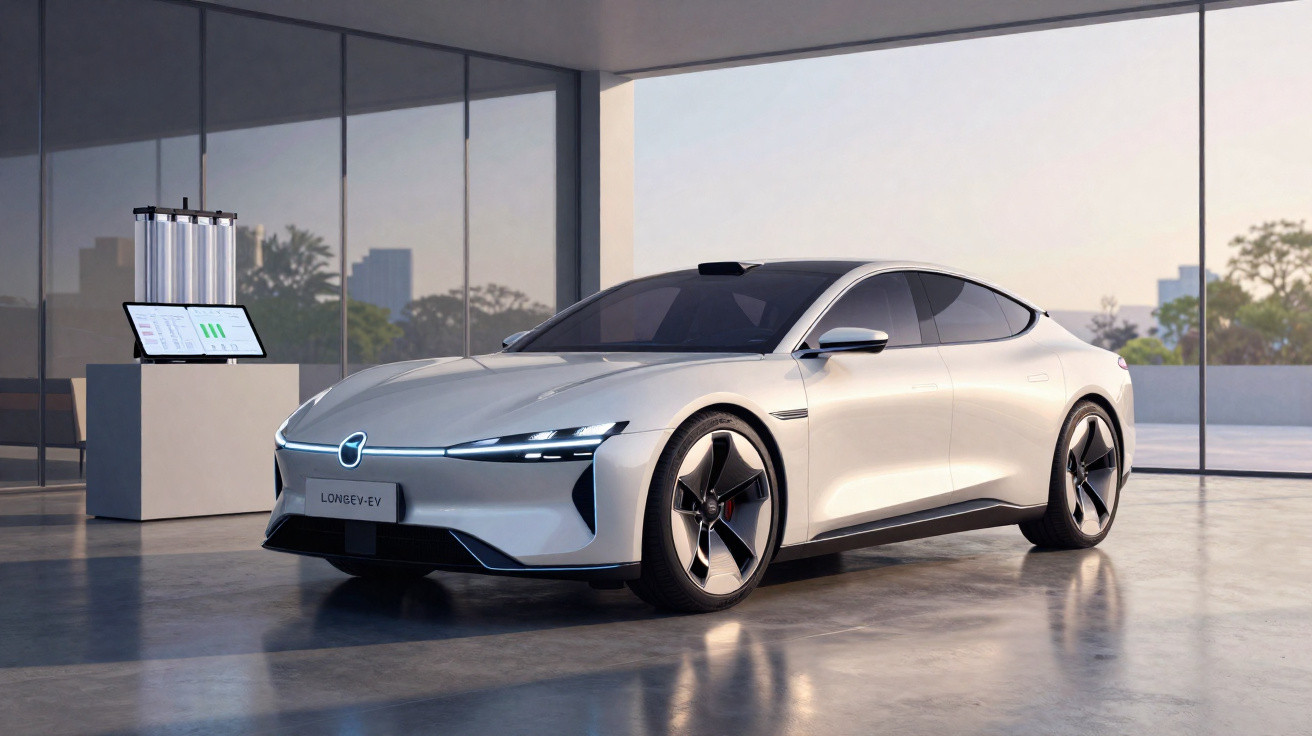
Batteries are the key component in electric cars, yet they are also their biggest headache. Their lifespan and cost remain issues for which the industry appears not to have found a solution.
Over time, batteries deteriorate and lose capacity, cutting a vehicle’s range. Once that degradation reaches a certain point, the battery must be replaced - an option that currently comes at a considerable cost.
There are still no answers to these challenges, but a new study indicates that, in the “real world”, batteries can last far longer - by as much as 38% - than previously estimated.
Recent research from SLAC (the Stanford Battery Center) found that the conventional methods currently used to calculate battery life may not be the most suitable for electric vehicles.
“We have not been testing EV batteries in the right way.”
- Simona Onori, associate professor of energy science and engineering at the Stanford Doerr School of Sustainability
A new method for electric car batteries
Battery lifespan has traditionally been assessed in laboratories through a constant discharge-and-charge cycle repeated at speed. Although this approach delivers results quickly, the researchers say it does not mirror the real-world conditions in which electric cars are used.
To address this, SLAC researchers created a new approach involving four battery-discharge profiles. These ranged from the standard pattern of constant discharge to dynamic profiles based on real driving data.
Like combustion-engined cars, electric vehicles are used in many different ways: from very short daily trips to long motorway journeys, and everything in between.
The difference with combustion cars lies in battery charging, where there is just as much variation. Some owners charge at home overnight every day, while others go several days between charges. Charging itself may also be slow or rapid.
With this in mind, the study tested 92 lithium-ion batteries for more than two years. The findings were unexpected: the closer the profile came to real-world usage conditions, the longer the batteries’ expected service life became. That was not the only result.
The research also reached the surprising conclusion that short, more intense acceleration contributed to slower battery deterioration, challenging previous assumptions.
“Much to our surprise, real driving with frequent acceleration, regenerative braking, regular stops, and leaving batteries to rest for hours helps batteries last longer than we thought,” Onori said.
What causes battery degradation?
Even with these advances, batteries do not last forever. The study identified two main causes of battery degradation: cycling and time.
Cycle-related degradation happens when a battery is repeatedly charged and discharged. This form of deterioration is most common in freight and passenger-transport vehicles, such as taxis and buses, which are almost constantly in use or being recharged.
Time-related degradation, meanwhile, occurs because of internal chemical processes, even when batteries are left unused for longer periods. Whether a battery is being used or not, degradation will still take place.
For privately owned cars, degradation over time is more significant than cycle-related wear, as the vehicle may not be driven regularly.
“For consumers who use their EVs to commute, collect their children and go shopping, but who most of the time neither use nor charge them, time becomes the predominant cause of battery degradation,” explained Alexis Geslin, one of the study’s authors.
The research identified an “optimal window” for discharge that helps to balance the two types of degradation mentioned above, at least for the batteries examined.
However, the study does not specify exactly what this “window” is. It may differ according to cell type, chemistry and battery ageing conditions, including temperatures and voltage range, but it falls within realistic discharge patterns for everyday electric-vehicle use.
“In the future, it will be very important to assess new battery chemistries and designs using realistic usage profiles.”
- Le Xu, postdoctoral researcher in energy science and engineering





Comments
No comments yet. Be the first to comment!
Leave a Comment