
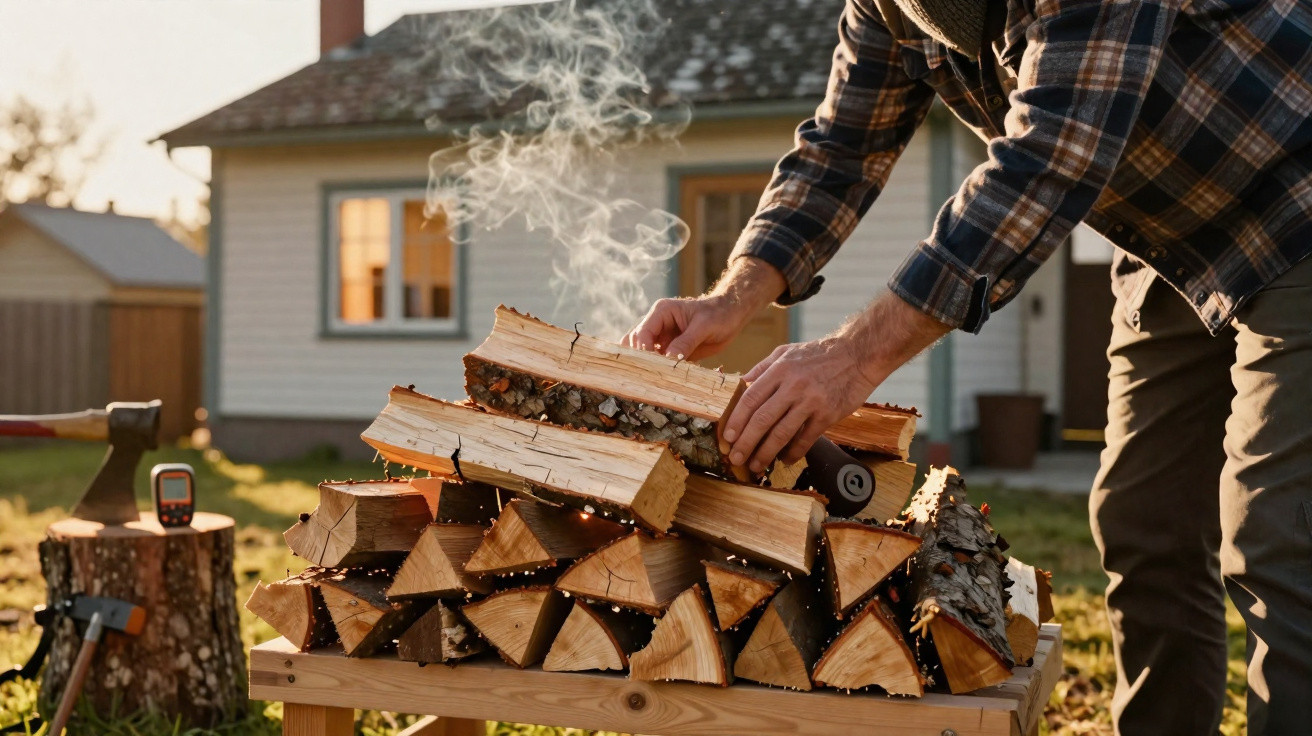
Across France and much of Europe, homeowners are passing on a straightforward method which they say can nearly double the warmth obtained from every log. It does not involve purchasing a costly new stove; instead, it comes down to preparing and storing the wood differently.
Why wet logs can ruin your heating plans
Most people assess firewood by its price and the amount supplied. Yet moisture content is the factor that can make the biggest difference. Newly felled timber may hold 50% water or more. Burn it before it has dried sufficiently and much of its energy is spent turning that water into steam rather than heating your living room.
Dry logs with less than 20% moisture can deliver up to twice as much usable heat as freshly cut wood of the same volume.
Damp logs burn inefficiently, smoulder in the stove and produce clouds of smoke. As this smoke cools in the flue, it condenses into creosote: a tar-like substance that can ignite within the chimney. Fire brigades throughout Europe regularly caution that badly seasoned wood is among the leading causes of chimney fires each winter.
Damp fuel also blackens stove glass, blocks air inlets with soot and means more logs are needed to achieve the same level of comfort. The much-discussed online “trick” is therefore not a gadget but a process: dry the wood properly, then allow the stove to work as intended.
How to tell whether logs are genuinely ready to burn
Many homeowners assume that timber which has “been outside for a while” is ready to use. This is seldom a reliable guide. Firewood sellers may describe their stock as “seasoned” without stating an exact moisture reading.
- Appearance: Properly dry wood is often greyer than freshly cut yellowish or reddish timber. Small cracks commonly appear on its ends.
- Weight: Two logs of similar size can feel noticeably different in the hand. The lighter one is usually drier and easier to carry.
- Sound: Tap two logs together. Dry timber makes a crisp, almost ringing noise, whereas wet wood gives a dull thud.
- Smell: Newly cut wood has a strong scent of sap or resin. Well-dried logs have little or virtually no smell.
A moisture meter is still the most dependable option. Push its probes into a freshly split surface of the log. For modern stoves, readings below roughly 20% are generally considered suitable.
A £15 moisture meter can save you hundreds in wasted wood and poor performance over a single heating season.
The drying “hack” users say transformed their winter
The widely shared advice behind comments such as “I’ve seen a real difference since this week” is remarkably simple: split wood early, stack it intelligently and let sunshine and moving air do the hard work. Applied correctly, the method can almost halve drying time while substantially increasing heat output.
Split firewood early and into smaller pieces
Professionals follow one key principle: do not leave large rounds sitting unsplit. Divide them as soon as possible after felling. Every cut exposes additional surface area, allowing water to evaporate faster.
Log size is the other important part of the approach. Rather than using thick, hefty pieces, many users find that smaller logs produce cleaner fires and better heat - around 30 to 50 cm long and not excessively wide in diameter.
- Smaller logs season more quickly.
- They ignite with less difficulty.
- They make it easier to regulate the burn and temperature.
This requires some additional effort at the outset with an axe or log splitter, but the result is a stove that gives off clearly more heat from the same stack of timber.
Keep air moving around every log
How the wood is stacked is the next major factor. A tightly packed pile holds moisture in place. Instead, lift logs above the ground using pallets or a basic timber frame. The space underneath enables passing air to remove moisture.
Keep narrow gaps between the rows and avoid cramming logs together. Many professionals advise changing the direction of each layer to form natural channels for airflow. Although the stack appears less compact, that open arrangement is precisely what helps dry each log through to its centre.
Rely on sunshine and wind rather than plastic
The chosen location matters just as much as the stacking method. A bright, breezy position, preferably south- or west-facing, helps timber dry more rapidly. Wind clears damp air from around the stack, while sunshine heats the outside of the logs and encourages water to move from their core towards the surface.
A simple rule: shield your wood from rain above, but leave the sides as open as possible to air and light.
A common error is wrapping the entire stack in plastic. This traps condensation and may leave the wood damp for months. It is better to protect only the top with a solid sheet or tarpaulin while keeping the sides uncovered.
How long does effective seasoning actually take?
Even with these improvements, wood still requires time to season. For many widely used hardwoods, the aim remains approximately two years between cutting and burning. Drying is quicker in windy, dry areas and slower in wetter climates.
| Wood type | Typical drying time* | Heat and burn profile |
|---|---|---|
| Softwoods (pine, spruce, fir) | 6–12 months | Season rapidly, ignite easily and burn quickly with bright flames |
| Medium hardwoods (birch, ash) | 12–18 months | Moderate drying period and good, consistent heat |
| Hardwoods (oak, beech, hornbeam) | 18–24+ months | Slow to season, with high heat output and long-lasting embers |
*Figures assume well-split, well-ventilated stacking in a suitable climate.
Why certain logs appear to provide twice as much heat
When people say “this technique doubles the heat”, they are usually comparing badly seasoned logs from a damp pile with correctly split, well-seasoned timber kept in a sunny, ventilated position.
The physics supports this. Heat released by burning wood must perform two tasks: dry the log and warm the room. Each additional percentage point of moisture takes away part of that energy.
Moving from 35–40% moisture to under 20% can roughly double the useful heat you actually feel from each log.
In practical terms, this can mean fewer journeys to the shed, less ash, less soot on the glass and a stove that reacts more readily. Many users also say that, once their logs are genuinely dry, the secondary combustion systems in modern stoves finally work as advertised: flames dance at the top of the firebox and far less smoke can be seen.
Keeping valuable dry wood safe from winter weather
Achieving the right dryness is only part of the task. When winter storms arrive, one careless decision can reverse months of seasoning. Well-dried logs left directly on snow or beneath leaking gutters can draw moisture back in through their bark and ends.
The best winter arrangement is a covered, ventilated store near the house. It protects the top and rear from wind-driven rain, keeps the base raised from the ground and leaves at least one side open for air to circulate.
Practical scenarios: what difference might you see at home?
Consider a small house that uses roughly 5 cubic metres of wood annually. If that wood remains too damp, the occupants may still feel cold and could end up burning nearer 7 or 8 cubic metres for comfort. Properly seasoned, correctly split logs may allow the same household to reach the same comfort level using considerably less fuel.
Picture two identical stoves, each operating for six hours a day. One receives wet logs and smoulders while coating its glass with soot. The other burns properly seasoned hardwood. The second house feels warmer, requires fewer top-ups and has a much lower risk of chimney deposits and fire. Preparation is the sole difference.
Key terms to understand before lighting the stove
Moisture content is the proportion of water in a log, shown as a percentage of its total weight. Firewood labelled “ready to burn” should generally contain less than around 20% moisture.
Creosote is the dark, sticky material that develops inside chimneys as smoke cools and condenses. Large accumulations may catch fire and lead to chimney fires. Burning dry wood at the correct temperature sharply reduces creosote formation.
Seasoning is the natural air-drying of wood, rather than factory kiln-drying. Effective seasoning needs time, storage space and careful stacking.
Combining this method with safer, cleaner burning
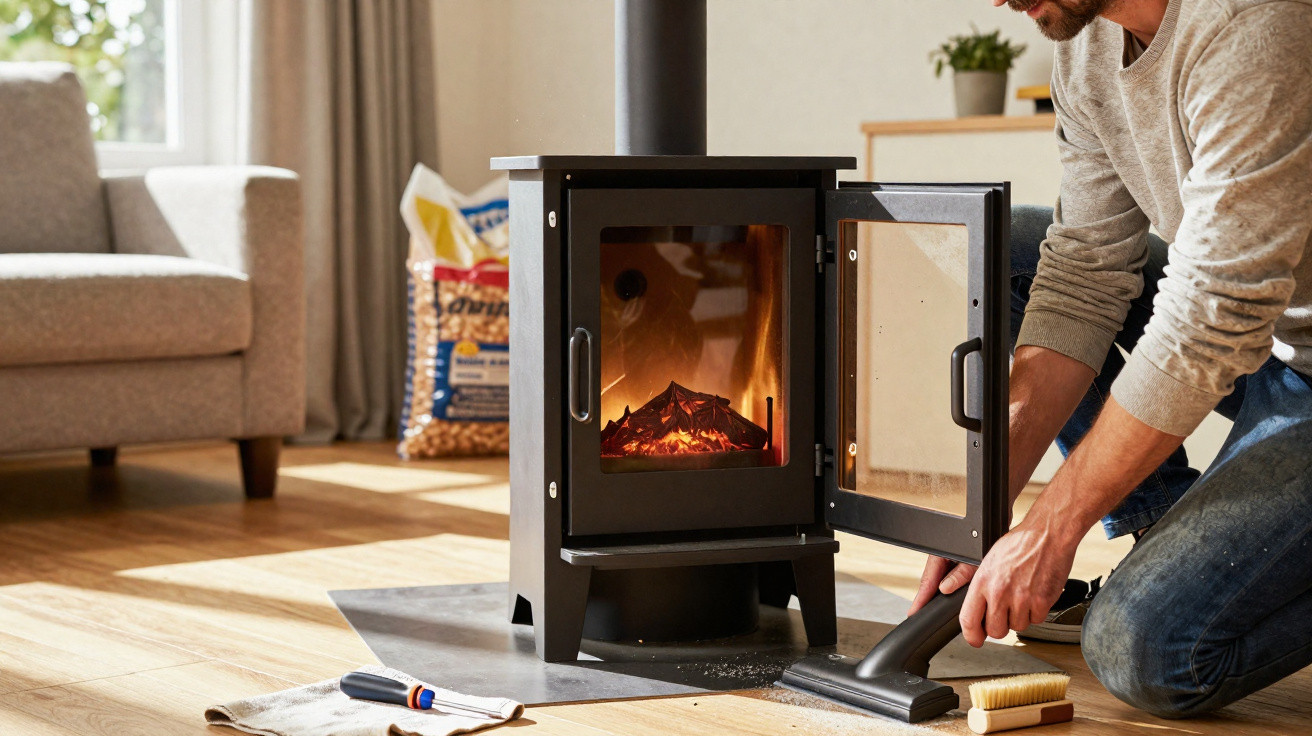
Anyone depending on a stove this winter can achieve meaningful benefits by combining thoroughly dried wood with sound fire-lighting practices. Begin with small, exceptionally dry pieces, then add medium-sized logs once the stove has become hot. Leave the air inlets more open initially to prevent smoky burning at low temperatures.
Some households now use a small proportion of quick-drying softwood as kindling alongside dense hardwood for the main fire. This mix makes lighting easier, creates strong early flames and provides enduring embers later in the evening, all from wood carefully split, stacked and seasoned using the simple method that so many users say has transformed their heating since they started it this week.





Comments
No comments yet. Be the first to comment!
Leave a Comment