
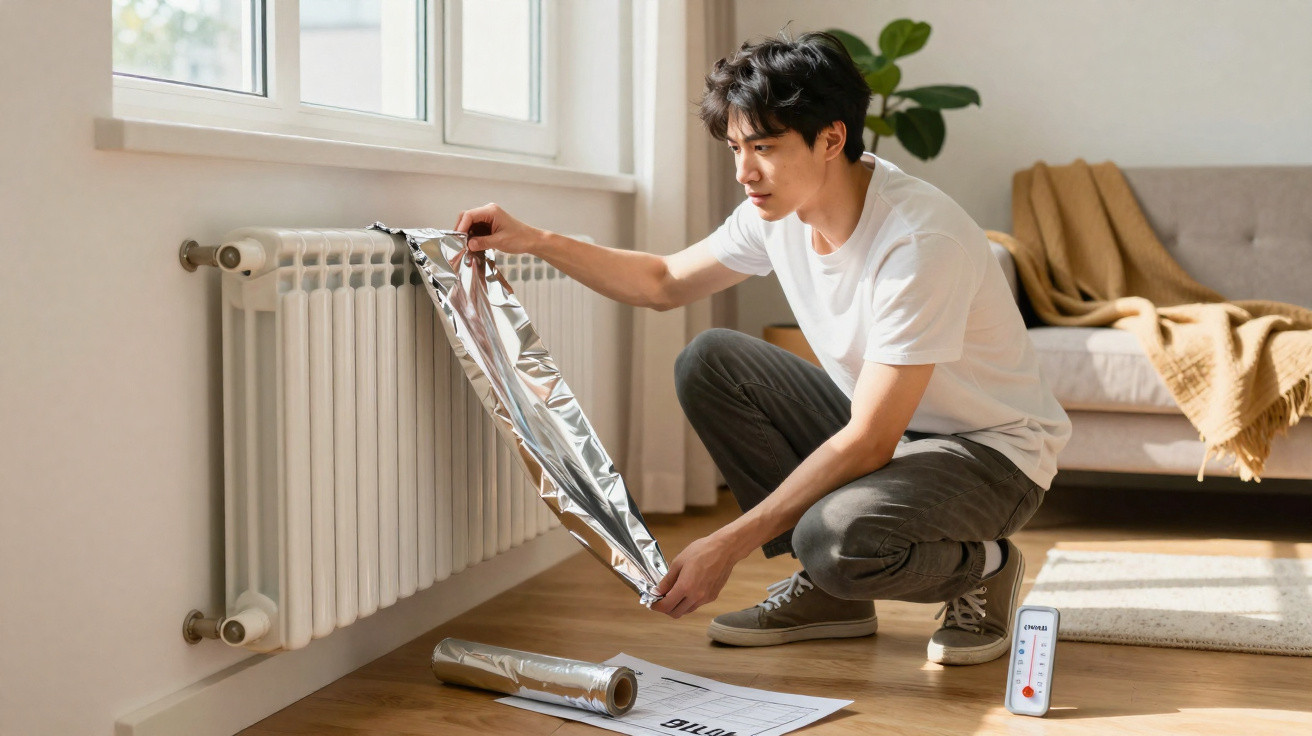
The first time I noticed aluminium foil taped behind a radiator, I was in a cramped London flat where your breath hung in the air in the kitchen. The host, a friend of a friend, tapped the creased silver sheet fixed to the wall with pride and said, “Best hack on TikTok. My gas bill dropped.” I can still recall the soft hiss from the ageing cast-iron radiator, the scent of dust heating up, and the strange sensation of watching an internet trend turn up in real life.
A few months afterwards, the very same tip appeared in a serious Facebook group about saving energy. Among the replies, however, a plumber described it as “useless and risky”.
So, is it an ingenious way to save energy, or a potentially dangerous myth with a reflective finish?
Why aluminium foil behind radiators has suddenly become “the thing”
Walk along almost any European street this winter and the same subjects keep coming up: energy bills, tariffs, chilly rooms and supposedly foolproof tips passed between friends. Aluminium foil behind radiators has become part of that word-of-mouth world, much like vinegar for cleaning showers or coffee grounds for plants.
The appeal is easy to understand. For just a few pence, you tape foil behind the radiator and supposedly reflect precious heat into the room rather than “losing” it through the wall. It seems quick, inexpensive and rather smart.
It also has the satisfying DIY appeal of needing no tools, hardly any work and nothing more than an item already tucked away in a kitchen drawer.
One reader from Manchester told me about the night she and her partner chose to “silver” their living room. Having watched a viral clip, pausing it every 10 seconds, she carefully pressed ordinary kitchen foil behind a steel panel radiator from the 1970s.
They photographed the result, shared it on Instagram and waited for the room to become warmer.
“Maybe a tiny bit?” she said two weeks later, unconvinced. Their smart thermostat indicated that the boiler was still coming on just as often. Their gas use had barely changed. The only obvious outcome was foil lifting at the corners and attracting dust bunnies.
Two overlapping realities are at work here: physics and psychology.
In principle, a reflective layer behind a hot radiator may limit heat lost through a wall, particularly where that wall is thin and uninsulated. That is the small truth at the centre of this hack.
Yet standard kitchen foil, crumpled and pressed directly against plaster, is another matter. Radiators do not simply “shine” heat: they chiefly heat air by convection, with much of that air rising in front of the appliance. A thin sheet of foil sitting against a cold wall is no magical mirror. In very particular circumstances it may offer a minor benefit, but the major savings promised in some posts are usually supported more by hope than evidence.
How to use the aluminium foil radiator trick properly - and when to avoid it
For anyone still keen to test it, there is a more sensible approach than the rapid TikTok version. Rather than fixing thin kitchen foil directly to the wall, energy advisers suggest a purpose-made reflective panel. Usually sold in DIY shops for a few euros, these panels are essentially foil attached to insulating foam or board.
The method is straightforward: trim the panel to be a little smaller than the radiator, then place or secure it behind the unit, ideally with a small air gap. The reflective face should point towards the radiator so it returns some radiant heat to the room, while the insulating layer reduces heat escaping through the wall.
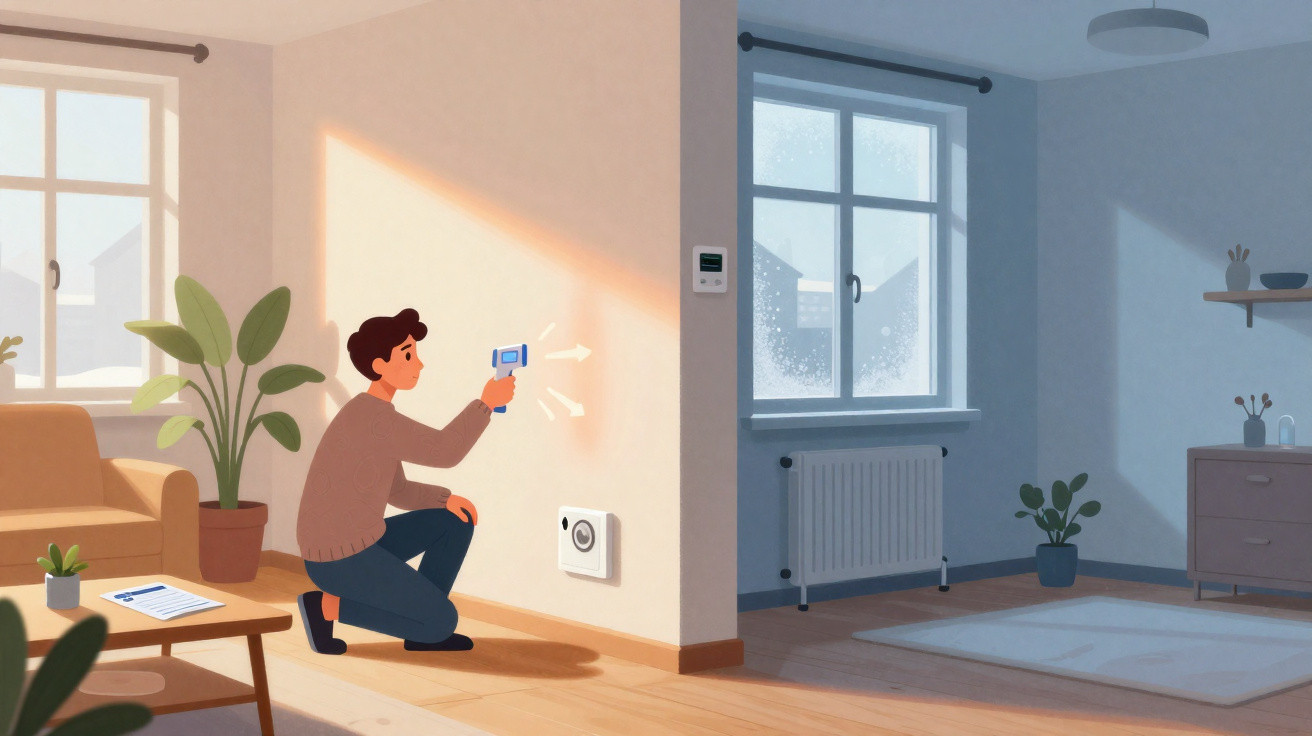
This approach is most worthwhile for radiators mounted on cold external walls, especially in older homes with poor insulation. Where the radiator sits on an internal wall separating two heated rooms, the benefit is almost nil.
Problems arise when people use foil as though it were duct tape for every energy issue. Some wrap pipes, obstruct vents or secure several layers so close to a hot radiator that the adhesive begins to smell as it softens. This is the point at which plumbers quietly start shaking their heads.
There is a risk of disappointment, too. You spend an evening crouched behind radiators, expecting your bill to fall by 20%. Then the next statement arrives, with figures that are every bit as harsh as the previous year. Most of us know that moment of realising the “secret hack” was largely wishful thinking.
The reality is simple: a €5 roll of foil cannot solve poor insulation, draughty windows or a boiler dating from 1994. At most, it can make a small difference around the edges.
The experts I spoke with kept returning to the same point.
“Reflective panels can help, but they’re a bonus, not a solution,” says an energy adviser from a UK charity. “People imagine 20% savings. In most tests, you’re looking at 1–3% in the best conditions, and often less. That’s within the margin of daily behaviour.”
If you want practical measures that genuinely make a difference, they are more likely to include the following:
- Bleed radiators once or twice each year to remove trapped air and allow them to heat properly.
- Consider furniture placement: a large sofa directly in front of a radiator can waste more heat than foil could ever “save”.
- Install straightforward thermostatic radiator valves to manage heating on a room-by-room basis.
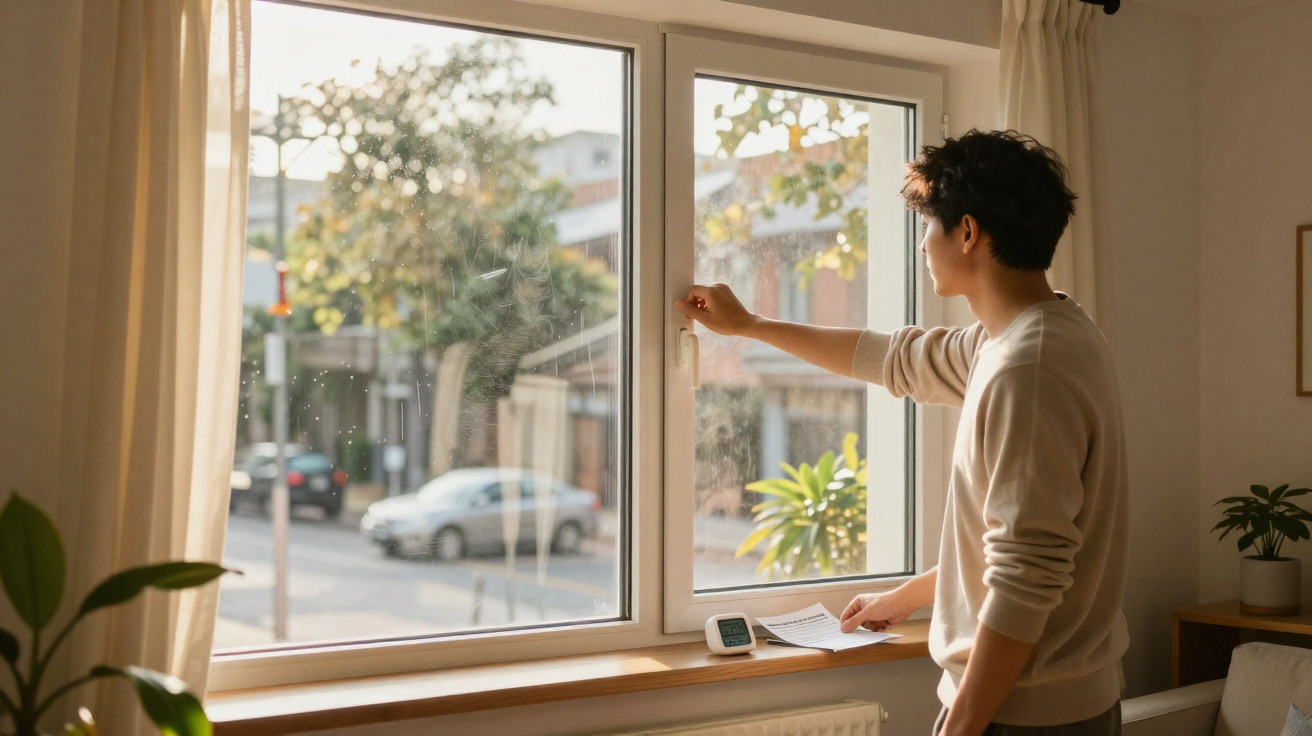
- Deal with clear draughts around doors and windows before pursuing small “hacks”.
- Close heavy curtains at night, then open them fully in daylight so the sun can help warm the room.
Between a clever hack and a shiny distraction
The craze for foil behind radiators reveals something about life at the moment. People are worried about bills, frustrated with energy companies and exhausted by being urged to spend thousands they do not have on insulation and replacement systems. A roll of foil can feel like a modest act of defiance: a way to regain some control when everything else is costly and slow.
A number of readers who installed proper reflector panels on external walls reported rooms feeling marginally warmer and walls seeming less cold. Others found little or no difference, then discreetly removed the dusty panels a year later. Small improvements combined with high expectations seldom do much for our mood.
Perhaps the most useful question is this: am I pursuing a reassuring illusion, or building up modest actions that genuinely accumulate over time? It applies to far more than whatever sits behind your radiators.
| Key point | Detail | Value for the reader |
|---|---|---|
| Reflective panels, not bare foil | Choose foil-backed insulation boards made for radiators, particularly on external walls | A realistic prospect of modest savings and slightly warmer rooms |
| Small impact, not a miracle | Savings are generally in the low single digits and can sometimes be barely noticeable | Helps prevent disappointment and viral claims of “huge” bill reductions |
| Focus on bigger wins | Bleeding radiators, moving furniture away, sealing draughts and using smart controls outperform foil tricks | Directs you towards measures that truly cut energy use and increase comfort |
FAQ: aluminium foil behind radiators
- Does aluminium foil behind radiators really save energy? It may, but only slightly, chiefly when it forms part of a proper reflective panel on an external wall. Assertions of dramatic reductions in bills are overstated.
- Is it dangerous to tape kitchen foil directly behind a radiator? Aluminium foil itself is not easily combustible, but tape and adhesives may deteriorate with heat, while poorly positioned sheets can restrict airflow or come into contact with live cables in old homes.
- What’s better than foil for improving radiator efficiency? Bleeding radiators, keeping furniture away from them, fitting thermostatic valves and insulating walls and windows provide much greater benefits than a basic foil hack.
- Do all types of radiators benefit from reflective panels? Panels are most helpful for wall-mounted radiators on poorly insulated external walls. Their effect is minimal on internal walls or in well-insulated homes.
- Is it worth buying commercial radiator reflector panels? Where funds are limited and walls are especially cold, they can be a sensible low-cost improvement, provided you expect small, gradual gains rather than a revolution in your bill.



Comments
No comments yet. Be the first to comment!
Leave a Comment