
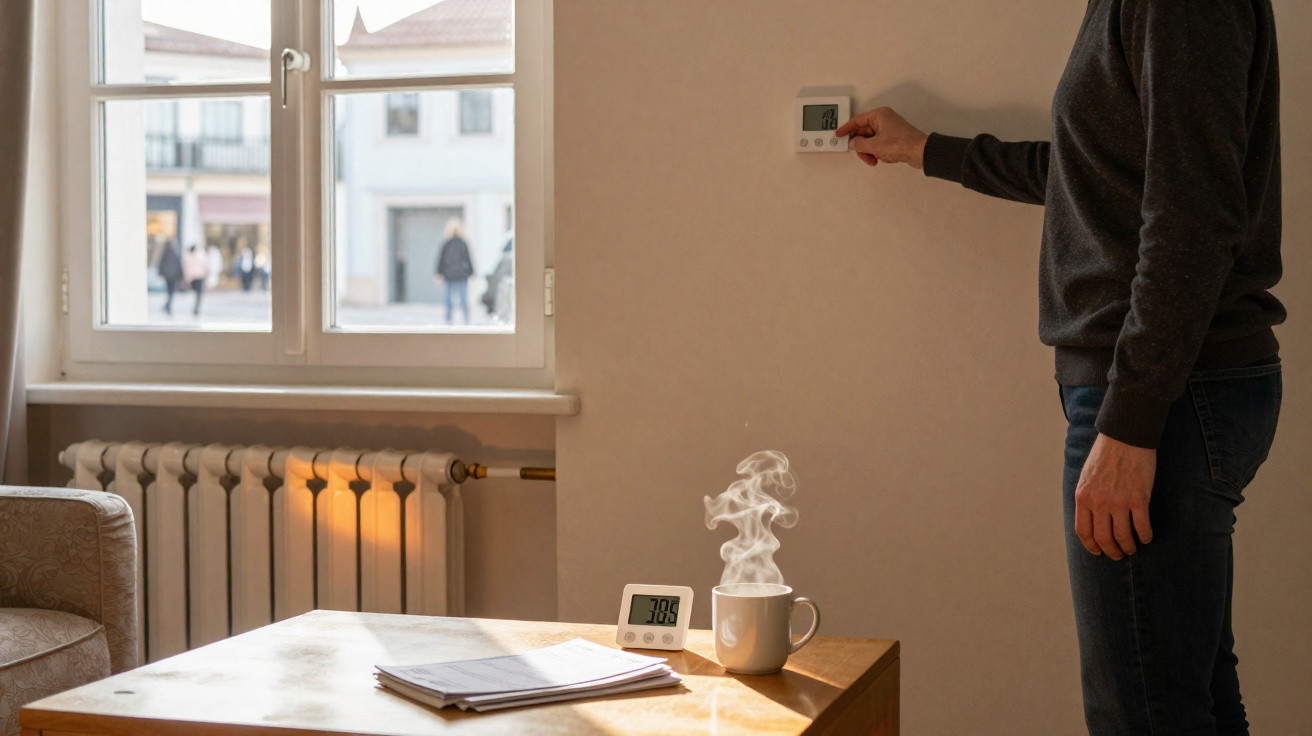
The row usually begins in a freezing kitchen. Someone, shivering in a dressing gown, jabs at the thermostat and says, “We should just leave it on low all day.” From the other room comes the reply: “That wastes more money. Everyone knows you’re meant to turn it off.” It is a familiar exchange in millions of homes as soon as the first frost arrives. With energy prices, draughty windows and children unwilling to put on jumpers, one small heating decision can feel as though it is quietly draining your bank balance. The problem is that each argument sounds broadly convincing. That is how this apparently straightforward question – whether to leave the heating on low or turn it on and off – became one of winter’s most persistent money myths.
What happens when your home is heated and reheated
Step into a cold home and your body notices immediately. Your shoulders tighten, your breath becomes visible and your hands disappear into your pockets. Switch on the heating and the radiators seem to come alive gradually, like a train labouring into motion. At that point, many people think: “This must be expensive. Surely it would cost less to keep the place gently warm all day.” We tend to imagine a boiler working like a car in congested traffic, where stopping and restarting burns more fuel than travelling steadily.
Energy engineers take a different view. Their focus is heat loss, rather than “cosy vibes”. Heat is continually escaping from a house through its walls, windows, roof and floors. The greater the temperature difference between indoors and outdoors, the quicker that heat escapes. That is basic physics, not a matter of opinion. Leaving the heating on low throughout the day therefore means paying to replace lost warmth for hours while you are at work or asleep beneath a thick duvet. Brief, targeted heating periods – using the system only when it is needed – normally keep a home cooler for longer, reducing overall heat loss.
An uninsulated or poorly insulated property loses warmth more quickly, much like a bucket with holes in its base. For these homes, keeping the heating on low is not a cheap way to “maintain” comfort; it is simply a steady trickle of money from your wallet. Most energy experts now agree that, for most households, using a timer to turn heating on and off is more efficient than keeping it low all day. The main exceptions are exceptionally well-insulated properties or those with certain specialist heating systems, including some underfloor installations. For most households, then, the old advice to “always leave it on” is quietly pushing bills upwards.
Smart heating habits that reduce bills without leaving you cold
The most effective step is unexciting but remarkably straightforward: make proper use of your timer. Programme the heating to start 30–45 minutes before you normally get up, then turn off 30–60 minutes before you leave. Apply the same approach in the evening: have it come on shortly before you return home and go off an hour before bedtime. Even after the boiler stops, radiators continue releasing heat, while the house will not turn arctic within ten minutes.
On a cold weekday, this could mean running your heating in two key periods: one in the early morning and another in the early evening. That keeps you comfortable when you are actually active at home, rather than paying to make empty rooms warm for the entire afternoon. At weekends, it is fine to extend the schedule, but try reducing each block by just half an hour. Most people hardly register any loss of comfort, although the meter will. We have all had a Sunday when the heating runs from 7 am until midnight “because we’re home” – followed by a bill that delivers a blunt reality check.
A major source of unnecessary spending is simply setting the thermostat too high “just to be safe”. Every additional degree can add roughly a few per cent to heating costs, quietly and continuously. Begin at 19–20°C in living spaces, set bedrooms slightly cooler, and wear the jumper your aunt gave you. Let us be honest: nobody really does that every day, but even doing it half the time makes a difference.
Many people never adjust the thermostatic radiator valves in individual rooms. They consequently pay to warm the spare bedroom, the hallway and the tiny box room that has not been used since 2014. Turn radiators down or off in spaces used rarely, allowing the boiler to concentrate on the rooms where daily life takes place. As one heating engineer told me over a mug of lukewarm tea:
“Your boiler doesn’t care about your feelings. It only cares how much heat it has to replace.”
When you are tempted to leave the heating “just ticking over”, run through this quick checklist:
- Will anyone actually be at home during the next few hours?
- Are the doors to unused rooms shut?
- Could you reduce the thermostat by 1°C and put on socks or a hoodie?
- Have you programmed a timer, or are you simply allowing it to run “for now”?
- Is the house genuinely cold, or have you become accustomed to hotel-level warmth?
Beyond the myth: what saves money over the long term
We often treat this as a simple choice: keep the heating low constantly or switch it on and off. However, the biggest differences are often found in the less dramatic details we tend to overlook. A poorly sealed front door, a gap beneath the back door or thin curtains covering a large bay window can all determine how quickly money, quite literally, escapes outdoors. Preventing heat loss matters more than worrying over an extra twenty minutes on the timer.
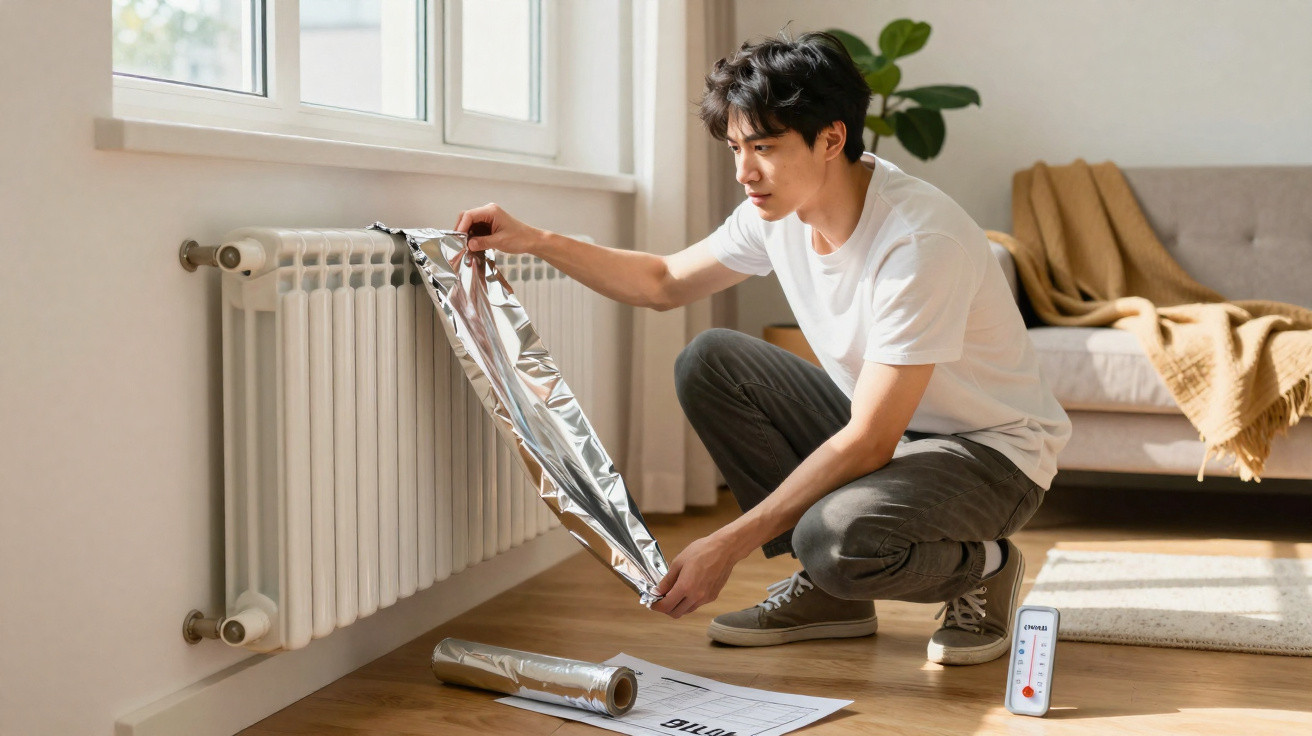
Low-cost insulation measures quietly work in your favour. Close heavy curtains as soon as darkness falls, fit draught excluders to doors and install foil panels behind radiators on external walls. These may not be glamorous home improvements, but they help a house retain warmth, meaning the boiler does not need to keep firing up. One Leeds family monitored its smart meter and reduced winter gas consumption by about 12% in a month using only draught stoppers, thicker curtains and a 1°C reduction. That is not merely theory; it is money their bank account genuinely noticed.
Heating also has an emotional dimension that no energy chart can capture. After coming home drenched by rain, with the outdoor air stinging your cheeks, the first rush of warmth indoors can feel like an embrace. No one wants to live in a home where their breath is visible just to save a few pounds on the bill. Comfort is not a luxury; it’s survival with a softer edge. The important question, then, is not only “What wastes more money?” It is also “How warm do I honestly need to be, and for how many hours, to feel okay?” Those answers are less neat, more personal and highly variable between households.
This subject becomes so contentious because it is bound up with pride, fear and the desire for control. Keeping the heating on low all day can seem like the safe, responsible option: a way to “manage” the home. Turning it off while you are out feels more deliberate, but can also seem slightly risky – will you return to an icebox, with children complaining and toes going numb? Some worry about damp and mould if their home becomes too cold, while others fear the next bill appearing in their inbox. That tension allows myths to flourish, while easy rules such as always on or always off feel reassuring even when they are inaccurate.
The truth is less memorable and more nuanced. For most standard homes with average insulation, controlling heating with a timer and a sensible thermostat is cheaper than leaving it low all day. Effective insulation, sealed draughts and smart routines tilt the calculation even further in your favour. Even so, the best answer for you also depends on your walls, windows, boiler age, working pattern and personal tolerance for cold. This is why neighbours in near-identical homes can debate the issue for hours, with each leaving certain they are correct.
| Key point | Detail | Why it matters to the reader |
|---|---|---|
| On/off vs. low all day | Intermittent heating typically consumes less energy than leaving it on low continuously | Explains which routine is more likely to reduce your bill |
| Heat loss governs the outcome | Homes lose heat constantly, and it escapes faster at higher temperatures | Shows why heat leaks, rather than “boiler effort”, determine costs |
| Small habits, major impact | Timers, a lower thermostat, draught proofing and room zoning | Provides practical actions you can take today without major expense |
FAQ:
- Is it always cheaper to turn the heating off when I go out? In most typical homes, yes. If you are away for longer than an hour or two, turning it off or right down will usually use less energy than maintaining gentle heat throughout your absence.
- Won’t reheating a cold house use more gas than keeping it warm? The additional energy needed to warm it up again is generally lower than the energy wasted replacing heat lost all day. The longer you are away, the stronger this effect is.
- What thermostat temperature is best for saving money? Many experts recommend about 19–20°C for living areas and slightly less for bedrooms. Lowering the setting by only 1°C can reduce your heating bill by several per cent over winter.
- Should I turn radiators off in unused rooms? Yes, or at least reduce them. Shut the doors too, so you are not funding the heating of vacant spaces. Just do not allow rooms to become so cold that damp or mould becomes a risk.
- Does leaving the heating on prevent damp better? Continuous low-level heating may help in very damp homes, but for most households, ventilation, repairing leaks and targeted heating are more beneficial than running the boiler all day.
Comments
No comments yet. Be the first to comment!
Leave a Comment