
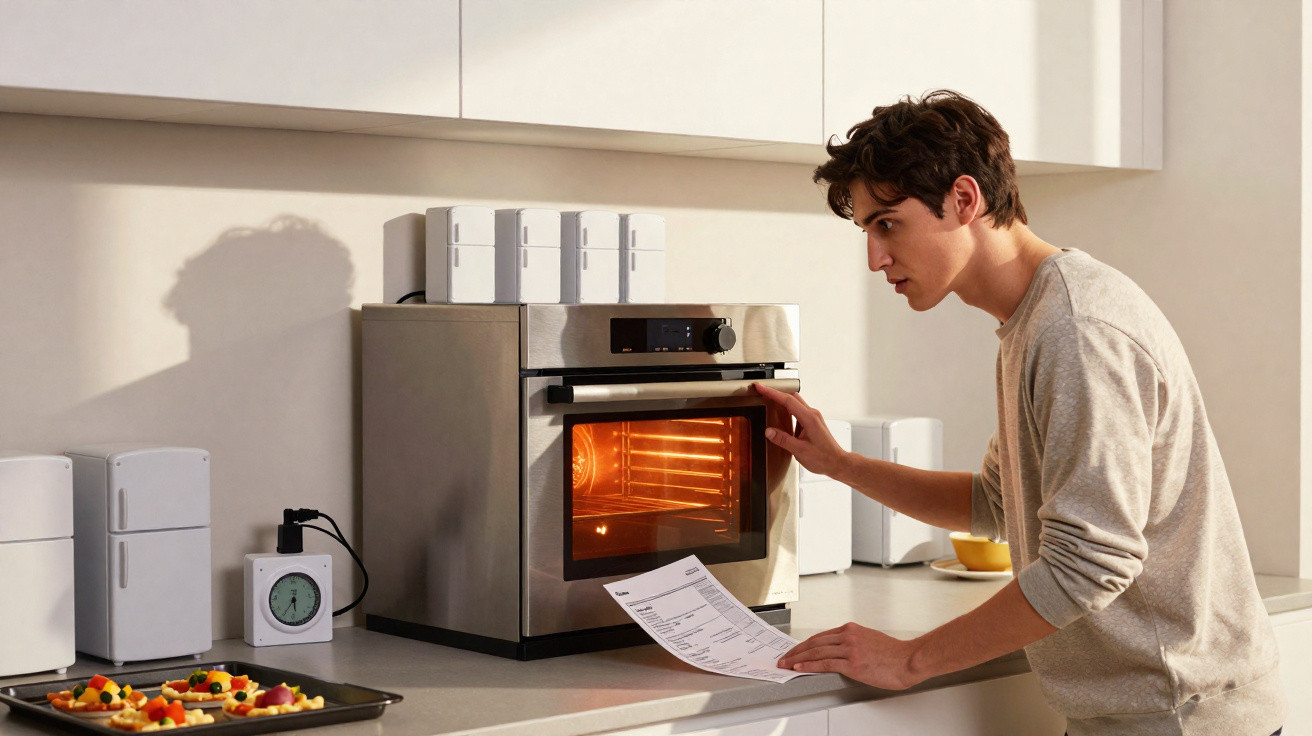
Most people picture an ageing refrigerator or tumble dryer when they think of an electricity-guzzling appliance. Yet the real energy drain is often hiding in the oven. New calculations indicate that, in certain circumstances, a modern electric oven can briefly draw as much power as up to 62 refrigerators operating at once.
The kitchen’s hidden electricity champion
Modern homes are filled with electrical appliances: bean-to-cup coffee machines, kettles, microwaves and dishwashers. Many remain plugged in all the time. Even so, they do not all have the same impact on the electricity bill. One appliance stands out clearly: the electric oven.
An oven does not merely need to become warm; it must reach genuinely high temperatures. Settings of 180 to 220 degrees are standard for pizza, bakes and bread, while the grill function or pizza setting can require even more. Keeping these temperatures stable calls for sustained high output.
"An electric oven generally draws between 2,000 and 3,000 watts while operating – considerably more than a television, laptop or many washing-machine cycles."
For comparison, a modern television commonly uses 80 to 150 watts, while a laptop typically needs 50 to 100 watts. Even a washing machine during a standard wash cycle rarely reaches the continuous output of an oven, and it usually runs for a much shorter period.
Why an oven can briefly outperform 62 refrigerators
At first, comparing an oven with refrigerators may seem strange. After all, a refrigerator runs around the clock, whereas an oven may only be used for a lasagne. The key is "instantaneous power" – the amount of electricity an appliance draws at a particular moment.
A refrigerator uses a cooling circuit inside a well-insulated compartment. It works in cycles: the compressor switches on, cools the interior, switches off and then pauses. Depending on the model and energy-efficiency class, many current appliances have an average power draw of 80 to 150 watts.
An oven operates very differently. At the start, it must transfer a large amount of energy into the metal and air inside its cooking cavity in a short time. This heating-up stage is when electricity demand is at its most intense.
"At its peak, an oven can draw as much power while preheating as several dozen refrigerators – in extreme calculations, this is equivalent to the consumption of up to 62 appliances at the same time."
That does not mean an oven ultimately uses as much electricity over a month as 62 refrigerators. The comparison refers to the brief period of maximum power draw. Nevertheless, it illustrates just how much power potential is concealed in the kitchen.
Power versus consumption: the difference explained
Two terms are frequently confused:
- Power (watts): the rate at which an appliance draws electricity from the grid at a given moment.
- Consumption (kilowatt-hours, kWh): the total energy used over a period – and this is what households pay for on their bill.
An appliance with high power that operates only briefly can ultimately consume less than one with low power that runs throughout the day. This is precisely the relationship between an oven and a refrigerator.
Frequent baking means noticeably higher costs
An oven’s monthly energy use depends heavily on individual habits. Someone who makes a bake only at weekends will notice less of an effect. However, those who bake several times a week, crisp up pizzas or prepare something in the oven every day will increase their electricity bill significantly.
A rough example using typical figures:
| Appliance | Power | Duration of use (example) | Consumption per use |
|---|---|---|---|
| Electric oven | 2,500 watts | 1 hour | 2.5 kWh |
| Refrigerator | 120 watts (average) | 24 hours | approx. 1–1.5 kWh |
A single evening use of the oven can therefore consume more electricity than a refrigerator does in an entire day. With three or four oven sessions each week, the amounts soon add up.
How to reduce oven energy consumption significantly
The good news is that nobody has to give up lasagne, a Sunday roast or crisp bread rolls. A few simple changes in routine can substantially curb an oven’s appetite for electricity.
Four easy adjustments for everyday use
- Often skip preheating: Many dishes turn out just as well when the tray goes into a cold oven. The oven then heats up "with contents inside", saving valuable minutes at full power.
- Use fan cooking instead of conventional top and bottom heat: Fan cooking distributes heat more efficiently. In most cases, the temperature can be reduced by 20 degrees, and several trays can be used at once.
- Keep the door closed: Heat escapes every time the door is opened. The oven then has to heat up again, drawing additional electricity.
- Make smart use of residual heat: Switch the oven off 5–10 minutes before the end of the cooking time. The stored heat is often enough to finish cooking the dish.
Anyone who follows these points in everyday life can cut oven consumption considerably without any noticeable loss of convenience when cooking or baking.
When other appliances are the better option
For small meals, the oven is not always the most sensible appliance. More energy-efficient alternatives are often available, particularly for individual portions.
Practical alternatives compared:
- Microwave: Ideal for reheating food that has already been cooked. It has short running times and uses much less power.
- Air fryer: Its smaller cooking chamber heats up quickly and often uses less electricity for portions for one or two people.
- Hob or induction hob: Not suitable for oven bakes, but usually more efficient than using the oven for dishes prepared in pans and pots.
For a single slice of frozen pizza or two bread rolls, the large oven cavity is hardly worthwhile. More compact appliances can save both electricity and time here.
Why so many people underestimate the oven as an electricity guzzler
Psychologically, a refrigerator seems more threatening because it runs for 24 hours a day. It hums, lights up and constantly reminds people that it is there. By contrast, the oven appears harmless: it is simply switched on and then off again.
"The oven’s short but highly intensive operating period means that many people misjudge the true scale of its costs."
In addition, people who enjoy cooking or baking associate the oven with pleasure, family time or the feeling of winding down after work, rather than with an electricity bill. This is exactly why its high wattage can so easily be overlooked.
What rising electricity prices mean for oven users
As electricity prices rise, every kilowatt-hour costs more. Depending on the tariff, using an oven for one hour can cost roughly between 70p and well over £1. Anyone preparing oven dishes on several evenings each week can quickly reach double-digit monthly costs for this one appliance alone.
Those who understand their own habits and make a few adjustments can reduce this share noticeably. Households on a tight budget, as well as families preparing many hot meals each week, particularly benefit from more conscious use.
A closer look at terms and figures that often cause confusion
Many calculations involving "62 refrigerators" initially appear sensationalist. They compare an oven’s maximum power peak with the average power draw of several refrigerators. This can raise awareness, but it is no substitute for a reliable calculation of annual electricity consumption.
Anyone wanting to assess their own appliances more accurately can check the energy label or instruction manual. These will usually state the oven’s connected load. Using this figure and typical weekly usage, it is relatively easy to estimate approximate costs – for instance, with an energy calculator or simple proportional calculation.
Overall, the comparison shows that the electric oven is among the most powerful electricity users in the home. Using it intelligently can quickly save noticeable sums, without having to forgo favourite dishes from the oven.




Comments
No comments yet. Be the first to comment!
Leave a Comment