
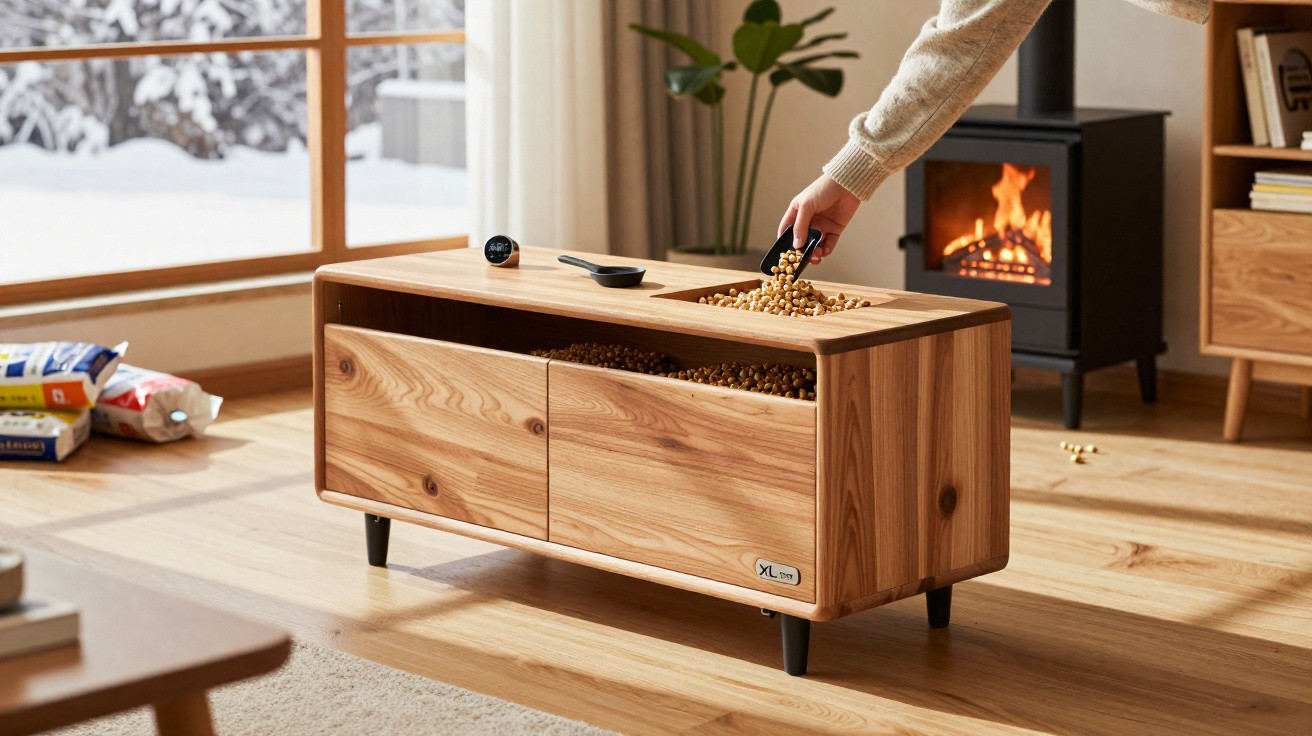
More homes are turning to pellet stoves for consistent, cleaner heat, but plenty of users still haul heavy bags in from the garage every few days. A new wave of smart storage boxes is designed to eliminate that routine, making pellets a genuinely “load once, forget for a while” type of fuel.
Why pellet storage matters more this winter
Pellet heating has steadily become more popular across Europe and, more recently, in areas of the US and UK. Higher gas costs and the search for lower-carbon heating choices have encouraged many householders to choose stoves that burn compressed wood pellets efficiently and with comparatively low emissions.
The main drawback is seldom the stove. It is the bags.
- A typical bag weighs roughly 15 kg, making it cumbersome for many people to lift and carry.
- Bags are commonly left in garages or cellars where damp conditions can affect them.
- Having to collect fuel every day can make an otherwise cosy routine feel like unpaid strength training.
Unprotected pellets soak up moisture, crumble to dust and burn badly, turning a supposedly clean system into a frustrating one.
This winter, manufacturers are betting that consumers want the convenience associated with gas and electricity: fuel kept close to the stove, requiring less exertion and creating much less mess. Purpose-made pellet storage boxes are intended to provide exactly that.
From unattractive bags to furniture: the growth of “design” pellet boxes
A decade ago, pellet storage usually involved a plastic container concealed behind a curtain. Now, it is increasingly styled like an item from a Scandinavian furniture catalogue. Manufacturers are positioning these containers as visible living-room furnishings rather than equipment to be hidden away.
Where design fits everyday living
Most recent models have several characteristics in common.
- Simple forms: square or gently curved designs that fit tidily beside a stove.
- Neutral colours and finishes: black, anthracite, white and pale wood to suit familiar interior schemes.
- Convenient opening: hinged lids or front panels that can be opened without shifting the unit.
The intention is straightforward: replace the industrial appearance of plastic sacks and make pellets part of the room’s overall look. Rather than piles of branded bags, there is a sturdy box, sometimes with a tray or shelf on top for books, firelighters or a plant.
The box does two jobs at once: it stores fuel and it behaves like a discreet sideboard, softening the presence of the stove in the room.
What a good pellet storage box really needs to do
Despite the polished appearance, the construction remains highly important. Pellets are compact, dry cylinders that are vulnerable to moisture but must still flow easily when tipped out. A worthwhile storage solution needs to account for both requirements.
| Key feature | Difference in everyday use |
|---|---|
| Capacity of around 40–50 kg | Provides several days to a week of heating without refilling for many homes. |
| Solid, sealed structure | Protects pellets from damp air and floors, reducing dust and crumbling. |
| Straightforward access | A top lid or lower chute enables quick filling of a scoop or bucket. |
| Firm base, occasionally with wheels | Keeps the box secure while allowing it to be moved for cleaning or rearranging the room. |
Together, these features reduce the number of times full bags need to be handled, preserve the fuel’s combustion performance and leave the floor uncluttered. There is also a significant psychological benefit: heating becomes less of a chore and more of an easy, repeatable action.
The XL pellet storage trend: bigger boxes, fewer journeys
As pellet users gain experience, many become unwilling to top up every day. Instead, they want to empty several bags into storage in one session, then leave it alone for a while. This is behind the growing popularity of “XL” boxes that hold approximately 45 kg at once, and sometimes more.
The Jura-style format: 45 kg at once
One model attracting attention in continental Europe this season is a high-capacity steel box built to take as many as three complete pellet sacks, or around 45 kg. Its design seeks a compromise between storage volume and floor area: sufficiently large to provide autonomy, yet compact enough to stand beside a standard stove without overwhelming the room.
- Ample capacity: 45 kg will generally cover several evenings of intensive heating in a well-insulated property.
- Durable casing: thick steel panels withstand knocks from vacuum cleaners and buckets.
- Sealed lid: a close-fitting closure helps keep out moisture and dust.
- Managed dispensing: a lower hatch allows pellets to run neatly into a container without spilling.
Moving three light scoops from a box next to the stove feels very different from wrestling a 15 kg bag in from the shed at night.
The principle reflects developments in kitchen bins and laundry baskets: when a formerly practical-only object receives thoughtful design, people are more willing to keep it in their principal living areas.
Choosing the right pellet storage box for your home
Neither every living room nor every back can accommodate the same setup. Considering a few points before ordering a heavy item can help identify the most suitable option.
1. Align capacity with your fuel use
Work out how much fuel the stove consumes during an average cold day. A smaller stove may burn 10–15 kg over 24 hours, with consumption rising during severe cold spells. A 45 kg box could therefore supply three to five days of heating. Smaller flats may be better suited to a 30 kg option that occupies less floor space.
2. Consider the material carefully
- Steel: durable, stable and often the most refined-looking option, particularly with powder-coated finishes. It is also heavier to move.
- Reinforced plastic: less expensive and lighter, though often less appealing in a main living space.
- Wood or wood-clad designs: visually warmer, but reliant on effective internal sealing to protect against moisture.
Whatever the material, contact with a damp floor should be limited as far as possible. Short feet or a raised base can help stop moisture rising from cold tiles.
3. Mentally walk through how you will use it
Before purchasing, picture the complete process:
- How close will the box be to the stove hopper?
- Will you have enough space to stand comfortably while filling a scoop?
- Can the lid open completely beneath a mantelpiece or wall shelf?
- Once empty, will you need wheels to move it for cleaning?
A good-looking box that leaves you working at uncomfortable angles will soon seem like the wrong choice.
Health, safety and air-quality considerations often overlooked
Pellet storage involves more than ease of use. Poor storage can lead to mould and dust problems, while effective storage supports both efficiency and health.
- Reduced airborne dust: a sealed container limits the fine sawdust released from opened bags, which may irritate the lungs.
- Fewer hazards underfoot: piles of bags, ripped plastic and makeshift buckets around a stove increase the likelihood of trips and spills, particularly for children and older people.
- More consistent combustion: dry, undamaged pellets burn at the rate expected by the stove, helping heat output and emissions alike.
Keeping pellets dry does not just protect their appearance; it keeps their energy content stable and reduces incomplete combustion and smoke.
For anyone with arthritis, back pain or reduced physical strength, handling a heavy bag once a week rather than lifting one every day can determine whether a pellet stove remains practical over the long term.
Costs, returns and the households that benefit most
A well-made pellet box generally costs considerably less than the stove, but some households still see it as a “nice-to-have” extra. Its value looks different when the time saved and fuel waste prevented are taken into account.
- Pellets damaged by moisture must be thrown away or will deliver poor heat and generate additional ash.
- Going outside every day in poor weather has a genuine, though difficult to quantify, cost in comfort and effort.
- Improved storage often makes it easier for people to purchase pellets in bulk at more favourable prices, as they can manage supplies without rushing.
The greatest advantages are likely to go to families primarily heated by pellets, owners of remote homes weary of late-night trips to the garage, and older users seeking to retain their independence. Occasional users who light their stove only at weekends may find that a smaller, lower-cost box beside the hearth is already a noticeable improvement.
Pellet storage within a wider heating strategy
Considering where pellets should be kept naturally raises questions about the wider heating arrangement. Many installers now include storage planning in the first stove consultation rather than treating it as an afterthought.
This may involve:
- Planning a clear route from bulk storage, whether a garage, shed or delivery location, to the indoor box.
- Assessing floor loading where several bags may temporarily be placed before the container is filled.
- Ensuring appropriate distances from hot surfaces, electrical sockets and upholstered furniture.
Some users take matters further by keeping useful equipment near the box: a metal scoop with an easy-grip handle, a compact vacuum for ash and dust, or a moisture meter for monitoring surrounding humidity. Combined, these small measures can transform pellet heating from merely “manageable” into something closer to fully integrated home infrastructure.






Comments
No comments yet. Be the first to comment!
Leave a Comment