
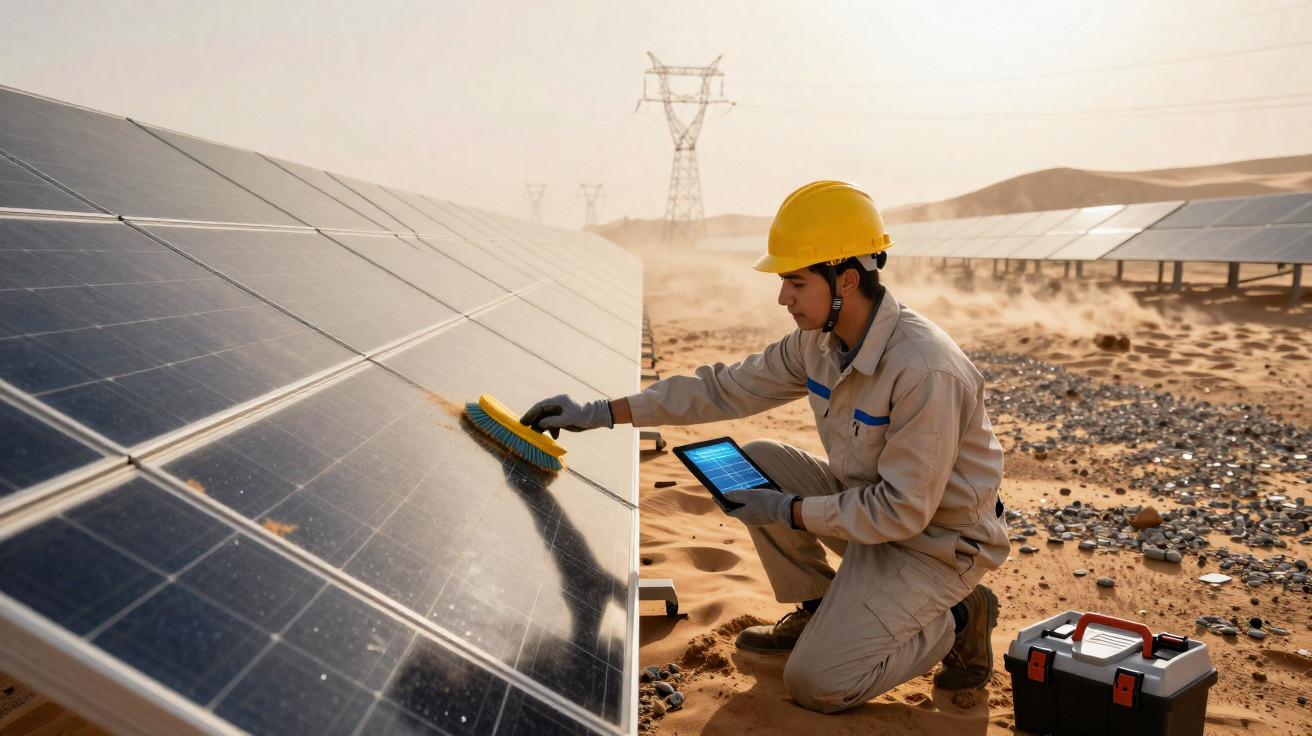
The planet’s largest hot desert receives sunshine for almost the entire year, yet it remains far from becoming the dream power station many imagine.
At first glance, the solution appears as straightforward as laying vast carpets of panels across the dunes and linking them to the rest of the world with cables. The concept produces colourful maps on social media and extravagant proposals in technology presentations. But a closer look at geography, physics, politics and cost reveals that the Sahara is not an empty game board, but a far more difficult puzzle.
A sun-drenched desert that is far from ‘empty’
The Sahara is often portrayed as a blank expanse waiting to be used. In reality, it contains communities, trade routes, adapted biodiversity and politically contested territories. A continental-scale solar power project would affect all of these.
The familiar claim is that covering a small portion of the desert with panels could supply electricity to all of Europe and part of Africa. From a technical perspective, solar irradiance is indeed high and comparatively consistent. Politically and socially, however, the issue is much more fraught.
Turning the Sahara into the “world’s battery” is not merely an engineering project. It is a project involving power, dependence and geopolitical risk.
North African countries already contend with internal conflicts, porous borders, and disputes over water and land. Building huge solar complexes would mean concentrating strategic infrastructure in places that are not always stable or secure.
Counterintuitive environmental effects in the desert
Dark solar panels absorb more radiation than pale sand. The difference may seem minor, but it becomes significant when thousands of square kilometres are covered with photovoltaic modules.
A continental-scale ‘heat island’ effect
By taking in more energy, panels warm the air immediately above the ground. This additional heat can alter local air currents and, in extreme scenarios, affect regional patterns of atmospheric circulation.
- Higher temperatures across extensive desert areas;
- Changes to cloud formation and wind patterns;
- Effects on dust routes that currently influence even forests such as the Amazon.
Climate models indicate that large solar installations in deserts could alter rainfall regimes and even encourage vegetation in certain areas. Yet such changes are not neutral: they would affect ecosystems that have taken thousands of years to adapt to extreme aridity.
Sand, dust and demanding maintenance
There is also a less glamorous issue: dirt. The Sahara is a planetary-scale dust producer. That dust settles on panels and steadily reduces their energy efficiency.
Keeping output at a high level would require modules to be washed or cleaned continuously. This demands water - a scarce desert resource - or complex mechanical solutions. Cleaning robots, dry-brushing systems and specialist coatings can help, but they make the project more expensive and require frequent maintenance in precisely the sort of remote areas where this is difficult.
Without regular cleaning, a Sahara solar mega-plant becomes, within a few months, a very expensive collection of dusty glass panels producing far less than investment charts predicted.
Technical challenges of transmitting power over long distances
Generating electricity at scale is only half the challenge. The other half is delivering it to consumption centres, many of which lie thousands of kilometres away.
High-voltage lines, losses and security
Ultra-high-voltage transmission networks would be needed, crossing several countries and relying on expensive, sophisticated technology. Even with HVDC (high-voltage direct current) lines, which reduce losses, energy is still lost along the route and infrastructure costs remain substantial.
These lines would be exposed to:
- Armed conflict and sabotage;
- Extreme weather events, including sandstorms;
- Technical failures at isolated locations that are difficult to reach.
Reliance on a continental electricity corridor creates systemic risk: a localised problem could disrupt energy supplies across entire regions thousands of kilometres away.
Economics, dependence and lessons from past projects
Ambitious plans to turn the Sahara into a solar energy hub have previously emerged through international consortia, particularly in Europe. Projects such as Desertec, announced with great fanfare in the 2000s, promised to provide much of Europe’s electricity using African sunshine. The initiative ultimately shrank and fragmented.
| Factor | Effect on Sahara solar megaprojects |
|---|---|
| Initial cost | Investment of hundreds of billions of dollars in infrastructure, transmission and security. |
| Political risk | Regulatory uncertainty, changes of government and conflicts in generation and transit countries. |
| Local alternatives | Falling panel prices favour distributed generation on rooftops and smaller plants close to consumers. |
| Public perception | Concern over a new form of energy dependence, now based on sunshine rather than oil or gas. |
While these megaprojects struggle, another trend is progressing: distributed solar generation in core countries, with production close to demand through rooftops and regional solar parks that do not depend on international transmission corridors.
Why concentrating everything in the desert does not always make sense
Even technically, there is debate over whether it is worthwhile to concentrate so much generation in one type of environment. Today’s energy logic is moving towards diversification: multiple sources, numerous generation points and smarter grids.
European countries, for instance, are combining rooftop solar, onshore and offshore wind, batteries, pumped-storage hydropower and, in some cases, nuclear power. Such a system may look less efficient on paper than a Sahara ‘hyper-project’, but it is likely to be more resilient.
Resilient energy systems do not rely on one magical location, however sunny it may be.
Terms that help explain the debate
Two concepts frequently arise in these discussions.
- HVDC (High Voltage Direct Current): a high-voltage direct-current transmission technology used to carry electricity over long distances with lower losses. It is costly and requires enormous converters at either end of the network.
- Distributed generation: energy production across many separate locations, including household rooftops, commercial buildings and small regional plants. It reduces dependence on major transmission lines and increases local autonomy.
When someone proposes turning the Sahara into one vast solar panel, these two ideas sit behind the debate: on one side, the appeal of technical efficiency through large-scale transmission; on the other, the global trend towards giving consumers and local communities greater power.
Future scenarios and possible combinations
One possibility discussed by specialists is to use part of the Sahara’s solar potential not primarily to export electricity directly, but to produce low-carbon fuels such as green hydrogen or ammonia. Solar energy would produce the hydrogen, which could then be transported by ship or through adapted pipelines.
This model would reduce reliance on enormous electricity lines and allow energy to be stored in chemical form. On the other hand, it would require water for electrolysis, port infrastructure and complex logistics chains. It would also continue to raise questions about who controls this new ‘energy commodity’ produced in the middle of a desert region.
Another line of research considers combining smaller solar plants in semi-arid areas near African urban centres, strengthening regional supply before pursuing mass exports. This approach has a direct social impact, expanding access to electricity in countries that still experience blackouts and low rates of grid connection.





Comments
No comments yet. Be the first to comment!
Leave a Comment